

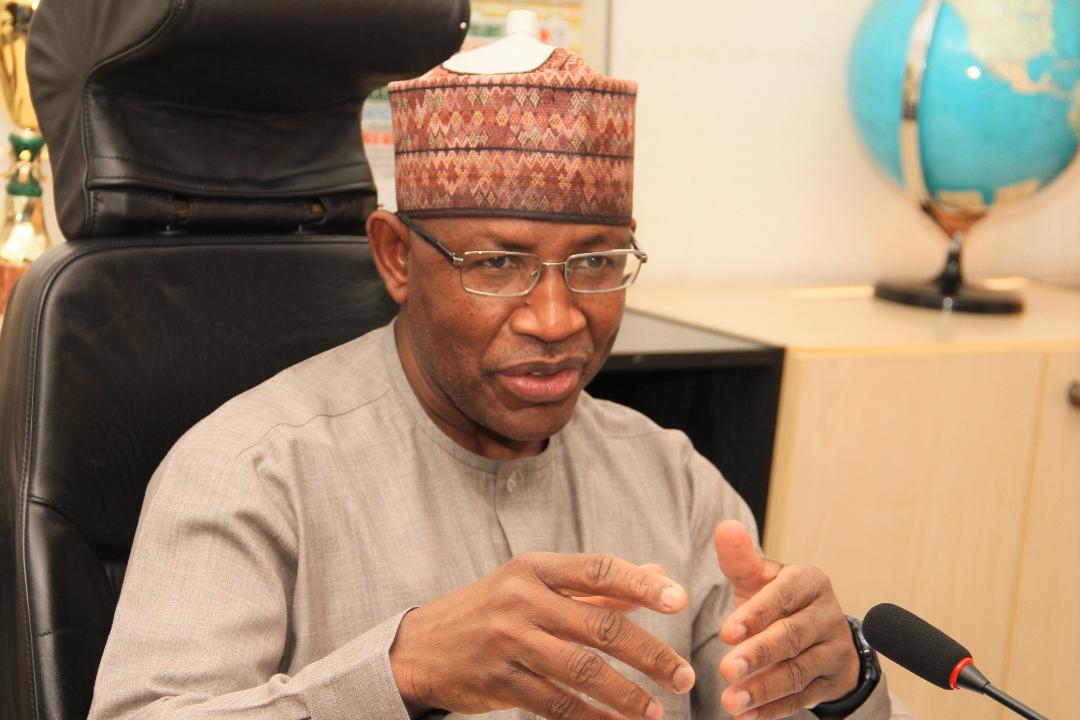
By Sam Adzegeh and Simeon Ogoegbulam with Agency Reports
Deputy Governor of the Central Bank of Nigeria (CBN), Malam Lamido Yuguda, has called on the government to align Public-Private Partnerships (PPPs) with monetary policy objectives to achieve better economic outcomes.
Yuguda, a one-time director general of the Securities and Exchange Commission (SEC), made the call at the 14th inaugural lecture of the Capital Market Academics of Nigeria (CMAN) Fellowship in Abuja titled: “Leveraging Infrastructure PPPs for Economic Growth and Financial Deepening in Nigeria.”
According to him, long-term PPP financing instruments can strengthen interest rate transmission and improve the effectiveness of monetary policy. Yuguda urged the government to reduce reliance on sovereign borrowing for infrastructure financing, noting that deeper capital markets would enhance the responsiveness of monetary policy.
He also advocated the development of infrastructure-focused financial instruments to reposition PPPs and attract long-term investment and further called for the expansion of infrastructure bond and Sukuk issuances linked to PPP assets, as well as the promotion of credit-enhanced instruments that meet institutional investors’ requirements. He described PPPs as long-term contractual arrangements in which private sector participants assume responsibility for financing, designing, constructing and, in many cases, operating infrastructure projects, while government provides regulatory oversight and risk-sharing frameworks.
The CBN deputy governor identified policy inconsistency, regulatory uncertainty, inadequate project preparation capacity and weak dispute resolution mechanisms as major barriers to successful PPP implementation.
“Nigeria’s infrastructure deficit and shallow financial markets are not separate problems; they are two sides of a single structural challenge. Well-structured PPPs transform infrastructure from a fiscal obligation into bankable, revenue-generating assets that attract long-term capital,” he noted.
He further added that, “As projects evolve from bank-financed construction to capital market refinancing, they expand the depth and sophistication of Nigeria’s financial system. Nigeria already possesses the building blocks. What is needed is deliberate alignment, credible policy, bankable project design and sustained institutional discipline,” he posited.
Earlier, President of CMAN, Prof. Uche Uwaleke, said infrastructure remained central to discussions about Nigeria’s economic future insisting that deficits in transportation, energy, housing, logistics, healthcare and digital connectivity continue to constrain productivity, competitiveness and inclusive growth.
Uwaleke, however, noted that the infrastructure gap also presented significant opportunities for innovation, investment mobilization and capital market expansion, emphasizing that the current administration has demonstrated renewed commitment to infrastructure development as a catalyst for economic growth.
The CMAN president added that the country’s infrastructure financing requirements far exceed what public revenue could sustainably support. He said, “This reality makes Public-Private Partnerships not simply desirable, but absolutely necessary. The power sector illustrates this urgency even more clearly. No economy can achieve sustained industrial growth with inadequate and unreliable electricity supply.
Nigeria’s energy deficit continues to undermine manufacturing competitiveness, raise business costs and limit productivity across sectors,” he disclosed, adding, “What is required is a well-structured partnership between the public and private sectors, supported by transparent regulation, risk-sharing mechanisms and strong financial market institutions capable of mobilizing patient capital for long-term infrastructure investments.”
Also speaking, a former SEC Chairman, Dr Suleyman Ndanusa, described infrastructure financing through PPPs as timely and critical to Nigeria’s development aspirations. Ndanusa said the discourse would provide practical insights into mobilizing long-term capital and stimulate discussions on how infrastructure investment could accelerate economic growth while deepening the financial system.



