

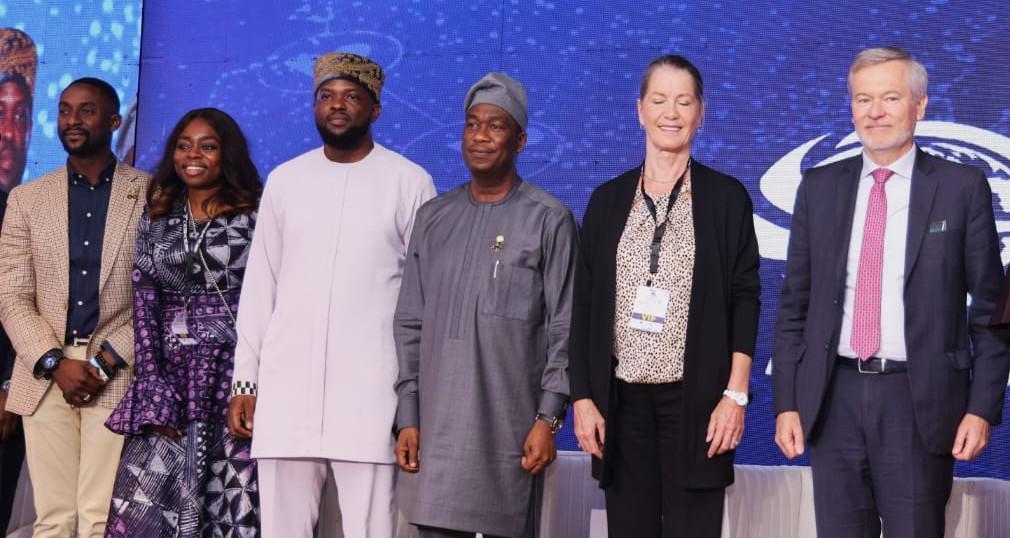
Gov. Babajide Sanwo-Olu of Lagos State says no fewer than 10,000 residents will be trained in industry relevant skills through a renewed partnership between the Lagos State Employment Trust Fund, LSETF, and the United States African Development Foundation.
Sanwo-Olu made the disclosure at the Omniverse Africa Summit 3.0, organised by Omniverse Africa and LSETF on Tuesday in Lagos.
The governor, represented by his deputy, Dr Obafemi Hamzat, said the initiative would equip residents with skills across technology, construction, fashion, health and business.
According to him, such efforts will boost employment and economic growth.
“Through a renewed partnership with the United States African Development Foundation, the LSETF is on course to train 10,000 people in industry-relevant skills across technology, construction, fashion, health and business,” he said.
Speaking on the theme: “Connected Future; Synergy for Impact,” the governor identified fragmentation of efforts as a major challenge facing African cities.
He said the lack of coordination between talent, investors and infrastructure, had hindered growth, stressing that connectivity beyond digital infrastructure remained critical.
“Connectivity is the solution, not just digital connectivity, but the human, institutional and economic connections that turn individual potential into collective prosperity,” he said.
Sanwo-Olu highlighted the state government’s commitment under its THEMES+ agenda, noting investments in broadband expansion, digital governance and innovation clusters.
He said his administration was focused on creating an enabling environment for entrepreneurship and private-sector growth.
The governor described LSETF as a key driver of the state’s employment strategy, established to provide capital and skills to residents.
He disclosed that in 2025 alone, the fund disbursed N1.91 billion in loans to over 4,000 Micro, Small and Medium Enterprises, MSMEs, while also providing grants exceeding N23 million to 65 businesses.
He added that 2,500 youths benefited from its graduate internship programme, while 1,050 persons with disabilities received entrepreneurship training and start-up tools.
“LSETF’s repayment rate of 91 per cent shows that beneficiaries are not passive recipients, but active builders of the economy,” he said.
The governor also emphasised the importance of building institutions that outlive political administrations.
“When the LSETF was established and strengthened, it was not a programme tied to an electoral cycle. We were building an institution,” he said.
The governor called on investors and development partners to take advantage of the growing opportunities in the state, citing its talent pool, market size and entrepreneurial culture.
He urged young entrepreneurs and creatives to leverage networking opportunities for partnerships and growth.
Sanwo-Olu reaffirmed the state’s commitment to leading Africa’s digital and creative economy, describing Lagos as a hub for innovation, investment and collaboration.
Gautier Mignot, the European Union Ambassador to Nigeria, affirmed commitment to supporting Nigeria’s digital and creative economy.
He described Nigeria’s youthful population as both a tremendous asset and a pressing economic challenge.
“With a large population under the age of 40, Nigeria possesses remarkable vitality, innovation and resourcefulness.
“However, the growing number of young people entering the labour market annually requires urgent and sustainable job creation strategies.
“Though the traditional sectors such as agriculture, industry and extractive activities remain important, they alone may not sufficiently address this challenge, but the rapidly expanding digital and creative economy is a viable pathway for growth and employment,” he said.



