

By Joy Onu
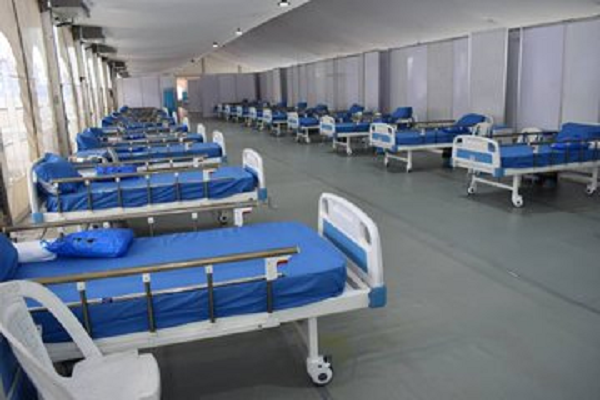
Across Nigeria’s public hospitals, a chilling phrase continues to define emergency care: “No bed space.” For victims of road traffic crashes, sudden collapse, stroke, childbirth complications, and other life-threatening emergencies, those words often signal not just delay but danger.
From Abuja to Lagos, Kano to Port Harcourt, accident victims and critically ill patients are rushed into already overwhelmed emergency units. In many cases, they are placed on trolleys, corridors, benches, or left inside ambulances while families search desperately for where treatment can begin.
Health workers say the pressure has reached critical levels. A senior clinician at a federal hospital in Abuja described emergency units as constantly overstretched. “People bring in accident victims and collapse cases at the same time. When beds are full, it becomes a crisis of choices we should never be making,” an official said.
In practice, emergency care in many public hospitals has become a race against time, where survival depends not only on medical intervention but also on whether a bed is available at that exact moment.
For families, the experience is often chaotic and emotionally exhausting. An Abuja resident, Fatima Yusuf, recalled rushing her brother to hospital after a road crash. “We brought him in after the accident, but they kept saying there was no bed space. He was still in the car park bleeding while we were running around begging them to act,” she said.
In Lagos, Kunle Adeyemi described losing a relative after a sudden collapse. “They told us to wait or go elsewhere. Every government hospital we went to said the same thing—no bed space. By the time help came, it was too late,” he said.
Beyond bed shortages, allegations persist that access to emergency care in some facilities can be influenced by informal payments or personal connections, particularly in intensive care units where demand is far higher than supply.
A Lagos-based public health expert, Dr. Chukwuemeka Okorie, said the situation reflects systemic pressure rather than isolated misconduct.
“When demand far outweighs supply in emergencies like crashes or collapse cases, the system becomes extremely strained. That is where informal payments and favouritism can emerge,” he said.
For many Nigerians, the crisis unfolds in moments of panic and helplessness. Families move from one hospital to another in search of beds, often while patients deteriorate in transit. “We drove around with him for almost an hour after the crash. Every hospital said no bed. We didn’t even know where to go anymore,” another relative said.
Some families report being asked to buy emergency supplies, pay for urgent tests, or raise immediate deposits before treatment can begin, even in life-threatening situations.
The Federal Government has acknowledged pressure on the healthcare system and, in recent years, approved new federal medical centres and teaching hospitals to expand access to care. Renovations and expansions in selected facilities, including increases in bed capacity, form part of ongoing efforts to strengthen tertiary healthcare services.
However, health policy experts argue that infrastructure expansion alone cannot resolve the crisis. They say the real challenge lies in emergency system design, governance, and accountability.
One of the most immediate reforms being proposed is the introduction of bed-management systems in major public hospitals. Each facility would assign a dedicated officer to track available beds in real time, with data shared through a national digital platform. This would allow emergency cases to be directed to hospitals with capacity before arrival, reducing time wasted moving patients between facilities.
Experts also recommend mandatory emergency triage protocols to ensure that all patients in life-threatening conditions receive immediate medical screening and stabilisation, regardless of ability to pay or bed availability. The principle, they argue, is that treatment must begin first, while administrative issues follow later.
Another key proposal is a strict prohibition on demands for unapproved payments during emergency stabilisation. Hospital managements would be required to investigate and sanction staff involved, reducing financial pressure on families at their most vulnerable moments.
A national emergency reporting system using SMS and USSD has also been proposed, allowing citizens to report denial of care, lack of beds, or bribery attempts in real time. These complaints would feed into a central dashboard at the Federal Ministry of Health for faster intervention and pattern tracking.
Legal reform is also central to proposed solutions. Analysts are calling for an Emergency Care Protection Law requiring all public hospitals to provide emergency screening and stabilisation regardless of ability to pay, effectively making emergency care a legally enforceable right.
Strengthening the National Health Act to make patient rights enforceable, including penalties for denial of emergency care and failure to respond to complaints, is also under consideration.
To improve accountability, experts propose routine unannounced inspections of emergency units, with findings published publicly. A dedicated anti-corruption unit within the health sector would investigate allegations of bribery or neglect and recommend sanctions where necessary.
Hospital performance indicators such as waiting times, bed occupancy rates, and complaint volumes would also be published to improve transparency and public trust.
Yet experts warn that no reform will succeed without addressing underlying system pressures. Weak primary healthcare means many emergencies that should be stabilised at lower-level facilities are instead referred directly to tertiary hospitals, worsening congestion in emergency units.
Health professionals also point to staffing shortages and burnout in emergency departments, arguing that surge staffing, improved incentives, and better remuneration are necessary to sustain emergency care delivery.
Some families say the consequences of the current system are already devastating. An Abuja resident, Aisha Mohammed, described repeated experiences of being turned away during emergencies. “We were told there was no bed space in three different hospitals. At a point, we did not even know where to go again. You just keep praying the person survives the journey,” she said.
Behind such accounts are families who say they have lost loved ones while waiting for emergency admission. In several cases, patients reportedly deteriorated despite the presence of medical staff, simply because beds were not available at the critical moment.
For many bereaved families, the pain is not only loss but the belief that timely intervention could have changed the outcome.
While government continues to invest in new hospitals and expand infrastructure, experts insist that without enforceable systems, transparency, and accountability mechanisms, the crisis will persist.
For now, the “no bed space syndrome” remains one of the most visible symptoms of a strained emergency healthcare system. For ordinary Nigerians facing accidents, collapse, and sudden medical emergencies, survival too often depends not only on medical attention but on whether a hospital bed is available at the exact moment it is needed.



