

By Simeon Ogoegbulem & Joy Onu
Nigeria is set to accelerate its export drive and deepen participation in Africa’s single market as a $1 billion (about N1.4 trillion) financing window becomes available to businesses under the African Continental Free Trade Area (AfCFTA).
Trade experts have described the latest move by Nigeria as a major push to strengthen industrial capacity and regional competitiveness.
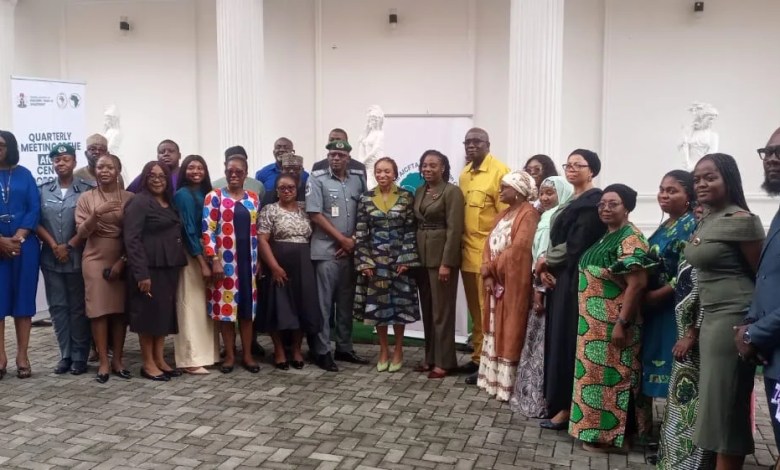
Nigeria’s push to corner a larger chunk of the emerging continental trade was highlighted in Abuja during a meeting of the African Continental Free Trade Area (AfCFTA) Central Coordination Committee (CCC).
At the meeting, attended by key government officials in charge of trade and other trade stakeholders, assessed Nigeria’s progress in implementing the continental trade agreement and identified key barriers affecting exporters.
At the centre of discussions was the AfCFTA Adjustment Fund Credit Facility (AfCFTA-AFCF), a financing instrument designed to support African businesses with expansion capital, production upgrades and integration into regional value chains.
Speaking at the meeting, Minister of Industry, Trade and Investment, Dr. Jumoke Oduwole, said the facility presents a strategic opening for Nigerian companies to scale operations beyond domestic markets and compete more effectively across Africa.
Oduwole regretted that while implementation of the AfCFTA has entered an advanced stage, Nigerian exporters still faced persistent challenges around documentation, certification, and compliance with trade standards.
She however, assured that the government is responding with targeted reforms, including improved trade facilitation systems and closer collaboration with agencies such as the Nigeria Customs Service (NCS) and the Nigerian Export Promotion Council (NEPC).
She explained that the Collaboration has become imperative in order to streamline export processes and reduce operational bottlenecks.
The Minister further stated that ongoing efforts to domesticate AfCFTA protocols, particularly in digital trade, are aimed at positioning Nigeria more competitively in emerging African markets driven by technology and cross-border e-commerce.
The National Coordinator of the Nigeria AfCFTA Coordination Office, Patience Okala, said sensitisation programmes across the country are beginning to yield results, with increased business participation recorded in recent engagements, including a session in Kano that attracted over 470 enterprises.
Okala explained that the AfCFTA ABC Series was introduced to simplify export procedures and help businesses better understand requirements for accessing continental markets.
Okala further disclosed that the $1 billion (about ₦1.4 trillion) financing window is targeted at large-scale African enterprises capable of accessing funding from a minimum threshold of $10 million (about ₦14 billion), adding that Nigerian firms are being prepared for inclusion in a pilot phase to ensure effective participation.
She said the facility is expected to support industrial expansion, working capital needs, and regional value chain development across priority sectors.
Officials from NEPC in their contribution, reiterated that exporters must be duly registered to access incentives and support programmes. They noted that the agency’s digital registration system has made it easier for businesses to obtain certification required for export incentives and financing support.
In his remarks, Director of Special Duties at the Federal Ministry of Industry, Trade and Investment, Dr. Simon Om-Ezomo, urged stronger coordination among institutions and stakeholders to ensure effective implementation of AfCFTA initiatives.
Om-Ezomo stressed that Nigeria must move beyond policy frameworks to practical outcomes that expand exports, attract investment and create jobs.
Participants at the meeting rise with renewed commitments from stakeholders to strengthen Nigeria’s integration into African value chains, improve export competitiveness, and enhance private sector participation as the country prepares for key continental trade engagements scheduled later in 2026.



