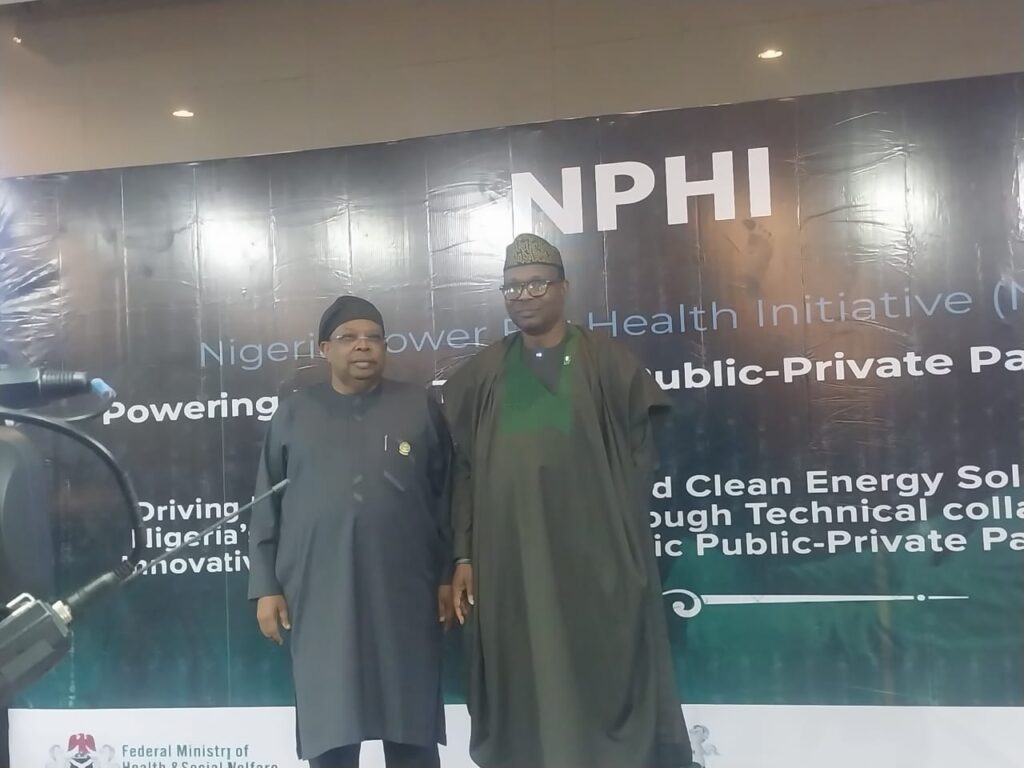
The federal government has stepped up efforts to attract private capital into healthcare infrastructure with the unveiling of an investment-driven model geared towards providing reliable electricity to at least 30% of Nigeria’s health facilities by 2027.
The initiative, under the Nigeria Power for Health Initiative (NPHI), seeks to leverage public-private partnerships and energy-as-a-service models to address chronic power challenges in the health sector. The forum brought together government officials, financiers, development institutions, healthcare administrators, energy developers and investors from within and outside Nigeria.
Speaking at the NPHI Investor Matchmaking Forum in Lagos, the Minister of State for Health and Social Welfare, Dr Iziaq Salako, said the programme offered investors opportunities in healthcare electrification while supporting improved health outcomes nationwide.
Salako said inadequate electricity supply remained a major constraint to efficient healthcare delivery, affecting critical services such as surgeries, vaccine storage, diagnostics, blood banking and emergency care. According to him, the high cost of energy also places significant financial pressure on hospitals, limiting resources available for medicines, equipment maintenance and workforce development.
He said the initiative was designed to replace the traditional model of government-funded energy projects, which often suffer maintenance challenges, with a private-sector-led approach that guarantees long-term sustainability.
Under the arrangement, energy companies will finance, install, operate and maintain power systems in health facilities, while hospitals pay for energy services and concentrate on healthcare delivery.
Salako said the programme would initially target federal tertiary hospitals before expanding to primary, secondary and tertiary health facilities in both public and private sectors. He said the initiative was being implemented through a collaborative framework involving the Federal Ministries of Health and Power.
According to him, a steering committee, a 24-member inter-agency technical committee and facility energy management teams have been established to strengthen governance, accountability and investor confidence.
The minister assured investors of the Federal Government’s commitment to creating an enabling environment through policy support and other measures required to attract long-term investment.
He called on commercial banks, development finance institutions, infrastructure funds, climate financiers and renewable energy developers to participate in the programme.
Also, Senior UK PACT Officer, Folakemi Aletan, said unstable electricity supply continued to create operational and financial challenges for healthcare facilities.
Aletan said the UK PACT programme was supporting healthcare institutions to develop bankable projects through energy plans, financial models and investment proposals aimed at attracting private capital, adding that “today represents the point at which all the work we are doing is being tested”.
She added that the forum provided a platform for healthcare providers, investors and energy companies to explore investment opportunities and build strategic partnerships.
Director of Renewable and Rural Power Access, Federal Ministry of Power, Dr Sunday Owolabi, said renewable energy technologies, particularly solar and battery storage systems, offered viable and cost-effective solutions for healthcare facilities. Owolabi urged stakeholders to adopt innovative financing mechanisms, effective risk-management strategies and sustainable business models capable of scaling investment in the sector.
He said improved access to reliable electricity would enhance patient care, strengthen emergency response systems and contribute to better health outcomes.
In her remarks, Director of Hospital Service, Federal Ministry of Health and Social Welfare, Dr Abisola Adegoke, said the initiative followed extensive efforts to address power-related challenges in federal health institutions. She said facility energy management teams had already been established across federal tertiary hospitals, while finance directors had received training to support project implementation and investor engagement.
Adegoke expressed confidence that the initiative would support the government’s target of providing uninterrupted electricity to at least 30% of Nigeria’s health facilities by 2027.
The NPHI is supported by UK PACT and other development partners working with the Federal Government to establish a national framework for sustainable healthcare electrification, particularly in underserved communities.
FG Targets Investors For Healthcare Power Infrastructure