

By Joy Onu
Nigeria has taken a major step towards implementing modern correctional practices with the release of 10 inmates on parole in Abia State, the first such exercise since the enactment of the Nigerian Correctional Service (NCoS) Act, 2019.
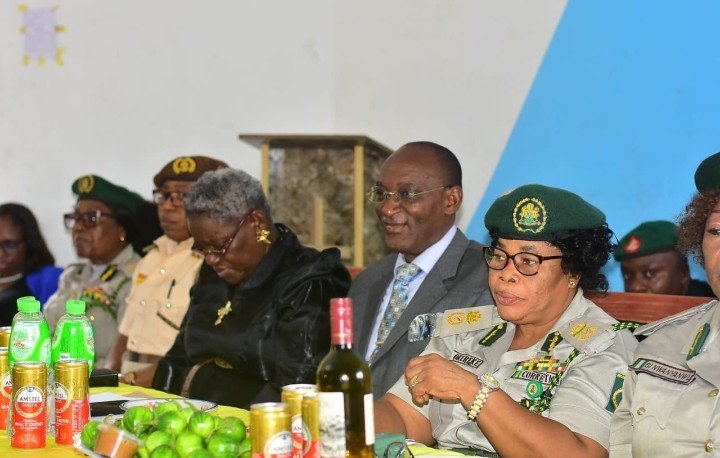
The parole release, conducted at the Medium Security Custodial Centre in Umuahia, is being regarded as a milestone in the country’s efforts to shift from a punishment-centred correctional system to one that prioritises rehabilitation, reintegration and restorative justice.
Officials of the Nigerian Correctional Service said the development marks the practical activation of one of the key provisions of the NCoS Act, which provides for the supervised reintegration of qualified inmates into society.
Speaking at the ceremony on behalf of the Controller-General of Corrections, Sylvester Ndidi Nwakuche, the Assistant Controller-General of Corrections and Zonal Coordinator, Ngozi Okeke, said the initiative demonstrates the Service’s commitment to implementing reforms aimed at transforming correctional administration in Nigeria.
She explained that parole allows carefully assessed inmates to serve part of their remaining sentences within the community under supervision, while maintaining accountability and public safety.
According to her, the programme is expected to reduce repeat offending, improve the rehabilitation of offenders and help address overcrowding in custodial centres across the country.
Okeke commended the Abia State Command for becoming the first command to implement the parole system and setting a benchmark for others.
She also acknowledged the support of members of the Abia State Parole Board, the judiciary and other stakeholders within the criminal justice sector whose collaboration facilitated the successful rollout of the programme.
The Controller-General further praised the contributions of Prisoners Rehabilitation and Welfare Action (PRAWA), the International IDEA Programme and the Rule of Law and Anti-Corruption Programme (ROLAC), describing their partnership as instrumental to ongoing correctional reforms and reintegration initiatives.
Earlier, the Controller of Corrections in Abia State, Nwanyanwu Blessing Ifeoma, said the exercise reflects the Service’s growing emphasis on rehabilitation-focused corrections.
Chairman of the Abia State Parole Board, Justice Obisike Oji, noted that parole should not be misconstrued as a pardon or clemency. Rather, he said, it is a structured legal mechanism that enables deserving inmates to return to society under carefully monitored conditions.
He urged the beneficiaries to remain law-abiding and become responsible members of their communities.
Representatives of the judiciary, security agencies, civil society organisations and development partners who attended the event described the parole exercise as a positive step towards strengthening Nigeria’s criminal justice system.
President of PRAWA, Professor Uju Agomoh, applauded the Nigerian Correctional Service for operationalising a major provision of the NCoS Act and reaffirmed the organisation’s commitment to supporting offender rehabilitation and reintegration programmes.
The 10 parolees were drawn from custodial centres in Umuahia, Aba and Arochukwu.
To aid their transition back into society, they received vocational tools, sewing machines and other empowerment materials. Financial assistance was also provided to support transportation and resettlement.
Speaking on behalf of the beneficiaries, one of the parolees expressed gratitude to the Nigerian Correctional Service and its partners for providing an opportunity to rebuild their lives.
The Controller-General used the occasion to call on community leaders, religious institutions, employers and members of the public to support the reintegration of parolees and former inmates.
He stressed that successful reintegration is vital to reducing crime, improving public safety and building more inclusive communities.
The successful implementation of parole in Abia State marks an important step towards the nationwide adoption of the system as authorities pursue more sustainable approaches to offender rehabilitation and custodial decongestion.



