

By Joy Onu
Nigeria is currently battling a fast-moving cholera outbreak that has intensified across the North-East and North-Central regions, with Borno State remaining the epicentre while Plateau State has now recorded new cases.
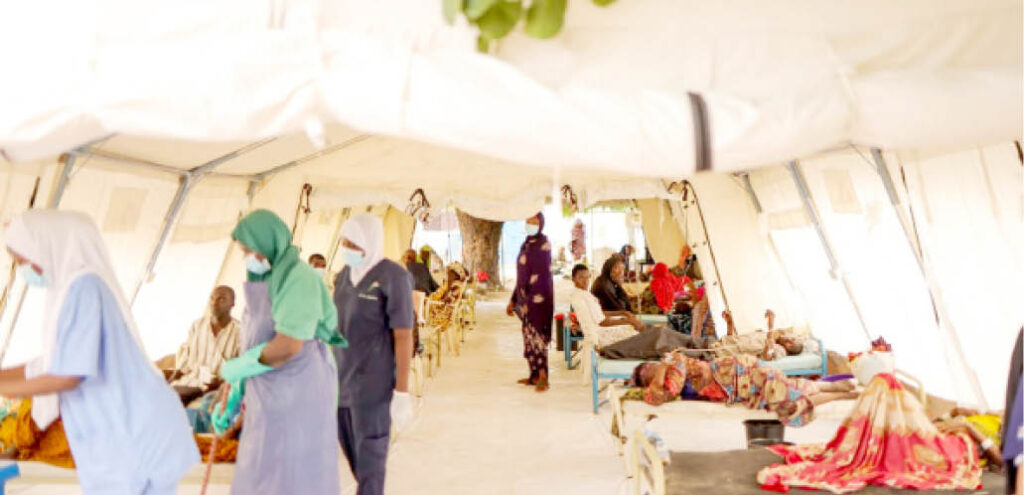
In Borno State, the outbreak, which began in early May 2026, has recorded 7,850 suspected cases and 74 deaths between early May and June 9, according to health responders working with Médecins Sans Frontières, with displacement camps identified as the most affected areas.
The outbreak has spread across 14 of Borno’s 27 local government areas, with overcrowded Internally Displaced Persons camps accounting for more than 90 percent of infections, authorities say.
Maiduguri, the state capital, remains the epicentre, while Monguno IDP camp reported nearly 300 suspected cases in just three days between June 11 and 13, reflecting severe sanitation challenges.
The crisis escalated sharply during the first week of June, when 3,646 new infections and 35 deaths were recorded, with over 500 patients admitted in a single day at treatment centres.
Doctors and aid workers report that over 7,400 patients have been treated so far, with an average of 185 new admissions daily across cholera treatment centres, as health authorities have confirmed the spread of cholera into Plateau State, where 53 suspected cases and five deaths have been reported in Mangu Local Government Area.
Officials in Plateau say cases are concentrated in Pushit, Mangu 1 and Mangu 2 communities, with containment efforts underway to prevent further transmission.
Commissioner for Health Nicholas Baamlong described the situation as contained but urged continued vigilance and urgent public health interventions to curb further spread. He added that the outbreak has been worsened by poor access to clean water, overcrowding in displacement camps, and seasonal rainfall increasing contamination risks across northern Nigeria.
Authorities are preparing vaccination campaigns and expanding treatment centres, hygiene support, and surveillance systems to contain further spread of the disease.
As of early June, the overall case fatality rate stood at 0.6 percent, with adults aged 21 to 50 most affected, followed by adolescents and children.
Health facilities, including cholera treatment centres, continue to operate across affected states to manage cases and prevent further deaths.
Public health experts have called for stronger water, sanitation and hygiene systems, especially in vulnerable communities, warning that without urgent investment and a coordinated response, the outbreak could continue to spread across northern states during the rainy season, placing additional pressure on already fragile healthcare infrastructure and displacement settlements across the country.


