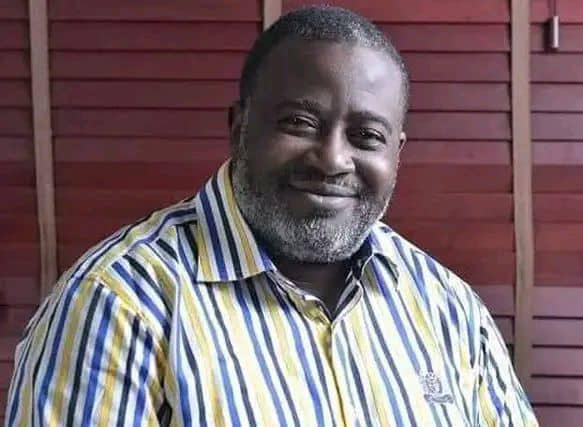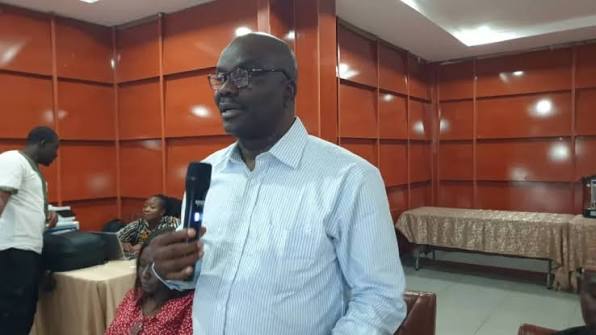
Benson Agbro, Disaster Director of the Nigerian Red Cross Society, has spent decades on the frontlines of humanitarian response. In this interview with Ameh George, Assistant Editor, and Theodora Obayanjie, Correspondent, he discusses Nigeria’s growing disaster risks, the challenges of responding to floods and conflict-driven displacement, the impact of climate change, and why stronger preparedness, funding and community resilience are critical to saving lives. Excerpts:
Nigeria continues to face insurgency and insecurity, with IDP camps across several states. How does the Red Cross respond to victims in these contexts, and what form of support is provided?
We do a lot of distribution of relief materials. There are hundreds of thousands of beneficiaries involved in our interventions. We work quietly because of the sensitivity of some of these emergencies. When there is flooding, you will see the Red Cross working visibly with other agencies on the ground. In many cases, state emergency management agencies manage camps. In other instances, organisations like the International Organisation for Migration, IOM, take charge. For example, in Benue State there is a large IDP camp managed by IOM, and the Red Cross supported it with registration and coordination.
We work with different agencies, World Food Programme, IOM, and others. During the dam collapse in Maiduguri, I represented the Red Cross alongside UN agencies and other humanitarian actors. We visited IDP camps and conducted assessments. In major disasters, no single organisation works alone. In Niger State, for instance, we worked for weeks with SEMA and other partners, providing temporary shelters, psychosocial support, dignity kits, and rehabilitation assistance. We also rely on support from the International Federation of Red Cross and Red Crescent Societies, as well as partners like ECHO and government donors. Through these partnerships, we preposition relief items in warehouses across the country so we can respond immediately when disasters occur.
Beyond flooding, Nigerian cities face environmental threats such as illegal mining, rock blasting, deforestation, and excessive borehole drilling. What are the long-term implications, and what should communities do?
We work with different agencies on environmental and disaster-related issues. For example, we are currently engaged in afforestation programmes in Jigawa and also working on drought and land degradation interventions in parts of the North. Our role is auxiliary. Regulatory enforcement on mining and environmental violations lies with relevant government ministries and agencies. However, citizens have a responsibility to report illegal activities such as illegal mining to appropriate authorities, and sanctions should be applied where necessary. Unregulated activities such as excessive borehole drilling and environmental degradation have long-term consequences. In other parts of the world, such practices have contributed to landslides and ground instability. We are not prepared for such events here. Prevention is key. We focus heavily on disaster preparedness and mitigation. Some disasters cannot be stopped, but their impact can be reduced. Communities must maintain drainage systems, obey building codes, and avoid blocking waterways. When drainage channels are blocked, flooding becomes inevitable. These are practical, non-complex measures that significantly reduce disaster risk.
Climate change is now a global concern. What climate risks should Nigeria prepare for in the next decade?
We cannot predict with certainty what will happen in the next decade. However, what is clear is that flooding and drought remain the dominant risks we are currently dealing with. We never anticipated COVID-19, yet it happened. So, we must remain open to unexpected events. For now, flood and drought are the two major climate-related hazards shaping our preparedness work. Climate change also interacts with other issues. For example, resource scarcity affects livelihoods and movement patterns. When grazing resources reduce in the North, it contributes to migration pressures and sometimes conflict. Many of the crises we see today have climate dimensions attached to them. We cannot stop all these developments, but we can strengthen preparedness systems and response capacity.
From your perspective, what systemic weaknesses continue to hinder Nigeria’s disaster response?
The first major challenge is bureaucracy.In emergencies, timing is critical. We refer to the “golden hour” in emergency response. If administrative processes delay intervention, lives can be lost, and livelihoods are severely affected.The second issue is poor preparedness and weak maintenance culture.Infrastructure must be regularly assessed – bridges, buildings, and public systems – require ongoing evaluation and reinforcement.Many disasters occur not only because of natural forces but because systems are not maintained or upgraded.Another gap is community-level capacity. In flood-prone areas, people should be trained in basic survival skills, including first aid, rescue techniques, and safety practices.First aid is simple, yet its absence leads to preventable deaths. Improper handling of injured persons often worsens outcomes before they reach hospitals.Basic skills can significantly reduce mortality during emergencies.
Many people argue that Nigeria focuses more on emergency response than prevention. Do you agree?
Prevention and anticipatory action do take place. The Nigerian Meteorological Agency, NiMet, releases seasonal climate predictions every year. The Nigeria Hydrological Services Agency, NIHSA, issues flood forecasts. NEMA convenes stakeholders annually for preparedness workshops to map responsibilities for rescue, health, psychosocial support, firefighting, and other response areas.The Red Cross plays its role in every flood incident. NEMA and State Emergency Management Agencies are always present. Each agency has defined responsibilities. The real issue is capacity. Do these institutions have adequate funding, equipment, logistics, and personnel to carry out their mandates?Early warning systems exist. Planning meetings are held. Forecasts are released. The challenge is translating those plans into effective action on the ground.
Would you say most disasters in Nigeria are man-made or natural?
Not entirely. Some disasters are climate-induced, while others are influenced by human activity. It is a combination of both. Natural events such as rainfall are not man-made. However, human activities such as deforestation, rock blasting, illegal mining, and uncontrolled borehole drilling increase vulnerability. So, disasters often result from an interaction between natural forces and human actions. It is also important to note that natural disasters such as floods and droughts often cause the highest number of casualties. For example, tremors may occur without significant loss of life, but floods and droughts can affect large populations and cause widespread fatalities. That is why preparedness must address both natural and human-induced risks.
If you had the opportunity to implement three immediate policy changes that could significantly reduce disaster risks, what would they be and why?
First is anticipatory action. It saves lives and reduces costs significantly. Preparing before disasters occur is more effective than reacting after the fact. Second is stronger funding for disaster management institutions such as NEMA, NiMet, and the Nigeria Hydrological Services Agency. These agencies are responsible for forecasting, early warning, and advisory services. They are doing their best, but stronger institutional support will improve their effectiveness. Third is improved commitment from state governments. Not all states have functional emergency management agencies. Some exist only in name. States must invest in preparedness, mitigation, and response systems. Disaster management must be properly funded at both federal and state levels, including support for humanitarian organisations.
Do humanitarian organisations exist because governments are not doing enough?
No. Humanitarian organisations exist globally, even in countries with strong governments. The American Red Cross, British Red Cross, German Red Cross, and others all operate in well-governed systems. Each organisation has a defined mandate. The challenge in Nigeria is often awareness and access to existing support systems, such as counselling units in hospitals, which many people are not aware of. Psychosocial support structures already exist, but utilisation and awareness remain low.
How does the Red Cross gain access to communities affected by conflict and insecurity?
Through trust built over time. We work in communities long before crises occur, often through Community First Aid Teams and volunteer networks. Because of this long-standing presence, communities already recognise and accept the Red Cross when emergencies happen. We do not take sides. Neutrality is one of our core principles. Our focus is strictly humanitarian, if someone is injured, the concern is treatment, not affiliation. That neutrality allows access even in volatile environments.
Does insecurity in Nigeria restrict humanitarian access, and how do you manage risks to staff and volunteers?
We take security seriously, and we have structured protocols before deployment. Our staff and volunteers undergo security clearance processes before field movement. However, the Red Cross emblem is not a guarantee of safety. Our teams face the same risks as other civilians. Despite that, insecurity does not stop humanitarian operations. We operate in high-risk environments globally, including conflict zones. Nigeria is not unique in that regard. The key is risk management, not avoidance of duty.
Volunteerism appears to be declining in Nigeria. What is responsible for this?
Several factors contribute. There is increasing bureaucracy in establishing volunteer units in schools and institutions. In addition, economic pressures are significant. Many people are focused on survival and income generation rather than volunteering. We currently have about one million volunteers in a country of over 200 million people, and not all are active.
Some people register primarily for certification or migration opportunities rather than long-term service. The spirit of volunteerism is under pressure. That is why school-based recruitment is important, but access to public schools has become more difficult due to administrative and political barriers.
What is one thing Nigerians should know about psychosocial support?
Many Nigerians are unaware that counselling services exist in hospitals. Trained counsellors are employed in hospitals specifically to support people facing emotional and psychological challenges. Greater awareness is needed so the public knows these services are available and can access them, especially after traumatic incidents.
What philosophy has guided your decades in humanitarian work?
The best life is one that serves humanity, not one that only seeks wealth. I joined the Red Cross as a secondary school student and never imagined it would become my life’s work. Over the years I have travelled widely, met many people, and had the opportunity to help others. That has been the greatest reward.
What is the single most important message on disaster preparedness for Nigerians?
Preparedness saves lives. Whether it is flooding, drought, insecurity, or accidents, early preparation is always more effective than emergency response. Communities must pay attention to early warning systems, maintain infrastructure, follow safety practices, and support institutions responsible for disaster management. Disasters will occur. The real question is how prepared we are when they do.