

By Joy Onu
The Nigeria Customs Service and the Customs Administration of the Kingdom of the Netherlands have deepened bilateral cooperation with the signing of a Joint Declaration aimed at boosting trade facilitation, enhancing border security, and intensifying the fight against transnational organised crime.
In a press statement signed on Thursday, Abdullahi Maiwada, Deputy Comptroller of Customs and National Public Relations Officer for the Comptroller-General of Customs, confirmed that the agreement was formally concluded on Wednesday, June 24, 2026, in Brussels.
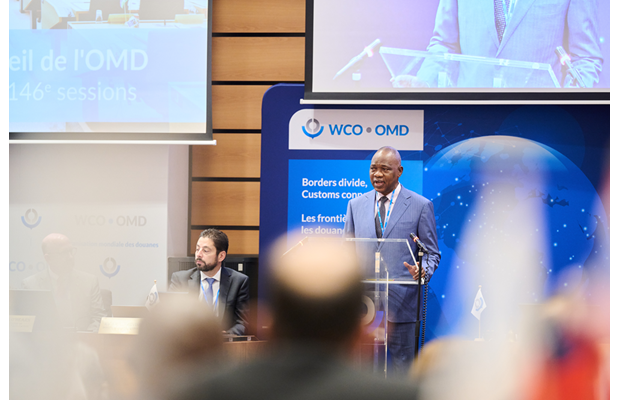
He stated that the Joint Declaration was signed by the Comptroller-General of the Nigeria Customs Service, Adewale Adeniyi, alongside the Director-General of Netherlands Customs, Nanette Van Schelven.
The Joint Declaration follows a series of high-level engagements between both customs administrations, including a working visit by the Nigeria Customs Service to the Netherlands in October 2025 and a subsequent visit by Dutch customs officials to Nigeria in March 2026, all geared towards strengthening institutional collaboration.
According to the agreement, both agencies will expand cooperation in critical areas such as risk management, cargo clearance systems, trade facilitation processes, border control mechanisms, supply chain security, capacity development, and enforcement against illicit trade activities.
The document also recognises Nigeria’s strategic importance as one of West Africa’s leading economies and a key trading partner of the Netherlands, while stressing the need for stronger customs cooperation and institutional capacity-building to support legitimate trade and curb illegal cross-border activities.
It further raised concern over increasing cases of narcotics trafficking, psychotropic substances and their precursors, counterfeit goods, wildlife products, and weapons smuggling, noting that such threats require coordinated international responses.
Speaking during the signing, Adeniyi said the Netherlands Customs had shown the immense value of international collaboration in addressing emerging challenges in global trade and border management.
He stated that the partnership would deepen intelligence sharing, enhance capacity building, improve enforcement efficiency, and support collective efforts to secure international supply chains while facilitating legitimate trade flows.
According to him, “the declaration is a significant milestone in the Service’s international cooperation agenda and a reflection of the strong relationship established between the two Customs administrations over the past years.”
On her part, Van Schelven noted that both administrations are confronted with similar challenges in today’s interconnected global trading system.
She said closer collaboration would encourage mutual learning, strengthen operational capacity, and improve joint efforts to combat transnational organised crime while ensuring more efficient and transparent trade processes.
According to her, both agencies face shared challenges in an increasingly interconnected global trading environment, and stronger cooperation would help address them more effectively.
The Joint Declaration further commits both parties to sustained collaboration through exchange of expertise, structured training programmes, knowledge sharing, and the development of formal cooperation frameworks.
It also provides a foundation for a joint work plan and future mechanisms designed to improve border efficiency, promote fair trade practices, strengthen supply chain security, and address both legal and illegal movement of goods across borders.



