

By Victoria Yakubu
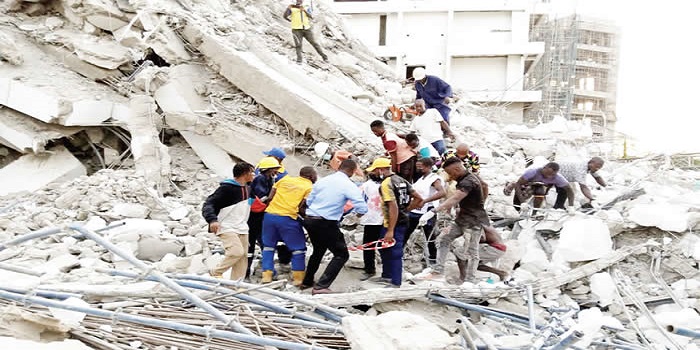
Residents across the Federal Capital Territory (FCT) and other parts of Nigeria have expressed growing concern over the recurring incidents of building collapse, saying the trend has left many Nigerians increasingly anxious about the safety of the homes and offices they occupy.
Findings by our Correspondent indicate that reports of collapsed buildings have become increasingly common in major cities, including Abuja and Lagos, prompting many prospective tenants and homeowners to pay closer attention to structural safety before renting or purchasing property.
Mr. Mathew Saliu, who witnessed a previous building collapse in Ikoyi, Lagos State, described the incident as one of the most traumatic experiences of his life.
“I thought it was an earthquake when I rushed out of my apartment. I felt the building move and knew something was wrong,” he recalled.
The experience, he said, has made him more cautious whenever he searches for accommodation.
“Since that incident, I always inspect any apartment carefully before renting it, especially if it is a high-rise building. I still can’t get over what happened,” he added.
Another survivor, Mr. Abraham Dennis, told the New National Star that warning signs were overlooked before the building he occupied collapsed.
“I noticed cracks on one of the pillars of my apartment before the incident, but I ignored them,” he said.
Many residents expressed similar concerns. Mrs. Chinyere Okeke, an Abuja resident, said she now checks buildings for visible structural defects before moving in.
“I no longer trust multi-storey buildings the way I used to. Whenever I hear about another building collapse, I begin to wonder whether the one I live in is truly safe,” she said.
Similarly, Mr. Kabiru Sani, an Abuja resident, said his family now considers a building’s approval status and the credibility of its developer before deciding to rent it.
“If we are looking for a house now, one of the first questions we ask is who built it and whether it was properly approved. Nobody wants to become the next victim,” he said.
Construction professionals attributed many of the incidents to poor planning, substandard building materials, weak regulatory enforcement and the exclusion of qualified professionals from construction projects.
A registered builder in Abuja, Mr. Micah Dung Pam, said building collapse is rarely caused by a single factor. “In most cases, it results from poor planning, substandard materials, inadequate structural design, poor workmanship, lack of proper supervision and failure to comply with approved building standards. Another major cause is the exclusion of qualified professionals from the construction process in an attempt to cut costs.”
Pam noted that the consequences extend beyond the loss of lives, destroying valuable property, displacing families, disrupting businesses and eroding public confidence in the construction industry.
He urged developers and property owners to engage licensed professionals throughout the construction process, stressing that the cost of hiring qualified experts is insignificant compared with the devastating consequences of structural failure.
Property expert Mr. Silas Paul also blamed the recurring incidents on the activities of unqualified builders and weak regulatory oversight.
“As long as the government fails to address this problem, non-professionals will continue to undertake construction projects, putting the lives of Nigerians at risk,” he warned.
Industry stakeholders estimate that Nigeria has recorded dozens of building collapse incidents in recent years, resulting in hundreds of deaths and injuries. Many of the cases have been linked to poor compliance with building regulations, inadequate supervision and the use of substandard materials.
Urban planning experts also warned that rapid urbanisation, poor development control and construction on unsuitable sites have further increased the risk of structural failures.
Residents and industry professionals are therefore calling for stricter enforcement of building regulations, routine inspections of construction projects and tougher sanctions against developers who violate approved standards.
They also urged government agencies to strengthen oversight of construction activities and ensure that only qualified professionals supervise building projects.
For many Nigerians, the issue has gone beyond construction standards. It is now about the assurance that homes, offices and public buildings are safe for occupation and do not become death traps.



