

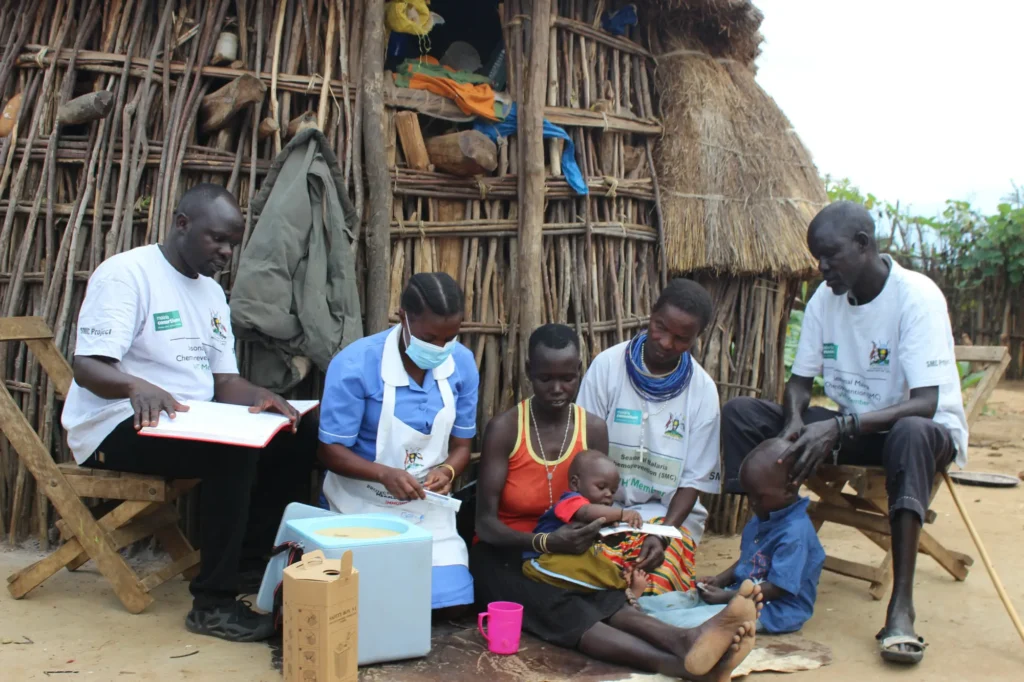
As Nigeria enters another rainy season, malaria infections are expected to rise once again. Despite decades of government programmes, WHO-backed interventions, improved medicines and the rollout of malaria vaccines, the disease continues to claim lives, strain the healthcare system and impose a heavy economic burden. JOY ONU writes to examine why malaria remains one of Nigeria’s most persistent public health challenges and why millions of Nigerians continue to battle a disease that is both preventable and treatable.
The arrival of the rainy season across Nigeria brings welcome relief from the scorching heat and renewed hope for farmers as crops begin to flourish. Yet, alongside the life-giving rains comes a familiar and deadly public health threat that has continued to haunt millions of Nigerians for generations: malaria.
Across hospitals, primary healthcare centres and community clinics, health workers are preparing for what has become an annual pattern: a sharp increase in malaria cases as rainfall creates ideal breeding conditions for mosquitoes. Every year, thousands of children, pregnant women and other vulnerable Nigerians are admitted with malaria-related complications, while many families spend significant portions of their income on treatment, transportation and hospital care.
Although malaria is both preventable and treatable, it remains one of Nigeria’s leading causes of illness and death. The disease continues to affect households, disrupt education, reduce productivity and place enormous pressure on an already stretched healthcare system.
Recent figures from the Federal Ministry of Health and Social Welfare underscore the magnitude of the challenge. Between January and September 2025, Nigeria recorded 24,467,232 confirmed malaria cases, with infections increasing steadily from more than 7.3 million cases in the first quarter to over 9.3 million in the third quarter.
The Nigerian figures reflect a broader global burden. According to the World Health Organisation (WHO) World Malaria Report 2025, an estimated 282 million malaria cases and about 610,000 deaths were recorded globally in 2024. Africa continues to bear the greatest burden, accounting for approximately 94 per cent of global malaria cases and 95 per cent of deaths. Children under five years remain the most vulnerable, representing about 75 per cent of malaria-related deaths across the African region.
Despite remarkable advances in medicine, improved diagnostic tools, effective antimalarial drugs, long-lasting insecticide-treated mosquito nets and the introduction of malaria vaccines, Nigeria continues to shoulder one of the world’s heaviest malaria burdens.
The persistence of malaria in the 21st Century raises important questions about why the disease continues to flourish despite decades of interventions by governments, international organisations, researchers and development partners.
Medical experts said that one of the biggest reasons is that the rainy season creates the perfect environment for mosquitoes to breed and multiply.
Rainwater often collects in potholes, blocked drainage channels, discarded tyres, broken containers, construction sites, abandoned cans, refuse dumps and other stagnant water bodies. These become breeding grounds for female Anopheles mosquitoes, which transmit the malaria parasite from infected individuals to healthy people.
The rainy season also brings increased humidity and warm temperatures that prolong mosquito survival and accelerate the development of the malaria parasite inside the mosquito, making transmission easier and faster.
Public health experts note that malaria cases usually surge a few weeks after heavy rainfall because mosquito populations multiply rapidly during this period. Communities with poor drainage systems, overcrowded housing, poor sanitation and limited access to preventive measures often record the highest infection rates.
Children under the age of five and pregnant women remain particularly vulnerable because of their lower immunity. Without early diagnosis and prompt treatment, malaria can quickly progress to severe anaemia, organ failure and death.
While the rains trigger seasonal increases in malaria transmission, experts insist that the disease has survived far beyond what should be expected in the modern era because of a combination of environmental, economic and social challenges.
Poverty continues to prevent many Nigerians from seeking early medical attention. Poor housing exposes families to mosquito bites, while blocked drains, indiscriminate waste disposal and inadequate environmental sanitation provide mosquitoes with countless breeding sites.
Climate variability has also altered rainfall patterns in many communities, extending mosquito breeding seasons and increasing transmission risks. Healthcare professionals argue that malaria should no longer be viewed simply as a seasonal illness but as a reflection of broader development challenges, including weak infrastructure, poor urban planning, inadequate sanitation, unequal access to healthcare and limited public awareness.
Behind every malaria statistic is a human story. For many Nigerian families, malaria has become an annual cycle of fear that begins with the rains. A child develops a fever, but because laboratory tests, consultation fees and medicines appear expensive, parents often resort to self-medication or buy drugs from nearby patent medicine stores.
Sometimes the fever subsides temporarily. In other cases, the illness worsens, forcing desperate families to seek emergency medical care after valuable time has been lost.
A resident of Kuchigoro Community along Airport Road in Abuja, Mrs. Rafaatu Abubakar, recalled how her son’s condition deteriorated before he was eventually taken to hospital.
“They admitted us and gave him blood,” she said, adding that she believes the outcome could have been tragic had they delayed seeking professional medical attention any longer.
Another mother from Masaka, Nasarawa State, Ummul Khairi, expressed gratitude after her child received prompt treatment at a health facility, saying the care restored her hope.
Similar stories are repeated across Nigeria every rainy season. Beyond the physical suffering, malaria places enormous emotional and financial strain on families. Parents lose workdays while caring for sick children. Pupils miss classes, affecting their academic performance.
Families spend money on transportation, laboratory tests, medicines and hospital bills, often sacrificing other essential household needs.
For some Nigerians, malaria has become so frequent that they now consider it part of everyday life. Yet survivors often describe the experience as debilitating, with persistent fever, headaches, weakness, fatigue and body pains that make normal daily activities almost impossible.
Mrs. Njideka Obiora, a tailor in Utako, Abuja, told New National Star that hardly a month passes without her treating malaria.
“There is no month I don’t treat malaria. At one point I became scared and thought I had a more serious health problem, so I went for a comprehensive medical test after seeing a doctor. I do that every year now because it happens too often. Sometimes people tell me it may be because I have the AA genotype. But I am doing everything I can to avoid falling sick all the time,” she
said.
Alhaji Jubril Mikail, a pepper seller at Nyanya Market in Abuja, admitted that many traders have accepted malaria as part of daily living because they often sleep in the market.
“Malaria is no longer a sickness to some of us. I sleep in the market and even now mosquitoes are biting me as I sit here. How can I avoid it? I don’t usually go to the hospital. I prepare herbal mixtures, drink them and the malaria goes away,” he said.
Doctors say this dangerous sense of familiarity has contributed to delayed treatment and unnecessary deaths.
Medical practitioners working in malaria-endemic communities report that health facilities record their highest patient numbers during the rainy season.
Dr. Balarabe Aliru of a government hospital in the northern part of Nigeria but chooses to remain anonymous has observed that severe malaria cases increase significantly during the rainy months, particularly among children, stressing that early diagnosis and prompt treatment often determine whether a patient survives.
Similarly, Dr. Chukwudi Njelita, a physician, has consistently urged Nigerians to sleep under insecticide-treated mosquito nets every night, eliminate stagnant water around their homes and seek prompt medical attention whenever malaria symptoms appear instead of relying on self-medication or unverified remedies.
Despite repeated warnings from health professionals about the dangers of self-medication and the importance of sleeping under insecticide-treated mosquito nets, many Nigerians still do not adopt these preventive measures consistently.
Andrew Paul, a commercial motorcyclist in Kuje, Abuja, said avoiding mosquitoes during the rainy season has become almost impossible because of poor environmental conditions around his home.
“Whenever I feel I have malaria, I buy antimalarial drugs and take them. Sleeping inside a mosquito net is difficult because my wife, our two children and I all live in one small room.
Around my house there are open gutters everywhere. I now prepare herbs at home whenever I notice the symptoms, and everyone in my family drinks them. But the government should also help by fumigating our environment. We deserve that,” he said.
Andrew’s experience mirrors that of many low-income Nigerians who continue to rely on self-medication, herbal remedies and over-the-counter drugs while living in environments that expose them to mosquito bites every day. Public health experts warn that unless environmental sanitation improves alongside better access to healthcare, many households will remain trapped in this cycle.
Health experts warn that one of the greatest obstacles to malaria control remains the widespread practice of treating fever without proper diagnosis.
Across many communities, people still purchase antimalarial medicines without first confirming malaria through a rapid diagnostic test or laboratory examination. Others depend on leftover medicines, herbal concoctions or recommendations from friends and neighbours.
Medical professionals caution that not every fever is caused by malaria. Treating the wrong illness wastes valuable time and may allow more serious diseases to progress unnoticed.
They also warn that incomplete doses, inappropriate medicines and poor-quality or counterfeit drugs increase the risk of treatment failure and severe complications.
According to health experts, the continued culture of self-medication, delayed hospital visits and financial hardship is fuelling preventable illness and avoidable deaths across the country. They argue that malaria is no longer merely a medical challenge but also a social, economic, environmental and governance issue that requires a coordinated national response.


