

By Victoria Yakubu
Many residents of the Federal Capital Territory (FCT) are relocating to neighbouring satellite towns as soaring house rents, inflation and stagnant incomes make living in Abuja increasingly unaffordable.
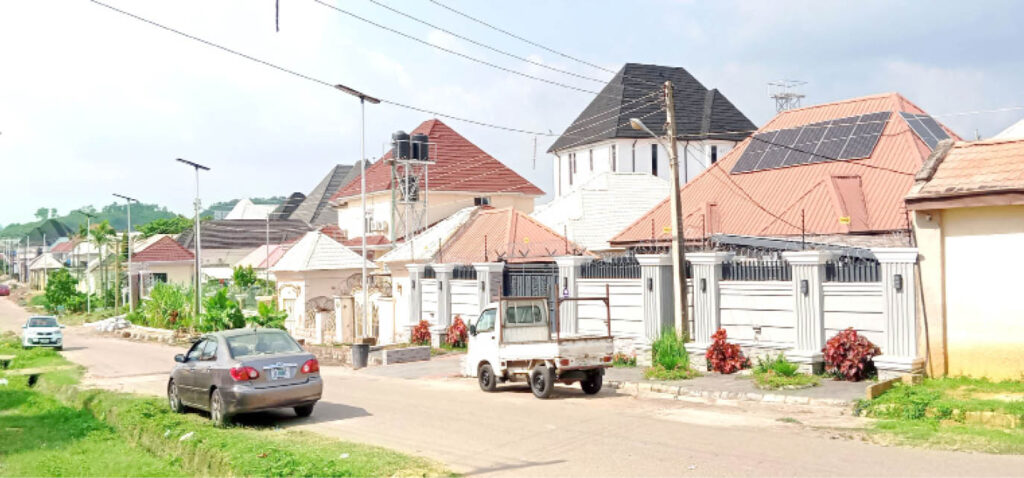
A survey by the New National Star across Abuja and neighbouring communities in Nasarawa State found that many families, civil servants and young professionals who once lived in Gwarinpa, Lokogoma, Jahi, Apo and Wuse have relocated to Mararaba, Karu, Nyanya, Lugbe, Kuje and Ado in search of more affordable accommodation.
The relocation has, however, increased demand for housing in the satellite towns, placing additional pressure on roads, transportation and public infrastructure.
For many residents, relocating has become a matter of necessity rather than choice.
Mr. Oki Olatunde, who recently moved from Apo to Karu, said he could no longer afford his apartment after his landlord increased the rent.
“When my landlord informed me of the increase, I realised I couldn’t afford to remain in Abuja. My salary has remained the same while the cost of almost everything keeps rising. After searching for another affordable apartment, I decided to move to Karu,” he said.
Although his new rent is lower, Olatunde said transportation now consumes much of what he saves. “I leave home before dawn to beat traffic. What I save on rent, I spend on transport.”
Mrs. Julie Daniel shared a similar experience, saying her family was forced to leave Gwarinpa after repeated rent increases.
“We loved our neighbourhood because our children had settled into school, but the rent became too expensive. We now spend several hours every week commuting from Mararaba, and it has affected both our finances and family life,” she said.
The rising cost of housing is also taking a toll on young professionals seeking to establish themselves in the capital.
A resident who identifies himself as Charles, recently secured a job in the FCT, but said he had to share a flat with friends because renting an apartment alone would consume almost his entire salary. “I expected to get my own apartment after a few months, but the rent would take almost all my salary. I now share a flat with two friends because it is the only affordable option.”
Meanwhile, residents of satellite communities said the influx of newcomers from Abuja has become increasingly noticeable.
A Nyanya resident, Ibrahim Momoh, said many of the new arrivals tell the same story. “They simply cannot afford Abuja rents anymore. They are moving because they have no choice.”
In Mararaba, another resident who declined to mention her name, said the growing population is changing the community in many ways.
“Houses no longer stay vacant for long, the roads are busier and even finding affordable accommodation here is becoming more difficult,” she said.
Estate agents also confirmed that demand for houses in satellite towns has risen significantly.
An estate agent, Miss Sandra Tony, said many prospective tenants initially search for apartments in Gwarinpa, Jahi and Wuse but eventually settle for Karu, Mararaba, Nyanya or Lugbe after discovering that rents are beyond their budgets.
She added that many tenants now opt for one-bedroom or self-contained apartments instead of larger homes, while others request to pay rent in instalments because paying one or two years’ rent upfront has become increasingly difficult.
Another estate agent, Mr. Noah Adams, said many families are downsising or sharing apartments with relatives and friends to reduce housing costs.
Landlords, however, argued that rising rents are largely driven by the increasing cost of building and maintaining houses.
A property owner, who spoke on condition of anonymity, said the prices of cement, roofing materials, paint, labour, security and maintenance have risen sharply, forcing many landlords to review their rents.
“Many people blame landlords whenever rents go up, but construction and maintenance costs have also risen sharply. Those expenses eventually reflect in rental prices,” he said.
Housing experts attributed Abuja’s worsening affordability crisis to rapid population growth, inflation, limited housing supply, rising construction costs and inadequate investment in affordable housing.
They warned that unless governments and private developers expand affordable housing and improve infrastructure in satellite communities, more residents will continue leaving Abuja while neighbouring towns grapple with overcrowding and mounting pressure on public services.
For many families, relocating has lowered housing costs but created new financial and social burdens, including longer commuting hours, higher transportation expenses and less time with loved ones.
As the cost of living continues to rise, many residents say the dream of owning or renting a comfortable home within Abuja is gradually slipping out of reach, leaving thousands of households with little option but to seek more affordable accommodation outside the city.



