

By Joy Onu
Cervical cancer remains one of Nigeria’s deadliest yet most preventable diseases, claiming the lives of thousands of women each year despite remarkable advances in medical science that have made it largely avoidable through vaccination, regular screening and early treatment.
Yet for many Nigerian women, these life-saving interventions remain beyond reach. Poor awareness, inadequate screening services, financial hardship, cultural barriers and late presentation at health facilities continue to deny countless women the opportunity to detect the disease before it becomes life-threatening. Consequently, many patients are diagnosed only after the cancer has progressed to an advanced stage, when treatment becomes more complex, more expensive and the chances of survival decline significantly.
According to estimates by the World Health Organisation (WHO) and the HPV Information Centre, Nigeria records between 12,000 and 13,676 new cases of cervical cancer every year, while approximately 7,000 to 8,000 women die annually from the disease. These figures place Nigeria among the countries with the highest cervical cancer burden in Africa, where the disease remains the second most common cancer affecting women, particularly those aged between 15 and 44 years.
To health experts, these are not just statistics. They represent mothers, wives, daughters and sisters whose lives could have been saved through timely prevention and early diagnosis.
Unlike many cancers that progress rapidly, cervical cancer develops slowly, often over a period of 10 to 20 years. This lengthy progression provides a crucial window for healthcare providers to detect and treat precancerous changes before they become invasive cancer.
Unfortunately, that opportunity is often missed. Cervical cancer begins in the cells lining the cervix, the lower part of the uterus that connects to the vagina. This disease is caused almost entirely by persistent infection with high-risk strains of the Human Papillomavirus (HPV), one of the most common viral infections transmitted through sexual contact.
Medical research has consistently shown that HPV types 16 and 18 account for the majority of cervical cancer cases worldwide.
Fortunately, not every HPV infection develops into cancer. Doctors explain that in most women, the body’s immune system naturally clears the virus within one or two years without causing permanent damage, but problems arise when infection with high-risk HPV persists over several years.
As the virus remains in the body, it can alter normal cervical cells by producing proteins known as E6 and E7, which disable the body’s natural tumour-suppressing mechanisms. Over time, these damaged cells multiply uncontrollably, developing first into precancerous lesions and eventually into invasive cervical cancer if left untreated.
This slow progression explains why medical professionals repeatedly stress that cervical cancer is one of the few cancers that can be prevented almost entirely through vaccination and routine screening.
Although persistent HPV infection is the principal cause of cervical cancer, health experts say several other factors increase a woman’s risk of developing the disease. These include early sexual activity, multiple sexual partners, smoking, repeated childbirth, prolonged use of hormonal contraceptives, poor nutrition and conditions that weaken the immune system, particularly HIV infection.
Women living with HIV face an even greater risk because weakened immunity makes it more difficult for the body to eliminate HPV infection, allowing the virus to persist and progress more rapidly.
Healthcare professionals therefore advise sexually active women, especially those with additional risk factors, to undergo regular cervical cancer screening.
One of the greatest challenges in Nigeria’s response is that cervical cancer rarely produces symptoms during its early stages.
Many women feel completely healthy while abnormal changes are already developing in the cervix. By the time warning signs such as abnormal vaginal bleeding, pelvic pain, painful sexual intercourse or unusual vaginal discharge appear, the disease may already have spread beyond its earliest stages.
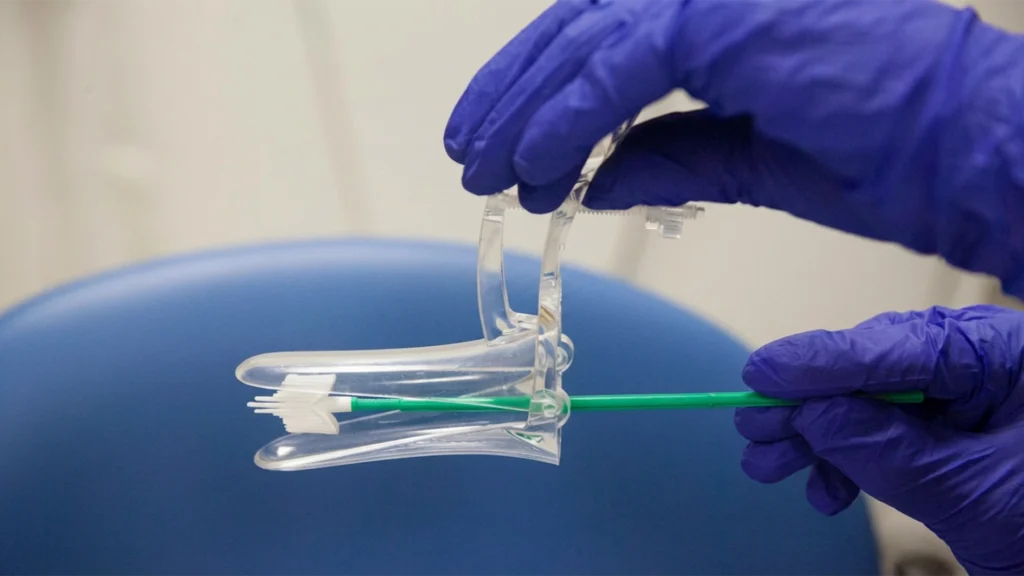
That is why screening remains one of the most effective weapons against cervical cancer. Tests such as the Pap smear, HPV DNA testing and Visual Inspection with Acetic Acid (VIA) enable healthcare workers to identify abnormal cervical cells long before they become cancerous. When detected early, these precancerous lesions can often be treated through relatively simple procedures, preventing cervical cancer from developing altogether.
Doctors say the difference between early and late diagnosis can literally mean the difference between cure and lifelong treatment.
Women diagnosed while the disease is still confined to the cervix often undergo surgery or radiotherapy and may never require chemotherapy. Survival rates in such cases approach 90 per cent.
However, once the cancer spreads to nearby tissues or lymph nodes, treatment usually requires a combination of chemotherapy and radiotherapy, while long-term survival falls considerably.
If the disease spreads to distant organs such as the lungs, liver or bones, complete recovery becomes far less likely. At that stage, treatment focuses mainly on slowing the disease, relieving symptoms, improving quality of life and extending survival.
Medical experts describe the HPV vaccine as one of the most significant breakthroughs in cancer prevention.
The vaccine protects against the HPV strains responsible for most cervical cancer cases and works best when administered before exposure to the virus. Based on strong scientific evidence showing high protection against persistent HPV infection, the World Health Organization now recommends a single-dose HPV vaccine for girls aged between nine and 14 years.
Nigeria adopted the recommendation in 2023 by introducing the vaccine into the country’s routine immunisation programme.
Public health experts say the single-dose approach offers enormous advantages. It simplifies vaccine delivery, reduces programme costs, minimises missed appointments and allows health authorities to reach far more girls with available resources.
Higher vaccination coverage not only protects individual girls but also reduces future circulation of high-risk HPV strains within communities, lowering the country’s overall cervical cancer burden.
Health experts, however, caution that vaccination alone cannot eliminate cervical cancer. While the vaccine protects against future HPV infection, it does not treat infections that already exist.
For this reason, women who are already sexually active are encouraged to undergo regular screening even if they have been vaccinated.
Despite growing awareness about cervical cancer, screening uptake across Nigeria remains disappointingly low, presenting one of the greatest obstacles to the country’s elimination ambitions.
Urban women generally have greater access to healthcare facilities than their rural counterparts, yet studies show that many still fail to undergo routine cervical cancer screening.
Health researchers attribute the poor uptake to inadequate public education, fear of receiving a cancer diagnosis, embarrassment associated with pelvic examinations, cultural misconceptions and the failure of many healthcare providers to routinely recommend screening during hospital visits.
Busy work schedules, childcare responsibilities and the cost of screening also discourage many women from taking advantage of available services.
The challenges are even greater in rural communities, where many primary healthcare centres lack trained personnel and the equipment needed to carry out cervical cancer screening. Women often travel long distances to facilities offering Pap smear or HPV DNA testing, while transportation costs and loss of income further discourage attendance. Poor awareness, misinformation, traditional beliefs and limited decision-making power among some women also contribute to delayed screening and diagnosis.
Although access remains uneven, cervical cancer screening is available in several federal and state-owned health facilities across Nigeria. Many teaching hospitals, Federal Medical Centres, specialist oncology centres and selected general hospitals provide screening services using Pap smears, HPV DNA testing and Visual Inspection with Acetic Acid (VIA).
Facilities such as the National Hospital Abuja, the University of Abuja Teaching Hospital, the University College Hospital, Ibadan, the Lagos University Teaching Hospital, Ahmadu Bello University Teaching Hospital and Jos University Teaching Hospital are among the tertiary institutions providing screening and referral services. In recent years, some primary healthcare centres have also begun offering VIA screening as part of efforts to expand access.
Health experts, however, believe that integrating cervical cancer screening into routine primary healthcare, antenatal care and maternal health services would significantly improve early detection, particularly in underserved rural communities.
Once cervical cancer develops, treatment depends largely on the stage of the disease. Women diagnosed early often undergo surgery or radiotherapy and have excellent chances of long-term survival, with many never requiring chemotherapy. However, when the cancer spreads beyond the cervix into surrounding tissues or nearby lymph nodes, chemotherapy is usually combined with radiotherapy to improve treatment outcomes.
Doctors commonly use cisplatin-based chemotherapy because it increases the sensitivity of cancer cells to radiation. Studies have shown encouraging response rates among women diagnosed before the disease reaches advanced stages.
Unfortunately, many Nigerian women seek medical attention only after the disease has spread to distant organs such as the lungs, liver or bones. At this stage, chemotherapy is no longer primarily aimed at curing the disease but at shrinking tumours, relieving pain, controlling bleeding, easing other symptoms and prolonging survival.
Although newer targeted medicines and immunotherapy have improved outcomes for some patients globally, access to these treatments remains limited in Nigeria because of their high cost and limited availability.
Cancer specialists distinguish between curative and palliative chemotherapy. Curative chemotherapy is administered when doctors believe there is a realistic chance of eliminating the disease completely. It is often combined with surgery and radiotherapy and generally involves more intensive treatment because the goal is complete remission and long-term survival.


