

… Says the South-east is not an enemy of the north
… “We have to forgive ourselves, work together as a family”
By Ameh George
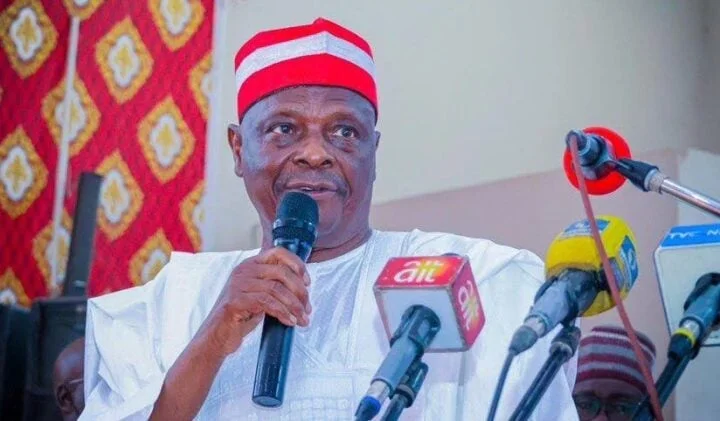
The vice-presidential candidate of the Nigeria Democratic Congress (NDC) for the 2027 general election, Rabiu Kwankwaso, has appealed for forgiveness and reconciliation between the north and South-East regions of the country, describing the region as a long-time ally of the North and calling for the restoration of their historic political partnership ahead of the 2027 elections.
In interview with BBC Igbo, posted on their Facebook page on Wednesday, Kwankwaso urged Nigerians to embrace forgiveness, reconciliation and national unity, saying the country’s progress depends on stronger collaboration across regional, ethnic and religious divides.
He said: “We have to forgive ourselves and work together as one family, the South-East has been our ally and friend over the years. During the time of our fathers in politics, the Northern Peoples Congress formed an alliance with the National Council of Nigerian Citizens led by Nnamdi Azikiwe. Even in the second Republic, you could see our leaders, Shagari and co went for the South-East. So, our leaders had foresight, the civil war finished in 1970.
“When democracy came back, the first thing they said is ‘look they are not our enemies, let’s work together.’ Our leaders of the First Republic worked together with them and that was how they brought Alex Ekwueme to be the Vice President.
“I remember that in Jos in 1999 most of the people who were supporting NPN were supporting Ekwueme but of course on the side of Obasanjo then.”
Kwankwaso reminded those who forgot or didn’t know that the NPN, a Northern party had to invite Ojukwu to come back. “He came back, contested the seat of Senate and lost the election. But beside the fact that he was the leader of Biafra at that particular time, our leaders decided to forgive themselves and forge ahead.
“We can’t be in the same country and start fighting, we need to have the spirit of forgiveness, so I’m happy that we in the North have decided to go back to history and work with the South-East. That does not mean that we are fighting South-West or any zone in this country. We are all friends. You can’t play politics of Muslim-Christian, North or South, not at this level.”
Kwankwaso cited historical political alliances between the Northern People’s Congress (NPC) and the National Council of Nigerian Citizens (NCNC), led by the late Dr. Nnamdi Azikiwe during the First Republic, as evidence of the enduring relationship between the North and the South-East.
The New National Star reports that earlier, Presidential Aspirant of the Nigeria Democratic Congress (NDC), Mr. Peter Obi, had said the time to rescue Nigeria has come, and all hands must be on deck to achieve this in 2027.
Addressing delegates at the first National Convention of his party, the NDC, in Abuja, the former Anambra State governor said, “Our choice as a people is therefore clear: whether to surrender to despair and national decline, or to summon the courage to rescue our country and rebuild it on the foundations of unity, equity, justice, competence, and productivity.”
“Where we are now, national unity is no longer optional; it is a national necessity. We must rise above ethnicity, religion, region, and political divisions to recover the soul of our nation.
“Let us be clear. No tribe can prosper alone. No religion can develop Nigeria in isolation. No region can achieve comparative greatness while other regions are left behind. Our diversity must become our strength, not a weapon of division in the hands of desperate politicians.”
Also speaking at the convention, the NNPP Presidential candidate in 2023 and former Governor of Kano State, Rabiu Kwankwaso, said zoning to the South is necessary for national healing. “This represents a true opportunity for real national healing.”
The 2023 Presidential Candidate of the Labour Party remarked that, “With unity and effective leadership, Nigeria can become a productive and prosperous nation once again.”
The NDC presidential ticket is anchored on a clear power-rotation agreement designed to ease regional and ethnic tensions. By zoning the ticket to the South for a single four-year term before returning it to the North, the party aims to establish structural equity and foster national healing.
The NDC’s agreement on zoning the presidency to Southern Nigeria addresses historical demands for power rotation, ensuring that major regions feel included in national governance.
By committing to a single four-year term, the ticket minimises the “winner-takes-all” mentality that frequently fuels political competition and ethnic divisions.
The commitment to return the presidency to the North after this transitional term provides a predictable political pathway, reducing the resentment often caused by prolonged political dominance by one region.
The symbolic fusion of the political movements of the supporters of Peter Obi known as the Obidients and those of Rabiu Kwankwaso, called Kwankwasiyya, marks a significant and officially recognised political realignment ahead of the 2027 general elections. Though previously separate political movements, supporters of Rabiu Kwankwaso and Peter Obi, now popularly referred to by supporters as the “OK Movement” have been working together towards the 2027 general elections in a remarkable display of unity and shared purpose.
The alliance is widely perceived as an attempt to build a formidable “third force” coalition capable of challenging the ruling party in 2027, and aims to repair fractured national unity by combining Obi’s mass support in the South with Kwankwaso’s influence in the North-West. The alliance seeks to overcome long-standing geopolitical divides through the following approaches.
Analysts describe this as a strategic attempt to unite the South-East and South-South with the Northern electorate, bridging ethnic and religious polarisation.
Both politicians advocate for equitable resource management and inclusion, which they argue is necessary to alleviate economic hardship and restore national stability. The path forward for the NDC ticket remains complex. The opposition previously struggled with internal legal battles, prompting their exit from the African Democratic Congress (ADC) to form the NDC. Their ability to reshape Nigeria’s fractured unity depends on broadening their coalition and overcoming competing regional interests ahead of the polls.
Overcoming the deep-seated mutual distrust between Northern and Southeastern Nigeria requires deliberate, structured engagement. Building sustainable unity depends on structured political dialogue, intentional economic integration, equitable power-sharing, and grassroots cultural exchange to dismantle historical prejudices.
A major driver of distrust stems from the perception of political, resource, and infrastructural marginalisation. Adhering strictly to constitutional or rotational zoning principles ensures that all geopolitical zones have a sense of belonging at the federal level. National leaders, such as former Kano State Governor Rabiu Kwankwaso, have openly advocated for the revival of historical political alliances between the North and the Igbo-majority South-East, urging both sides to move past civil-war divisions. By fostering bipartisan, cross-regional platforms, it enables leaders to address grievances transparently rather than exploiting them for regional mobilisation during election cycles.
Suspicion often breeds in the absence of interaction, making room for negative stereotypes to thrive. Supporting programmes like the Peace in South East Project (PISE-P) helps stabilise troubled regions and promotes reintegration.
Programmes that encourage youth from the North to study or do business in the South-East, and vice versa, foster mutual understanding and break down rigid ethnic profiling.
Economic disparities, where the South largely drives the national economy while the North grapples with higher poverty and illiteracy rates, create fertile ground for resentment and socio-economic tension, by encouraging inter-regional trade partnerships, particularly between agrarian Northern communities and the commercial hubs of the South-East, focus shifts from political dominance to mutual economic benefit. Bridging the developmental divide through targeted education and skills-acquisition programmes ensures that demographic advantages in the North translate to economic stability rather than vulnerability to conflict.
Insecurity across Nigeria is often weaponised to deepen regional divides. Both regions must collaboratively back holistic security strategies that depoliticise crime and focus on the intelligence-led dismantling of criminal networks rather than ethnic profiling.



