

By Joy Onu
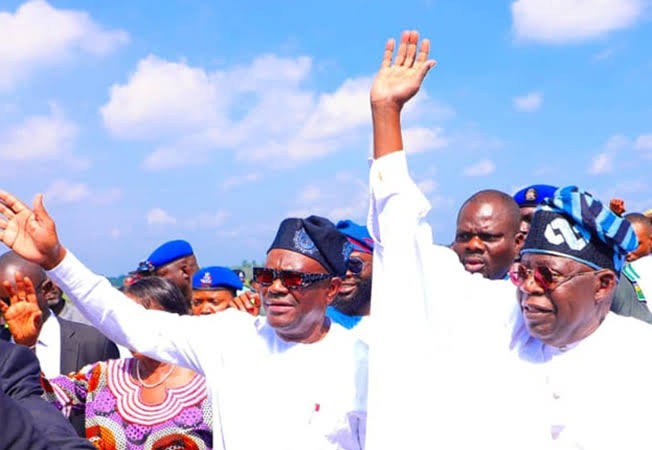
The Federal Capital Territory Administration on Friday commissioned the reconstructed 4.2-kilometre Arab/Gbazango Road in Kubwa, Bwari Area Council, bringing to a close 31-day commissioning and project flag-off exercise. The commissioning was also part of activities to mark Abuja at 50 and President Tinubu’s third anniversary in office.
President Bola Tinubu, represented by the Speaker of the House of Representatives, Rt. Hon. Tajudeen Abbas, declared that the transformation of the Federal Capital Territory must extend beyond the city centre to every satellite community, saying quality infrastructure remains central to his administration’s Renewed Hope Agenda and its vision of inclusive development.
“Our developmental vision for the Federal Capital Territory is complete inclusion. We refuse to restrict development to the high-brow city centre of Abuja. The suburbs, the outskirts and the satellite towns deserve the exact same high-quality infrastructure,” the President said, noting that the completed projects were turning “blueprints into roads people can drive on today.”
He said the reconstructed Kubwa road, which links the area to the Outer Northern Expressway, would ease traffic congestion, reduce travel time, stimulate economic activities and improve the quality of life for residents, while urging Abuja residents and businesses to pay taxes and outstanding ground rents to sustain infrastructure development.
Hours later, the month-long infrastructure drive was capped with a special thanksgiving dinner hosted by the Federal Capital Territory Administration at the Bola Ahmed Tinubu International Conference Centre, where Vice President Kashim Shettima, Senate President Godswill Akpabio, Speaker Tajudeen Abbas, ministers, lawmakers, members of the diplomatic corps, traditional rulers and other stakeholders reflected on what government described as a defining moment in Abuja’s development.
The gathering served not only as the climax of the month-long commissioning exercise but also as a celebration of Abuja’s evolution over five decades, with the completed infrastructure presented as visible evidence of the capital’s continuing transformation under the Tinubu administration. The dinner celebrated the successful completion, commissioning and flag-off of 31 major infrastructure projects across the nation’s capital. Speakers described the projects as evidence of the administration’s commitment to translating policy into visible development while commending the pace of infrastructure delivery under the FCT Administration.
Driving that agenda on the ground was FCT Minister Nyesom Wike, who repeatedly described the commissioning marathon as “Operation Show Your Report Card,” insisting that government should be judged by completed projects rather than political rhetoric.
“This is what we call ‘Operation Show Your Report Card.’ If you call Tinubu today, he will show you his report card for the satellite towns and the city centre. Abuja is closed to empty politics,” Wike said.
Describing the scale of the infrastructure rollout, the minister said the exercise had shifted attention from political rhetoric to measurable development outcomes, insisting that completed projects now speak louder than campaign promises.
The minister said that since President Tinubu assumed office in May 2023, the FCT Administration had awarded 317 kilometres of roads in satellite towns, completed 221 kilometres and was executing another 96 kilometres. He stressed that the figures excluded several major infrastructure projects delivered within the city centre through the Federal Capital Development Authority.
He challenged critics to dispute the figures. “It is unprecedented in the history of this country for a President to commission and flag off projects continuously for 28 days… If anybody has a contrary view, let him come and challenge us. I challenge you in the next 48 hours to say we have not awarded 317 kilometres of roads and completed 221 kilometres in the satellite towns, and I will resign as Minister of the FCT.”
Wike said roads remained the backbone of development because they reduce travel time, improve connectivity, attract investment and stimulate residential and commercial expansion. He also announced that the next phase of infrastructure delivery would include the completion of the Apo-to-Karshi and Bwari-to-Kubwa roads, while directing the immediate provision of potable water to the Arab Road community following residents’ complaints during the commissioning ceremony.
Reflecting on the month-long exercise, Wike thanked residents, security agencies and other stakeholders for their cooperation throughout the programme.
“We thank God that from June 9 till today, everything went smoothly. There was no accident, no incident that we would regret, no fighting. Everybody came and left happily,” he said, describing the successful rollout as evidence that large-scale public engagements could be conducted peacefully while delivering critical infrastructure.
FCT Minister of State, Dr. Mariya Mahmoud, described the projects as tangible evidence of government’s commitment to improving human dignity through infrastructure. She commended President Tinubu and Wike for transforming Abuja’s landscape and appealed to residents to safeguard the newly completed public assets.
Presenting the technical overview of the Arab/Gbazango Road project, Coordinator of the Satellite Towns Development Department, Abdulkadir Zulkiflu, said the 4.2-kilometre dual carriageway, constructed by Zeberced Nigeria Limited, connects the Outer Northern Expressway to Liberty Junction in Byazhin, Kubwa. Besides easing movement, he said the project is expected to stimulate commerce and encourage greater patronage of rail transport in the area.
Chairman of the Arab Road Residents Association, Nnamdi Ezeabasirim, described the reconstructed road as transformational for the community.
“This road is more than asphalt to us; it is dignity, opportunity and safety,” he said, while pledging residents’ support for the protection of the new infrastructure.
For many residents, the impact of the projects is already evident.
Joel Shekwabagu Elisha said the current administration had delivered visible improvements across the FCT.
“We have witnessed several administrations in the FCT, but this one has put things in place that benefit even the indigent. Anyone who knew Abuja years ago and visits today can clearly see the level of development,” he said.
Trader Elizabeth Owene-Onu said better roads had increased customer traffic and improved access to markets.
“Market people are selling more because people can now come easily. Before, where there were no good roads, people hardly came. Now, we move around freely and can easily get to places like Gwarinpa, Katampe and Mabushi,” she said.
Similar sentiments were expressed across several communities that benefited from the projects, with many residents saying improved road networks were already easing movement, encouraging commercial activities and restoring confidence in areas that had long suffered inadequate infrastructure.
Other residents, including Ruth Bulus and Theophilus Obi, linked improved roads, street lighting and access to greater security and renewed confidence in their communities, while farmers in Kwali, Abaji and Kuje said better rural roads were reducing post-harvest losses by making it easier for buyers to reach farms.
The infrastructure drive has been backed by heavy capital investment through statutory allocations, internally generated revenue, SUKUK financing and commercial loans, with successive FCT budgets prioritising roads, water supply, transport links and urban renewal projects.
Despite the optimism, some residents said inflation, rising transport costs and the broader cost-of-living crisis continue to blunt the immediate economic gains of improved infrastructure, while analysts say the long-term success of the projects will depend on effective maintenance and the timely completion of the remaining road network.
As the celebrations marking Abuja’s 50th anniversary drew to a close, the message from government was unmistakable: the capital’s story is no longer being told only through plans and promises but through roads, bridges, transport links and public infrastructure. The month-long commissioning marathon, culminating in the Kubwa grand finale and the thanksgiving dinner, sought to present Abuja as a capital undergoing visible transformation in real time. Whether that narrative endures beyond the fanfare of ribbon-cutting ceremonies will depend on how well the projects are maintained, how quickly the remaining infrastructure is completed and whether the benefits continue to improve the lives of residents across the Federal Capital Territory.



