

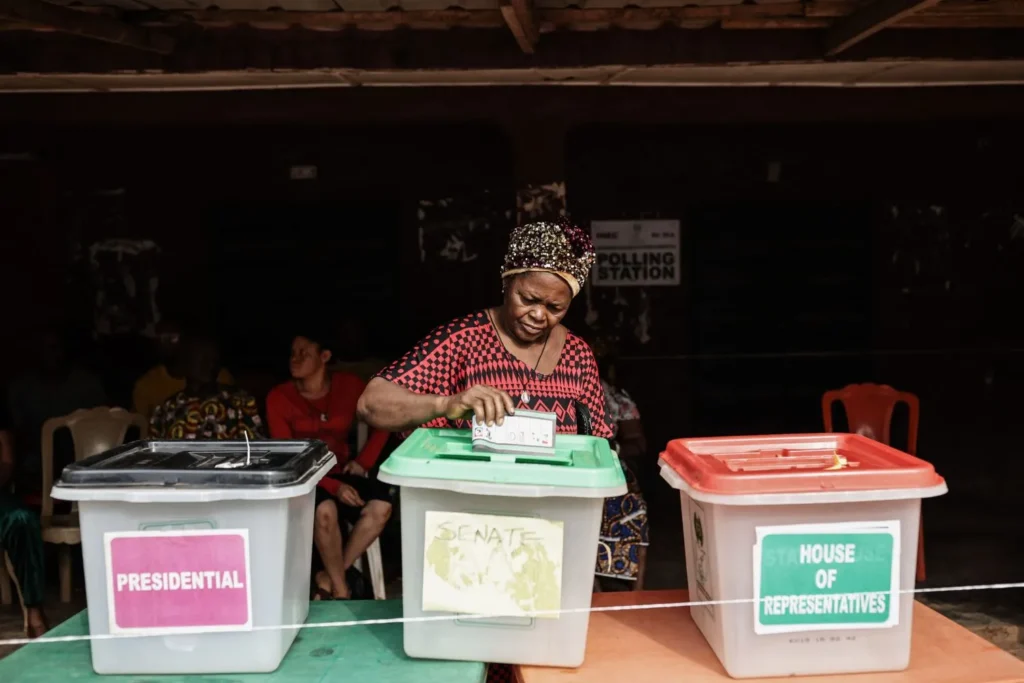
Over the years, many Nigerians are increasingly becoming disillusioned over election processes primarily due to pervasive electoral fraud, systemic vote-buying, persistent insecurity, and a widespread feeling that their votes do not translate into better governance. This frustration often manifests as voter apathy, with historical turnouts dropping significantly. For instance, the 2023 presidential election saw only about a 27 per cent voter turnout, one of the lowest in the political history of the country since the commencement of the fourth republic.
The core factors fuelling this massive sense of disillusionment include failure of electoral technology, which were deployed since 2015 and had raised the expectation of Nigerians for a free, fair and credible election.
Despite massive anticipation and promises of transparency through the Independent National Electoral Commission’s (INEC) introduction of the Bimodal Voter Accreditation System (BVAS) and electronic result viewing portals, technical glitches and delayed uploads created deep mistrust and alleged result manipulation.
Another major factor fuelling this sense of disillusionment is the issue around the monetisation of the vote. Severe economic hardship and high inflation have forced many citizens to prioritise immediate financial relief, rendering them vulnerable to widespread vote-buying by politicians who trade cash for ballots, a situation that many politicians have taken advantage of and exploited, rendering the true credibility of the ballots void.
Another factor militating against the credibility of elections as a true reflection of the wishes of the people is its characterisation of violence and intimidation. The presence of political thugs, which breeds violence at polling units, and broader national insecurity deter millions of citizens from risking their safety to cast their ballots.
In the same vein, questionable judicial outcomes, which result in the frequency with which disputed election results are settled in court rather than elections themselves being decided through the ballot box has led citizens to believe that the judiciary, rather than the electorate, determines who holds power. This has made the citizens to recoil into their shell while expressing disillusionment.
The perpetual menace of recycled leadership and broken promises has led to the prevalence of repeated cycles of poor governance, lack of accountability, and unfulfilled campaign promises, which have caused many Nigerians to view the political system as a self-serving enterprise for the political elite.
To reignite the hope of citizens and drive robust voter turnout, Nigerian political actors must implement strict institutional independence for INEC, absolute transparency in judicial dispute resolution, and genuine, issue-based governance from politicians. Widespread voter apathy is fuelled by a pervasive belief that the ballot box no longer determines leadership. Rebuilding this broken trust requires structural, behavioural, and legal reforms across all three pillars of the democratic process. What politicians must do to create this atmosphere of trust in the system is to commit to issue-based campaigns, they must shift focus from ethnic, religious, or sectional vitriol to clear, actionable policies addressing national socio-economic crises.
Politicians must also end the menace of vote-buying and inducement, they must halt the monetisation of the electoral process that targets vulnerable, low-income voters. They must also respect party internal democracy by ending the practice of imposing unpopular candidates through compromised or opaque party primaries. Political players must also as a matter of necessity prioritise the delivery on campaign promises. They must match governance outcomes with pre-election rhetorics to prove that voting yields tangible local development.
The de-escalation of political violence is also a basic necessity in the effort of rebuilding the trust of Nigerians in the election process. Politicians must stop the sponsorship of political thugs and armed intimidation aimed at voter suppression at the polling units.
On the part of the election umpire (INEC), it must enforce strict technological compliance. It must mandate real-time, tamper-proof electronic transmission of results from the polling unit straight to public portals, secure financial and operational autonomy. INEC must as a matter of importance, advocate constitutional reforms that strip the executive of the power to appoint the INEC chairman, commissioners and also drive the campaign for the enactment of legislation that would give it the powers to sanction electoral offenders proactively.
Also, the electoral umpire must collaborate with security agencies to arrest, blacklist, and diligently prosecute staff or politicians caught compromising standard guidelines. INEC must also clean-up and audit the voter register through the elimination of deceased persons, ghost entries, underage voters, and clerical errors through continuous, open registration. It must also improve logistics and access by eliminating systemic delays in distributing election materials to eliminate voter frustration and long queues on polling days.
The Judiciary on its part must conclude petitions prior to inauguration. It must enforce strict legal timelines, ensuring all election disputes are completely resolved before any candidate takes the oath of office. It must uphold merit and popular will over technicalities. It must focus its judgments on substantial justice and verifiable evidence rather than dismissing legitimate cases on trivial, procedural technicalities.
The judiciary being the last resort for the aggrieved persons must also prove its mettle through the elimination of partisan and conflicting rulings. It must purge corruption and internal bias to ensure consistent legal precedents across different appellate panels and rise above board to punish judicial indiscretion. It must ensure the National Judicial Council (NJC) swiftly disciplines judges who issue erratic or compromised injunctions that destabilise the electoral timeline.
Last but not the least, the judiciary must broadcast election tribunal sessions publicly to guarantee public trust in its optimum by streaming legal proceedings live to demystify judicial processes and rebuild public faith in the impartiality of courts.



