The African Union and Regional Economic Communities (RECs) have pledged to strengthen responses to trafficking in persons across Africa.
This is contained in a statement issued on Tuesday on the AU website.
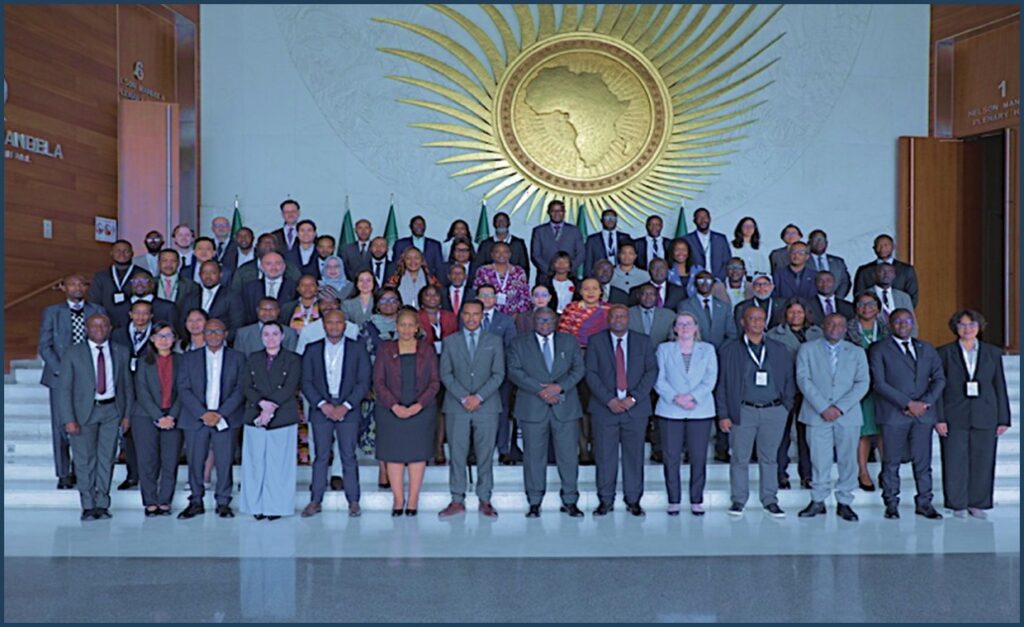
It said the parties made the commitment on the margins of a meeting held in Mombasa, Kenya, by the Continental Operational Centre (COC), a Specialised Office of the AU Commission.
COC was established in 2018 to support AU Member States and RECs in combating irregular migration, particularly trafficking in persons and smuggling of migrants, including related forms of transnational organised crime in Africa.
The new commitment is necessitated by the challenges confronting comprehensive victim-centred protection and assistance within criminal justice procedures.
Under the auspices of the Senior Officials Forum, the initiative is designed to create a collaborative platform for dialogue, knowledge-sharing, partnership-building among governments, criminal justice actors, civil society, survivor-led groups, and international organisations.
The forum described Trafficking in persons as one of the most pressing transnational organised crimes affecting Africa, exposing victims to exploitation, coercion, abuse, and long-term psychological and emotional harm.
“While AU Member States, RECs and partners continue to strengthen responses to trafficking in persons, challenges remain in ensuring comprehensive victim-centred protection and assistance within criminal justice procedures.
“Victims of trafficking continue to face discrimination in criminal justice systems and further challenges during return, readmission, and reintegration into their communities,” the forum said.
It emphasised protection of victims of trafficking in persons as the key pillar in implementing the AU Policy on Trafficking in Persons, noting that COC initiated implementation of Policies on Prevention of Trafficking in Persons and Smuggling of Migrants work plans to achieve targets.
It also reiterated the AU and UNODC commitment to supporting Member States and RECs in building forward-looking approaches to victim protection, while strengthening justice systems that uphold the dignity, safety, and rights of victims of trafficking in persons.
“There is growing recognition that effective anti-trafficking efforts require stronger victim-centred approaches that prioritise protection, dignity, safety, and long-term support for victims and survivors,” it said.
The forum highlighted the efforts by AU Member States, Regional Economic Communities, and other stakeholders to support victims of trafficking in persons.
It noted that evidence continued to show fragmentation, under-resourced protection interventions, and gaps in tackling long-term psychological and emotional needs.
The forum added that existing legal and policy frameworks, institutional arrangements, and cross-border realities continued to create challenges that required focused continental interventions.
It said that planned projects put in place would help to strengthen investigations, prosecutions, enhance victim protection, assist frameworks, increase global engagement, cooperation on trafficking in persons and migrant smuggling.
“UNODC is implementing the Human Trafficking and Migrant Smuggling Section (HTMSS) project.
“It is promoting action and cooperation among countries at the global level against trafficking in human beings and the smuggling of migrants funded by the European Union,” the forum added.