

…Says funds target youth reorientation
By Ogana Cyril Jr
The Office of the Deputy Speaker of the House of Representatives, Benjamin Kalu, has defended a controversial budget allocation that triggered widespread public criticism after reports revealed that ₦1 billion was earmarked in the proposed 2026 budget for the procurement of musical instruments for churches in Bende Federal Constituency, Abia State.
Responding to the backlash.
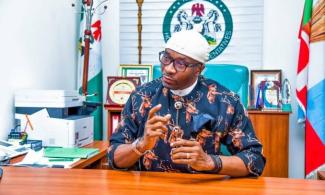
In a statement issued on Wednesday by the Deputy Speaker’s Chief Press Secretary, Levinus Nwabughiogu, dismissed the reports as misleading, and described it as a misrepresentation of the actual purpose of the allocation, insisting that the allocation is part of a broader youth reorientation and social support programme to be implemented through faith-based organisations.
There had been reports of public criticism that has hit the government following revelations that it earmarked a staggering ₦8.05 billion for the construction, renovation, and equipping of places of worship across the country in the 2026 budget.
The allocation was uncovered and made public on Sunday by Tracka, a public accountability organisation under BudgIT.
According to the budget breakdown, the government allocated ₦1.91billion for projects tied to seven churches, while ₦6.14billion was earmarked for 52 mosque projects.
The document analysed by The New National Star uncovered several contentious line items embedded under ministries and agencies traditionally detached from religious affairs.
Among the projects is code ERGP20273981, which details ₦1 billion allocated through the Industrial Arbitration Panel under the Federal Ministry of Labour and Employment for the provision and distribution of musical and cultural equipment to churches in Bende Local Government Area, Abia State.
But despite evidence, the Deputy Speaker’s office claimed that the proposed allocation is not N1 billion but N780 million after Value Added Tax (VAT) and other statutory deductions.
The Deputy Speaker’s office said that the programme is designed to support over 130 churches across Bende Federal Constituency, with each church expected to receive between N5million and N6million during the first phase of implementation.
The controversy began after Tracka, a public accountability platform under BudgIT, uncovered a total of ₦8.05 billion allocated in the 2026 budget for the construction, renovation, and equipping of churches and mosques across Nigeria.
The findings, later reported by journalists, showed that ₦1.91 billion was allocated for projects involving seven churches, while ₦6.14 billion was set aside for 52 mosque-related projects.
Among the most debated provisions was a budget line under the Federal Ministry of Labour and Employment’s Industrial Arbitration Panel, which allocated ₦1 billion for the supply and distribution of musical and cultural equipment to churches in Bende Local Government Area.
However, Kalu’s office argued that the widely reported ₦1 billion figure was inaccurate, explaining that after Value Added Tax (VAT) and other statutory deductions, the actual amount available for the project is ₦780 million.
According to Nwabughiogu, the intervention forms part of a “Youth Re-orientation and Social Support Programme” designed to engage young people through churches and other faith-based organizations in Bende Federal Constituency.
He explained that the constituency consists of 13 federal wards and more than 200 churches. During the first phase of the programme, approximately 130 churches, about 10 from each ward—are expected to benefit, with each church receiving between ₦5 million and ₦6 million.
The funds, he said, will not only cover musical instruments but also evangelical equipment and public address systems to support community campaigns against drug abuse, sexual offences, violent crime, and other social vices.
“The intervention is aimed at strengthening churches’ ability to mentor young people, promote discipline, encourage moral values, and foster peaceful coexistence within communities,” the statement said.
Defending the initiative further, the Deputy Speaker’s office argued that national development should not focus solely on roads, bridges, and other physical infrastructure but should also include investments that strengthen character, values, and social cohesion.
It maintained that faith-based organisations remain trusted institutions capable of influencing positive behavior and deserve government support, just as traditional institutions have benefited from similar community development interventions in the past.
The office also stressed that no money has been released for the programme because implementation of the 2026 budget has not yet begun. It noted that Nigeria is still executing the 2024 and 2025 budgets.
In addition, the Deputy Speaker’s office acknowledged that the procurement description contained a technical error and revealed that a corrigendum had already been initiated through the Budget Office and the National Assembly’s Appropriation Committee to correct the wording before implementation begins.
Reiterating its position, the office insisted that the initiative is “not about musical instruments alone” but about using churches as community platforms to promote youth development, moral instruction, peace, and unity across the constituency.
It urged Nigerians to disregard what it described as sensational reports surrounding the budget provision and instead support programmes aimed at promoting both infrastructure development and societal values.



