

By Victoria Yakubu
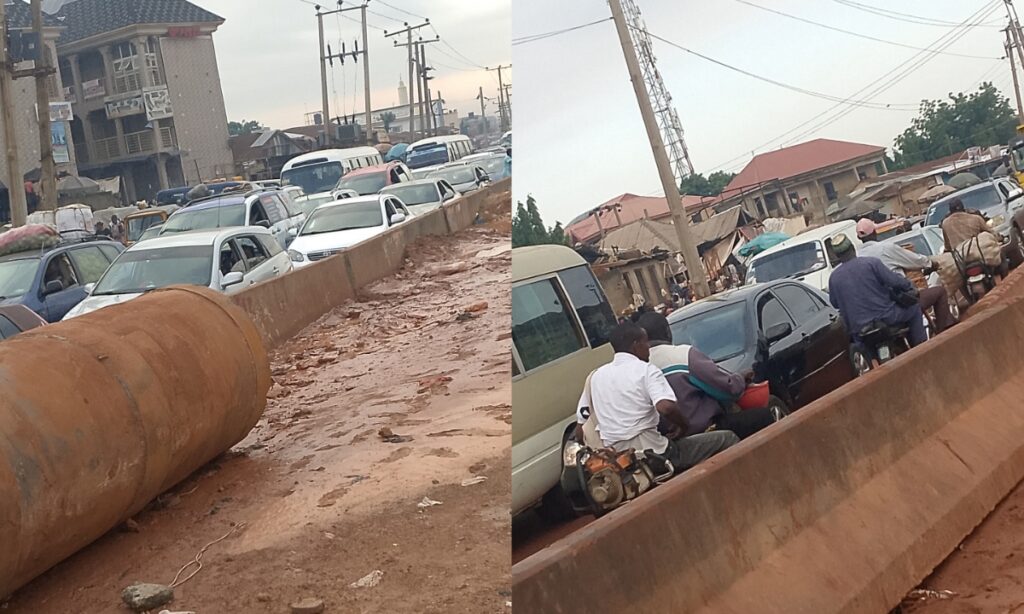
Residents and commuters in Mararaba, Nasarawa State, say worsening traffic congestion caused by the ongoing construction of the Mararaba flyover has turned daily travel into an ordeal, with motorists spending longer hours on the road and businesses counting mounting losses.
Findings by the New National Star showed that traffic has worsened significantly along the busy Abuja–Keffi highway since construction began, with motorists spending extended periods navigating diversions and narrowed sections of the road, particularly during the morning and evening rush hours.
The Mararaba axis serves as one of the busiest gateways into the Federal Capital Territory (FCT), linking thousands of daily commuters from Mararaba, Masaka, New Nyanya, Karu and other neighbouring communities to Abuja.
Residents said the persistent gridlock has increased transport costs, delayed business activities and prolonged commuting times, while roadside traders continue to battle heavy dust generated by the construction.
For many commuters, leaving home much earlier has become the only way to beat the traffic
Mrs. Ruth Samuel, a civil servant who lives in Mararaba and works in Abuja, said the construction had significantly increased her commuting time.
“Before the construction, I could get to the office in about 40 minutes if I left home early. Now I spend more than an hour on some days because of the traffic. I have to wake up much earlier just to avoid getting to work late,” she said.
According to her, the daily delays have become physically and mentally exhausting. “By the time I return home in the evening, I’m already tired from sitting in traffic. It affects my productivity at work and the little time I have with my family.”
As commercial drivers said, the prolonged gridlock has also reduced their daily earnings. Mr. Ibrahim Sani, who operates along the Abuja–Mararaba route, said fewer completed trips now mean lower income despite rising fuel costs.
“Instead of making six or seven trips in a day, sometimes I can only make four because vehicles spend too much time in traffic. We buy fuel at higher prices, but we carry fewer passengers,” he said.
Roadside traders said the construction has created another challenge as dust from the project continues to settle on their goods.
Mrs. Grace Okafor, who sells food items near the highway, said she constantly cleans her shop to prevent dust from settling on her products. She said: “The dust settles on everything. We keep wiping our goods throughout the day, yet customers still complain. Some people simply walk away because they don’t want to buy food exposed to dust.”
Despite the hardship, some residents expressed optimism that when completed, the completed flyover would bring lasting relief to commuters.
Mrs. Sarah James described the current situation as difficult but necessary: “Nobody enjoys sitting in traffic every day, but if the flyover is completed on time and it solves this problem permanently, then the sacrifice will be worth it.”
The Mararaba flyover is part of ongoing efforts to improve traffic flow along the Abuja–Keffi corridor, one of Nigeria’s busiest commuter routes. However, road diversions, narrowed lanes, heavy construction equipment and increased vehicular movement around the project have contributed to persistent congestion, especially during peak periods.
Residents and commuters appealed to the relevant authorities and contractors to speed up construction while introducing measures to reduce traffic delays and improve traffic management around the project corridor.
For thousands of motorists who depend on the Abuja–Keffi highway every day, the completed flyover offers hope of smoother and faster movement. Until then, however, navigating Mararaba’s notorious traffic remains a daily test of patience.



