

By Joy Onu
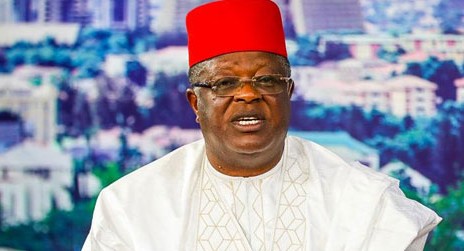
The Minister of Works, Sen. Engr. David Umahi, has directed Federal Controllers of Works across the 36 states and the Federal Capital Territory (FCT) to intensify supervision of road and bridge projects, strengthen engagement with stakeholders and ensure Nigerians are adequately informed about infrastructure interventions in their areas.
Mohammed A. Ahmed, Director, Information and Public Relations in the ministry, said in a statement issued on Thursday that Umahi gave the directive during a strategic meeting with the Federal Controllers at the ministry’s headquarters in Abuja on Tuesday.
According to him, the Minister urged the officers to take full ownership of projects under their supervision and promptly address challenges that could hinder their timely completion.
Umahi said the Controllers, as the ministry’s representatives at the sub-national level, have responsibilities that go beyond routine administrative duties, urging them to build stronger working relationships with state governments, contractors, traditional institutions, community groups, the media and other stakeholders.
He said effective project delivery must be complemented by clear and factual communication, noting that road users and citizens should have access to information on the location, scope, implementation status and expected benefits of Federal Government projects.
The Minister particularly urged the Controllers to spend more time at project sites instead of relying on office-based assessments, saying physical inspection was essential to identifying construction challenges early, monitoring quality and ensuring contractors complied with approved specifications and contractual obligations.
“Go hard on the contractors. Go straight to the site, not sit in the office. The sites need your extra attention to ensure quality and timely delivery,” he said.
Umahi also directed the Controllers to be proactive in resolving technical and construction-related challenges within existing contractual provisions.
He said that legitimate provisions in the Bill of Quantities (B.O.Q.) and contingencies should be properly understood and applied where necessary adjustments were required to facilitate efficient project delivery.
The Minister, however, warned against using such provisions to create unnecessary work or additional expenditure for contractors, stressing that every adjustment must be technically justified, properly documented and approved, with the ultimate aim of achieving value for money and improved project outcomes.
He said delays in addressing legitimate project challenges could increase costs, prolong construction periods and worsen the difficulties experienced by road users.
Umahi also emphasised the importance of professional judgement and timely decision-making, promising continued capacity building within the ministry, particularly for technical personnel involved in project monitoring and evaluation.
He said officers requiring additional training would be exposed to appropriate learning opportunities to strengthen their technical and professional competencies, adding that personnel must remain abreast of international construction best practices, contract administration and project management procedures.
The Minister urged the Controllers to take personal interest in construction activities, saying practical knowledge gained from project sites was essential to effective supervision.
He also tasked them with strengthening public awareness of Federal Government infrastructure projects through a robust communication plan across the states and the FCT.
According to him, the strategy should include strategically located project information signages, media engagements, documentaries, radio and television jingles, project tours and community-level communication.
Umahi urged the Controllers not to compromise professional standards or overlook deficiencies in project execution, stressing that effective supervision requires diligence, courage and a commitment to public interest.
He further called for stronger collaboration between the Federal Controllers, Zonal and Coordinating Directors, saying regular communication and coordinated action would improve the speed and quality of decision-making on project-related issues.
The Minister assured the officers that the ministry would continue to focus on resolving problems and removing avoidable obstacles to project delivery, while urging them to approach their responsibilities with a sense of ownership and accountability.
He charged the Controllers to place the interests of road users and host communities at the centre of their professional responsibilities, noting that the ministry’s success should ultimately be measured by the extent to which infrastructure improves mobility, supports economic activities and enhances citizens’ quality of life.
“When you put the people first, you are putting God first,” Umahi said, urging the officers to remain committed to public service and discharge their responsibilities with integrity, diligence and compassion.
He also stressed that effective project delivery requires collective effort, urging the Controllers to work closely with the ministry’s management, contractors, consultants, state governments, communities and other relevant stakeholders.
The Permanent Secretary of the ministry, Mr. Rafiu Adeladan, commended Umahi for his commitment to improving infrastructure delivery and the passion with which he drives the ministry’s mandate.
Adeladan urged the Federal Controllers to remain dedicated to their responsibilities and support efforts to improve project supervision, stakeholder engagement, communication and the delivery of quality infrastructure across the country.
Umahi also said that Zonal Directors and other key directors would hold a follow-up meeting to address operational details and implementation modalities arising from the interaction.
The meeting was attended by the six Zonal and Highways Coordinating Directors and featured discussions on project supervision and delivery, community engagement and communication strategies.
The Minister charged the Controllers to ensure that projects are executed according to approved specifications and deadlines, contractors remain accountable for their obligations and Nigerians are kept adequately and consistently informed about infrastructure interventions under the Renewed Hope Administration of President Bola Ahmed Tinubu.



