

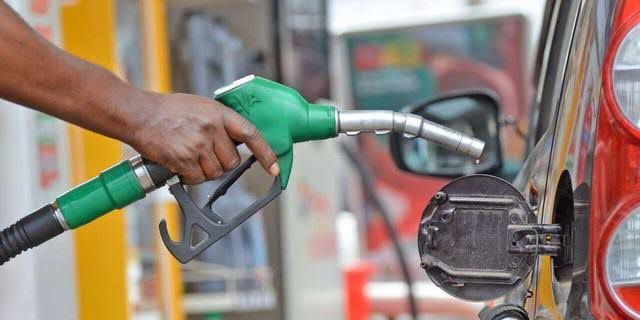
Nigeria’s decision to remove petrol subsidy was presented as a difficult but necessary step towards rescuing the economy from an expensive and unsustainable system.
The argument was that the government could no longer continue spending enormous public resources to keep petrol prices artificially low while the country struggled with abysmal revenue generation, debt obligations and other fiscal pressures.
There is merit in that argument. The subsidy regime had become costly and distortive, and the International Monetary Fund (IMF) has acknowledged that fuel subsidy removal, alongside other reforms, contributed to improved macroeconomic stability.
However, economic reform should not be judged only by what the government served on paper. Its real test is whether ordinary Nigerians experience a better standard of living. And this is where the subsidy story becomes complicated.
The painful question is not simply whether subsidy should have been removed. It is whether the alternatives and protections required to make the transition bearable were ready before the policy was implemented.
One of the clearest lessons from the subsidy experience is the need for preparation. If the government knew that removing the petrol subsidy would immediately increase the costs of transportation and production, prior provisions of affordable alternatives could have been made.
Compressed Natural Gas (CNG) was repeatedly identified as one such alternative. Government announced plans for thousands of CNG buses and other interventions after subsidy removal, but the rollout of infrastructure and conversion facilities took so much time.
Government is now accelerating CNG deployment. On September 19, 2026, President Bola Tinubu said the National Affordable CNG Transit Programme was being implemented, with the goal of delivering measurable reductions in transportation costs from October 1.
The fuel subsidy removal no doubt is excruciating but that policy implementation has redirected, reshaped the daily living style of millions of Nigerians as they no longer engage in wasteful lifestyle. Peoples’ movement, even social lifestyles are now prioritised to save money.
Government’s subsidy burden has been reduced, while the reform has helped correct distortions in the petroleum market. The IMF opined that the reform has contributed to improved macroeconomic stability, stronger investor confidence and increased resilience.
There is also a legitimate argument that public money previously used to subsidise petrol can be redirected towards infrastructure, healthcare, education, security and other productive sectors.
The Federal Government has argued that the old subsidy system consumed huge public resources. President Tinubu said in May 2026 “that Nigeria had spent as much as ₦18.4 billion daily on petrol subsidies, with more than ₦4 trillion spent in 2022 alone.”
But these gains must not be exaggerated. The IMF reported in 2026 that estimated savings from fuel subsidy removal had not fully translated into budgetary gains in 2025. It also noted that poverty and food insecurity remained serious concerns.
Therefore, subsidy removal should not automatically be equated with prosperity.
Reform creates an opportunity. Good governance determines whether that opportunity becomes a benefit to citizens.
For millions of Nigerians, the consequences have been straightforward: higher transport fares, higher food prices, increased business costs and reduced purchasing power.
Workers who earn the same salary but spend substantially more commuting to work are effectively poorer.
The small business owner who spends more transporting goods must either increase prices or accept lower profits. The farmer who pays more to transport fertiliser and produce faces higher production and distribution costs.
The student who pays more to get to school experiences the reform differently from an economist analysing fiscal balances. This is why economic reform must be examined from both the government ledger and the household table.
Recently, the Federal Government seems to have woken up by implementing some programmes, sort of playing catch up as the 2027 approaches. CNG and EV buses are plying the roads in their numbers in many states, including the FCT.
However, there is a fundamental difference between preventing a problem and compensating people after creating the problem.
The New National Star suggests that if CNG is the cheaper alternative, its infrastructure should be ready before or provided alongside a major price adjustment, rather than years after citizens have absorbed the shock.
If the objective is to save public money, those savings should be transparently channelled into services citizens can see and use.
Nigeria must learn to stop governing from crisis to crisis.
Before implementing a major reform, the government should ask: What will happen to transportation? What will happen to food prices? What will happen to workers and small businesses? What alternatives are immediately available? How quickly can vulnerable citizens be protected?
These questions should be answered before, not after, implementation.
The planned October 1 CNG transport interventions, therefore, deserves close attention. If properly implemented, they could reduce one of the most painful consequences of fuel-price increases. But the government must ensure that the benefits reach commuters through lower fares rather than becoming another programme whose impact ordinary Nigerians struggle to see.
The subsidy debate should now move beyond whether its removal was right or wrong. The more important question is: What has Nigeria built since the removal to ensure that citizens can survive and ultimately benefit from the reform?
A sustainable solution cannot depend indefinitely on cash transfers, temporary interventions or palliatives.
Nigeria needs affordable mass transportation, functioning CNG infrastructure, reliable electricity, productive agriculture, efficient refineries, stronger local manufacturing, better roads and a business environment that allows wages and incomes to rise alongside prices.
Most importantly, the government must learn from the experience. Do not create an economic challenge today and begin searching for ways to cushion the effects tomorrow. Build the cushion before the shock.
Subsidy removal may have delivered fiscal and economic gains, but the pain experienced by Nigerians cannot be dismissed as a mere inconvenience on the road to reform.
The ultimate measure of any economic policy is not simply how much the government saves. It is how better the lives of citizens become.
Nigeria does not need endless cycles of crisis and cushioning. It needs foresight, preparation and lasting solutions.



