

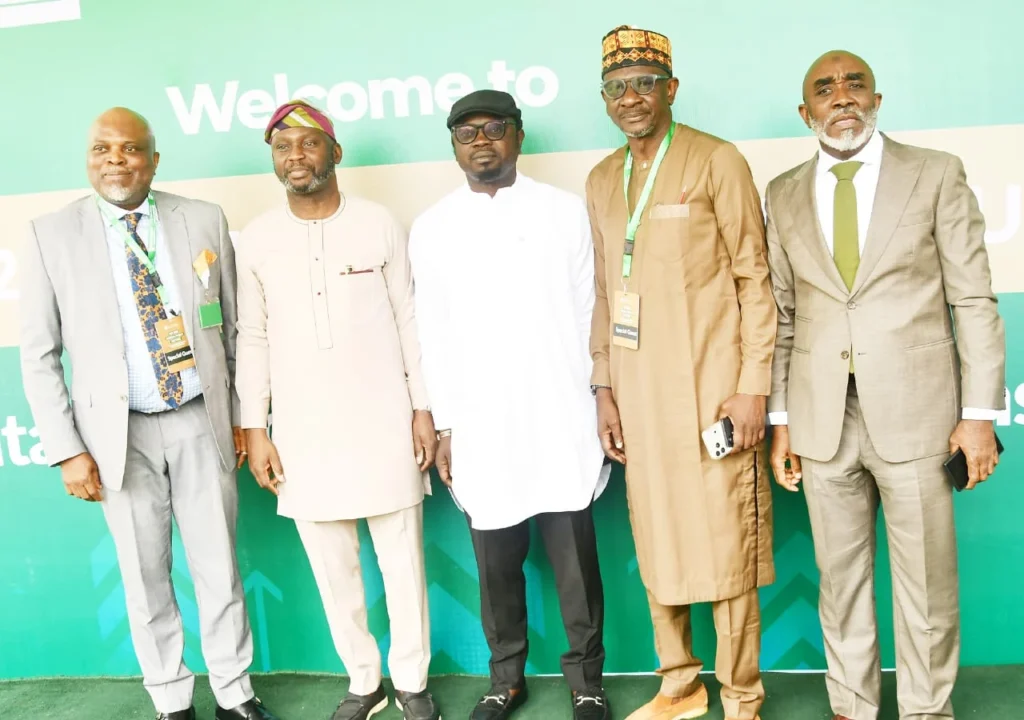
By SIMEON OGOEGBULEM
The Managing Director of Bank of Industry (BoI), Dr Olasupo Olusi has called for a rethink of how capital is mobilised and deployed to drive Nigeria’s inclusive economic transformation. Olusi said Nigeria needed long-term capital that could support industrial growth, reach underserved businesses and attract private investment into productive sectors of the economy.
Olusi,who made the call yesterday in Abuja at the bank’s 2026 Annual Public Lecture themed “Rethinking Capital for Inclusive Economic Transformation”, said the theme was apt as it focused on how capital could be mobilised, structured and deployed more effectively to deliver measurable development outcomes.
The managing director said the annual lecture, which began in 2024, was established as a platform for informed discussion on issues shaping Nigeria’s economic and industrial development. He recalled that the maiden edition examined how Micro, Small and Medium Enterprises (MSMEs) support and financing could address poverty and food insecurity, while the 2025 edition focused on development finance imperatives for Nigeria’s growth.
Olusi said the third edition would build on previous discussions by examining how development finance could be leveraged to unlock greater private sector investment. He said BOI disbursed N645 billion in 2025, supporting over 12,000 businesses and impacting 1.68 million jobs, noting that the scale of opportunity ahead remained significant.
According to him, achieving inclusive transformation will require mobilising more long-term capital, extending financing to underserved sectors and ensuring that financing translates into economic impact. He commended the Guest Lecturer, Dr Asad Alam, former World Bank Director and Adjunct Professor at Georgetown University, for honouring the bank’s invitation to share his insights.
Olusi thanked the federal government, state governments, development partners and the private sector for their continued support for the bank’s mandate of driving sustainable and inclusive industrial development.
The guest lecturer, in his lecture titled “Rethinking Capital for Inclusive Economic Transformation – Some Reflections”, said Nigeria must move beyond capital accumulation to efficiency, productivity and human capital to achieve inclusive transformation.
Alam said the lecture was framed around three questions: how important capital is for economic growth, what global evidence shows on the role of capital and other factors, and how countries can maximise the impact of capital for inclusive transformation. He noted that while capital remained important, efficiency of capital was what drove impact on growth, and as economies mature, Total Factor Productivity (TFP) became the key driver of sustained growth.
“Global evidence shows that as countries grow, TFP becomes more important than physical capital, while human capital contribution remains modest but holds huge potential given existing gaps with high-income countries,” he said.
According to him, greater equity can support potential growth, as higher inequality correlates with lower physical and human capital and lower productivity. Alam stressed that investments in technology and climate action had the potential to spur productivity and structural transformation if capital was deployed efficiently, incentivised by strong institutions and inclusive policies.
He said the debate on growth had moved beyond the simplistic notion that poor countries only needed more capital, a thinking that dominated development economics in the 1940s. According to him, early models such as the Harrod-Domar model assumed that countries were poor because they lacked capital and the solution was to channel capital to them through multilateral development institutions.
Alam said “But that did not do the trick,” noting that the failure of capital alone to deliver growth forced economists, including Nobel Prize winners, to rethink growth models.He explained that in the 1950s, the Solow growth model introduced technology, innovation and ideas as critical drivers, beyond physical capital and labour



