

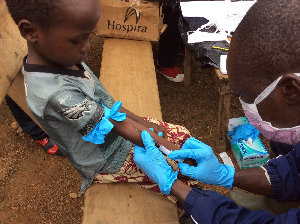
Epidemiologists and public health experts from across Africa are meeting in Accra, Ghana to examine how artificial intelligence, digital technologies and laboratory innovations can improve disease surveillance and accelerate outbreak detection.
Participants in the three-day meeting which opened , yesterday, include representatives of the World Health Organisation (WHO), the Food and Agriculture Organisation (FAO), the Ghana Health Service, Ghana’s Ministry of Health, the West African Health Organisation (WAHO), the African Field Epidemiology Network (AFENET) and the Pandemic Fund.
The meeting focuses on strengthening public health systems through technological advances that can help authorities identify emerging threats, monitor disease trends and respond more rapidly to outbreaks.
Digital surveillance systems can improve the collection and analysis of health information, while artificial intelligence can help detect unusual patterns that warrant further investigation by epidemiologists and other specialists.
Laboratory innovations, including improved diagnostic methods and genomic technologies, can help identify disease-causing pathogens and provide information on how infections spread and evolve.
These capabilities are particularly important as African countries work to improve preparedness for public health emergencies and reduce delays between the emergence of a health threat and the implementation of a response.
Collaboration among national health authorities, regional institutions and international partners is also essential for sharing reliable information and coordinating action when diseases cross geographical boundaries.
For Nigeria, the discussions are relevant to the work of the Nigeria Centre for Disease Control (NCDC), which coordinates national disease surveillance and outbreak response. The agency’s surveillance systems, emergency operations centres and laboratory partnerships are important components of the country’s preparedness framework.
The involvement of organisations working across human and animal health further highlights the importance of a coordinated approach to surveillance, particularly for diseases that can pass between animals and humans.
The Accra meeting provides an opportunity for experts to examine how these technologies can be incorporated into existing health systems and what investments in infrastructure, skills and institutional capacity are needed to make them effective.
The discussions come amid growing efforts to shift African public health systems towards earlier detection, stronger surveillance networks and faster, better-coordinated responses to emerging disease threats.


