

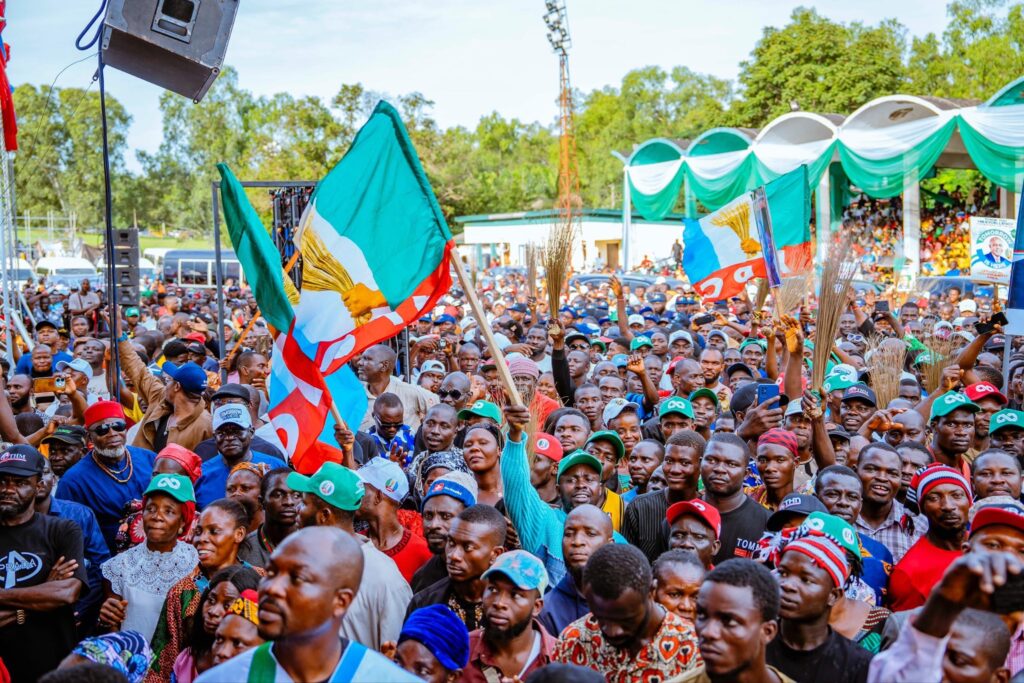
The absence or sparsity of official opposition campaign posters and billboards across major cities is raising concerns among political watchers in the countdown to the 2027 general elections.
Some analysts have opined that this stems primarily from strict regulatory timelines and rising advertising costs rather than an explicit ban on opposition parties. Under the Electoral Act 2022 guidelines enforced by the Independent National Electoral Commission (INEC), official open public campaigns are legally permitted to begin only 150 days before polling day.
Since INEC has officially flagged off the campaign window for the upcoming 2027 general elections on August 19, 2026, political campaigns are technically allowed in accordance with federal electoral laws.
The current political landscape and the visibility of different parties involve several key factors which include; strict electoral timelines and enforcement of INEC regulations. INEC spokesman, Rotimi Oyekanmi, reiterated that open campaigns are limited to the strict 150-day legal window.
Both the Presidency and INEC have actively distanced themselves from premature campaign materials prior to this legally permitted date for the lifting of ban on campaigns, leading to the removal of early promotional billboards in cities like Abuja to maintain institutional neutrality even though there were complaints regarding the campaign postings of some candidates of the ruling All Progressives Congress (APC), especially those posted by support groups such as the PBAT Door to Door Movement.
Also, local restrictions at state-level agencies have actively penalised premature or unapproved postings. For instance, the Plateau Metropolitan Development Agency (PMDA) recently fined both the ruling APC and opposition parties like the African Democratic Congress (ADC) for violating local signage executive orders.
The dramatic increase in state-enforced outdoor advertising fees has become a major hurdle facing newer or smaller opposition groups.
Analysts note that these steep costs can act as a financial gatekeeper, reinforcing the advantages of well-funded incumbents.
The Abia State Signage and Advertisement Agency in this instance set its new 2027 presidential billboard fee at N200 million, a thirteenfold increase from the N15 million charged during the previous election cycles.
In Anambra State, The Signage and Advertising Agency similarly raised its comprehensive presidential outdoor activity permit to N50 million.
Prominent opposition figures and civil society groups have expressed concern over how these dynamics affect the democratic playing field.
In October 2026, opposition stalwart Buba Galadima publicly questioned the political environment on Arise News, pointing out the visual absence of opposition materials in the Federal Capital Territory compared to the ruling party’s presence. Civil society experts have also warned that instances of early, under-the-radar electioneering by any major party create an inherently uneven playing field for smaller parties that lack access to massive public or alternative slush funds.
Meanwhile, newer groups like the Movement Adebayo for President (MAP) are pivoting from heavy outdoor advertising to challenge the status quo, urging voters to scrutinise policy manifestos directly rather than relying on billboard recognition.
Another worrying development is the deliberate act of pulling down or vandalising the campaign billboards of opposition parties, which is widely condemned as an undemocratic and criminal act. This is viewed by legal authorities, civic groups, and opposition figures as a direct threat to fair political competition.
Civil society organisations, police departments, and electoral bodies emphasise that election campaign is an essential component of the democratic process. Under regulatory frameworks like Nigeria’s Electoral Act, destroying campaign materials is classified as a punishable offense. The Police departments frequently warn political actors that pulling down rival materials amounts to malicious damage to property, carrying penalties of fines or imprisonment.
Also, civil society groups argue that defacing banners strips alternative political voices of visibility, which undermines the right of the electorate to information and choice.
Government agencies sometimes assert that specific advertising corridors have been legally pre-booked by private practitioners, making unapproved deployments liable for removal regardless of party affiliation.
The tension between these two viewpoints often leads to clashes. For example, in Benue State, the Peoples Democratic Party (PDP) rejected directives by the government to remove signage, labeling the timeline a “desperate, anti-democratic attempt to cripple opposition campaigns.”
Similar friction has been reported by parties like the Nigeria Democratic Congress (NDC) and APC in states like Rivers, Lagos, Bauchi, and Osun, where parties routinely trade accusations of billboard vandalism and administrative bias.
The principle of ensuring a level playing field for all political parties during campaigns is a cornerstone of democratic integrity and electoral fairness.
Voters require unrestricted access to diverse information, policy platforms, and candidates’ backgrounds to make well-informed decisions.
When a governing or dominant party utilises state resources, monopolises public media, or restricts the movement and assembly of opposition parties, it undermines the credibility of the election. Every legally recognised political party and candidate should ideally possess the same rights to hold rallies, broadcast campaigns, and engage with voters without facing institutional barriers or targeted harassment.
Many international bodies, such as the United Nations (UN) and the African Union (AU), outline specific standards to protect civic space and ensure electoral equity.
Publicly funded media houses are typically mandated to provide fair, equitable, and non-biased coverage to all registered political parties. The use of government vehicles, buildings, or public funds to support a specific party’s campaign is strictly discouraged or outlawed in robust legal frameworks.
The New National Star urges law enforcement and regulatory bodies to as a matter of necessity and in the spirit of true democratic ethos, apply permit requirements and security protocols neutrally, ensuring opposition parties are not systematically denied the right to campaign publicly.



