

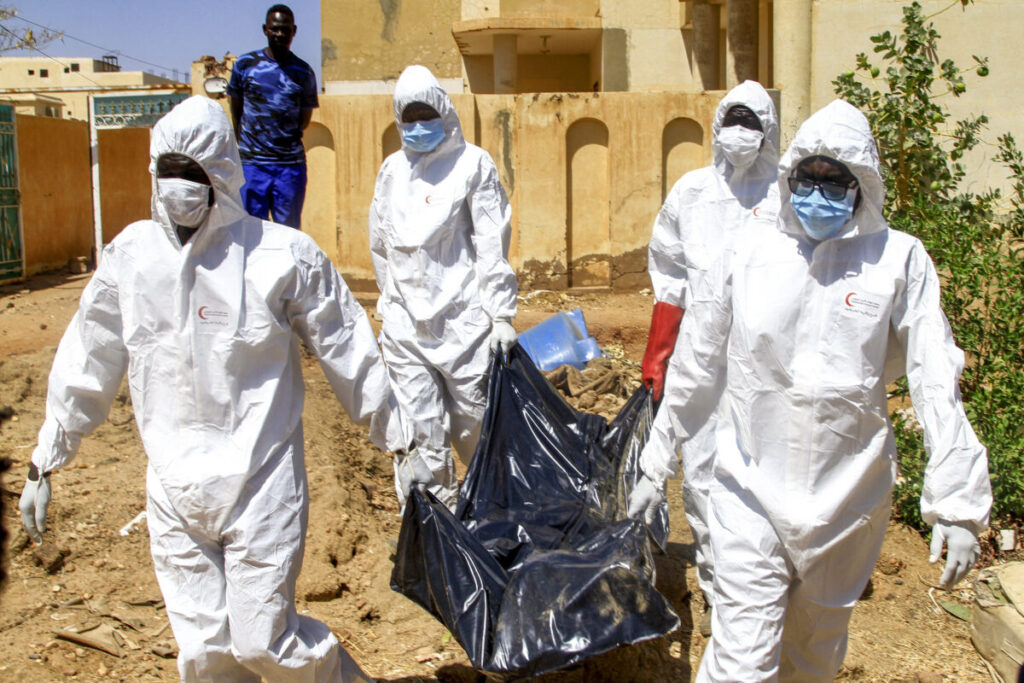
Uganda has rejected suggestions that a woman recently diagnosed with Ebola in Nigeria contracted the deadly virus in the East African country.
The Ugandan Ministry of Health said the source of the infection remains unknown, stressing that the patient’s recent travel through Uganda does not establish where she contracted the disease.
The clarification followed Nigeria’s confirmation of an imported Ebola case in the Federal Capital Territory (FCT), Abuja, on Tuesday.
Nigeria’s Coordinating Minister of Health and Social Welfare, Muhammad Pate, had disclosed that the patient, a woman with recent travel history to Uganda, returned to Nigeria with symptoms on October 7.
Her condition reportedly worsened four days later before laboratory tests confirmed Ebola infection.
Reacting in a statement, Uganda’s Ministry of Health denied reports of an ongoing Ebola outbreak in the country.
“The location of exposure remains under investigation,” the ministry stated.
It maintained that travelling through Uganda was insufficient evidence to conclude that the patient became infected there.
Ugandan authorities also said Nigeria had yet to provide detailed information about the woman’s travel itinerary and clinical history, which would assist investigations and contact tracing.
Meanwhile, Nigerian health authorities have identified 44 contacts linked to the patient, who is currently receiving treatment in isolation.
Pate said surveillance had been strengthened at the country’s entry points, while the Federal Ministry of Health, FCT Health Secretariat and international health partners were coordinating efforts to prevent further transmission.
Uganda, which recorded Ebola infections earlier in 2026, had subsequently declared its outbreak over after completing the required period without a new confirmed case.
The development comes amid growing regional concerns over Ebola, with cases also reported in the Democratic Republic of the Congo and Kenya.
Kenya reported its ninth case on Tuesday, with health authorities saying all nine infections belonged to a known cluster.
Ebola spreads through direct contact with the bodily fluids of an infected person or contaminated materials. Symptoms include fever, severe weakness, headache, vomiting and diarrhoea.
Nigerian authorities have urged residents to remain calm, observe preventive measures and report suspected cases promptly.



