

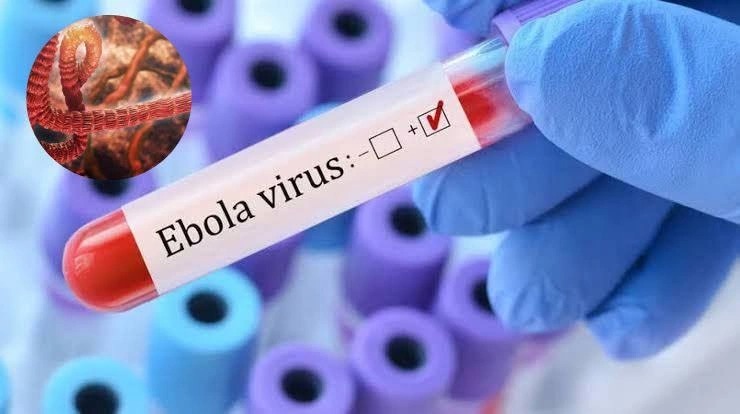
… As NCDC tasks churches, mosques on awareness, surveillance
… Oyo, Enugu, activate disease surveillance
…The Senate seeks emergency funding, orders compulsory screening at entry points
By Joy Onu
The World Health Organisation (WHO) has sounded a note of caution to countries against imposing travel or trade restrictions on countries affected by the Ebola outbreak. The warning is coming barely 24 hours after Nigeria confirmed an imported case of Ebola Bundibugyo virus disease in the Federal Capital Territory (FCT), with 44 contacts identified for monitoring.
The global health agency said it was closely monitoring the situation and would continue to verify travel and trade measures introduced in response to the outbreak, while regularly reassessing its risk assessment as new developments emerge.
Nigeria confirmed one case of the disease on October 20, making it the fifth country to detect the virus since an outbreak was declared in the Democratic Republic of the Congo on May 15, 2026.
WHO said in a statement that the patient is a woman with a recent travel history to Uganda. Her symptoms began on October 7, four days after arriving in Nigeria, and she sought treatment at a private health facility in Abuja on October 11. Laboratory tests confirmed the infection on October 20.
The woman is currently in isolation and receiving medical care, while 44 contacts have been identified and are being monitored. Investigations are ongoing to establish the likely source of infection and reconstruct her full travel and exposure history.
The Federal Ministry of Health and Social Welfare said infection prevention and control measures are also being strengthened at the private health facility where the patient initially sought treatment.
The WHO also confirmed that Kenya had recorded nine cases linked to an imported infection in recent weeks, highlighting the need for countries across the region to strengthen preparedness against cross-border transmission.
The organisation urged governments to sustain heightened disease surveillance, investigate alerts promptly, ensure laboratories can safely test suspected cases and keep rapid-response and clinical teams ready for immediate deployment.
It also called for stronger infection prevention and control measures in public and private health facilities, adequate stocks of essential medical supplies, active community engagement and increased monitoring at points of entry, backed by appropriate response plans.
According to WHO, sustained preparedness was essential to detect cases early, prevent further transmission and protect health workers and communities.
While advising against travel and trade restrictions on affected countries, the organisation said it would continue to monitor and, where necessary, verify measures introduced in response to the outbreak.
It added that its risk assessment was being regularly reviewed to incorporate the latest developments.
In the same vein, the Nigeria Centre for Disease Control and Prevention (NCDC) has charged religious institutions on awareness, surveillance across the country to intensify public enlightenment on Ebola disease following confirmation of a case in Nigeria.
The agency said in a statement on Wednesday that the Bundibugyo strain responsible for the current outbreak has no approved vaccine or specific curative treatment.
NCDC recognised that churches and mosques are vital partners in public health interventions. Due to their large followership and community influence, the NCDC frequently tasks faith-based organisations with driving health awareness and community-level disease surveillance to control outbreaks.
Also, in a move to contain the spread of the Virus, the Oyo and Enugu State governments have assured residents that no confirmed case of Ebola Virus Disease (EVD) has been recorded in their states, saying it has strengthened surveillance and emergency response measures to prevent a potential outbreak.
The Enugu State Commissioner for Health, Prof. George Ugwu, said on Wednesday that the State has strengthened its disease surveillance and put health officials on alert within the 17 council areas in the state.
Speaking at a press conference on actions of the state government in response to confirmed case of Ebola in Abuja, Ugwu said that following the confirmation of the case, the government had reactivated and strengthened the Enugu State Public Health Emergency Operations Centre (PHEOC) to coordinate preparedness, surveillance and response activities.
“Specifically, the State has intensified disease surveillance across its 17 Local Government Areas and strengthened coordination with relevant agencies and partners.
“Surveillance activities around the Akanu Ibiam International Airport are also being strengthened in collaboration with Port Health Services and other relevant stakeholders.
“The state is further maintaining its Rapid Response Teams and relevant technical personnel on standby, while preparedness measures are being reviewed to ensure that the state is able to respond promptly should a suspected case be identified.
“Public awareness and risk communication activities are also being strengthened to ensure that members of the public receive accurate and timely information,” Ugwu, who is a member of the Presidential Committee on Ebola Prevention, said.
In Oyo, the state Commissioner for Health, Dr. Oluwaserimi Ajetunmobi, urged residents to remain calm and vigilant while adhering to recommended health and safety precautions.
Ajetunmobi said this on Wednesday during an interview with journalists in her office, explaining that the Ministry of Health began preparations in June 2026 to strengthen the state’s readiness for possible outbreaks of Ebola and other infectious diseases, including diphtheria.
She said the ministry had adopted a One Health approach, involving collaboration with relevant stakeholders to strengthen disease surveillance, preparedness and response across the state’s 33 local government areas.
According to the Commissioner, the ministry is working with the Ministries of Information, Agriculture and Environment, as well as the Epidemiology Unit of the University College Hospital (UCH), Ibadan, to improve coordination and ensure a timely response to potential public health threats.
As part of the preparedness measures, Ajetunmobi said disease surveillance units had been activated across the 33 local government areas, while Information, Education and Communication (IEC) materials containing information on Ebola transmission, preventive measures and emergency contact numbers had been printed and distributed to health facilities.
She added that infection prevention and control measures had also been strengthened across healthcare facilities, with health workers directed to maintain a high index of suspicion for patients presenting with symptoms that could indicate Ebola infection.
The Commissioner stressed the need for strict compliance with infection prevention and control protocols, including the appropriate use of personal protective equipment (PPE), to protect healthcare workers and prevent possible transmission within medical facilities.
On the symptoms of the disease, Ajetunmobi explained that the early signs of Ebola could resemble those of malaria, making prompt medical assessment important for people who develop symptoms after possible exposure.
She listed symptoms to watch for as sudden fever, severe headache, joint or muscle pain, vomiting, diarrhoea, extreme tiredness, abdominal pain and unexplained bleeding from body openings, including the nose, ears, eyes or vagina. According to her, the incubation period for Ebola Virus Disease ranges from 2 to 21 days.
She advised residents experiencing such symptoms to seek medical attention promptly rather than engage in self-medication or delay reporting their condition to health authorities.
On the state’s capacity to manage suspected infections, the commissioner said trained healthcare personnel, including laboratory teams responsible for sample collection and testing, were available to respond to any suspected case.
Meanwhile, the Senate on Wednesday called for proactive measures to stem the spread of Ebola in the country, urging the Federal Government to release emergency funds from the Service Wide Votes to support preventive measures and essential services.
It said the funds should be made available to the NCDC and Ports Health Services (PHS) to immediately implement preventive measures, particularly comprehensive screening at all entry points into the country.
The Senate directed health agencies to conduct mandatory screening of all international travellers arriving in Nigeria by air, land and sea, regardless of whether they were coming from countries where exposure had been reported.
The red chamber also resolved to amend the Quarantine Act of 1926 to modernise public health services in the country.



