By Joel Ajayi
For three weeks, the indoor sports hall of the Moshood Abiola National Stadium, Abuja, became more than a venue for volleyball.
It was a hub of sporting excitement, business opportunities, entertainment and renewed hope for traders and small-scale entrepreneurs whose livelihoods received a boost from the 2026 CGC Bashir Adewale Adeniyi Volleyball Premier League.
As the curtain came down on the final phase of the competition on today Thursday, October 29, 2026, players, coaches, officials and traders reflected on an event that brought together 26 teams, comprising 13 male and 13 female sides, for a total of 156 games across the competition’s phases.
Beyond the fierce rallies, powerful serves and thrilling encounters on the court, the championship created an economic ripple effect that extended to food vendors, sportswear sellers, suya sellers, groundnut merchants, snack vendors and car wash operators around the stadium.
For these traders, the volleyball league was not just another sporting event; it was an opportunity to earn more, support their families and keep their businesses running.
The steady influx of players, team officials, supporters and other spectators translated into increased patronage for vendors who took advantage of the gathering to sell their goods and services.
From plates of food to grilled suya, snacks and sporting equipment, business activity flourished as volleyball enthusiasts converged on the venue to enjoy the action.
One of the traders, who expressed gratitude for the sponsorship, said the competition had positively affected businesses and brought relief to families dependent on daily sales.
“Imagine we are having this programme throughout the year; it would have brought more joy to people,” the trader said, appealing for sustained investment in sporting competitions that create opportunities beyond the playing arena.
The traders also called on other well-meaning Nigerians and corporate organisations to emulate the Comptroller-General of the Nigeria Customs Service, Bashir Adewale Adeniyi, by supporting sports development and competitions capable of creating economic opportunities for ordinary citizens.
For the participating teams, the championship also provided competitive exposure and financial support.
Each team reportedly received ₦500,000 in palliative support during the first phase and another ₦500,000 for the final phase to help ease the cost of feeding players during their camping.
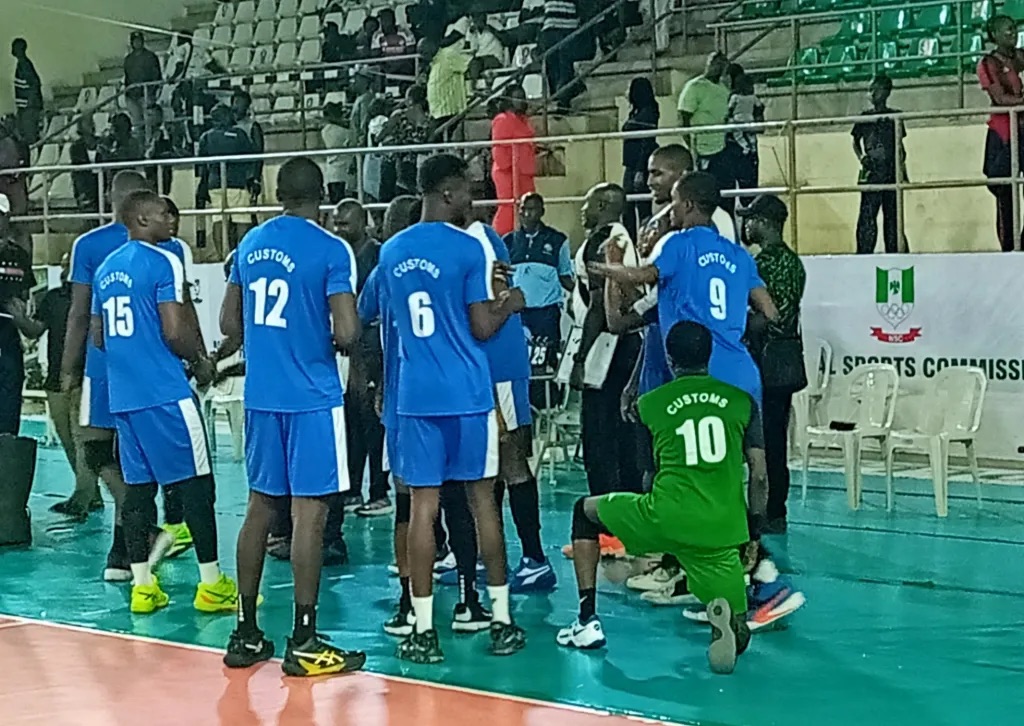
Customs head coach, Abdullahi Salisu, attributed his team’s progress to the encouragement of the Comptroller-General and the service’s sports secretary, adding that sponsorship had created opportunities for international exposure and improved performance.
“Because of the sponsorship we are getting, we are improving. From all indications, it seems we are going to win. We still have three more matches. Every point and every match is important for us, but that is our target,” Salisu said.
His remarks underscored the importance of sustained institutional backing in helping teams prepare, compete and pursue their ambitions.
Similarly, the Vice President of the Nigeria Volleyball Federation and Chairman of the League Management Committee, Architect Adamu Tenimu, expressed appreciation to Adeniyi for supporting the staging of the premier league for the third consecutive time.
Tenimu described the competition as the flagship of Nigerian volleyball, providing a platform for locally based and internationally exposed players to showcase their abilities while contributing to the growth of the sport.
Ultimately, the 2026 CGC Volleyball Premier League demonstrated that investment in sports can deliver benefits beyond medals and trophies. For players, it offered competition and development; for teams, financial relief; and for traders, valuable business opportunities.
As calls grow for more sustained private-sector and institutional support for sports, the smiles of traders and the determination of players offer a compelling reminder: when sports thrive, communities can benefit too.