

By Victoria Yakubu
For some Nigerian women, anklets are stylish accessories that complement their appearance and express personal taste. For others, however, the ornaments are associated with promiscuity, homosexuality and questionable lifestyles.
The growing popularity of anklets in women’s fashion has generated differing opinions, with cultural traditions, religious beliefs and personal perceptions influencing how people view the fashion accessories.
A cross-section of Nigerians who spoke with our correspondent in Abuja expressed contrasting views, with some defending anklets as ordinary fashion items and others questioning the lifestyles of women who wear them.
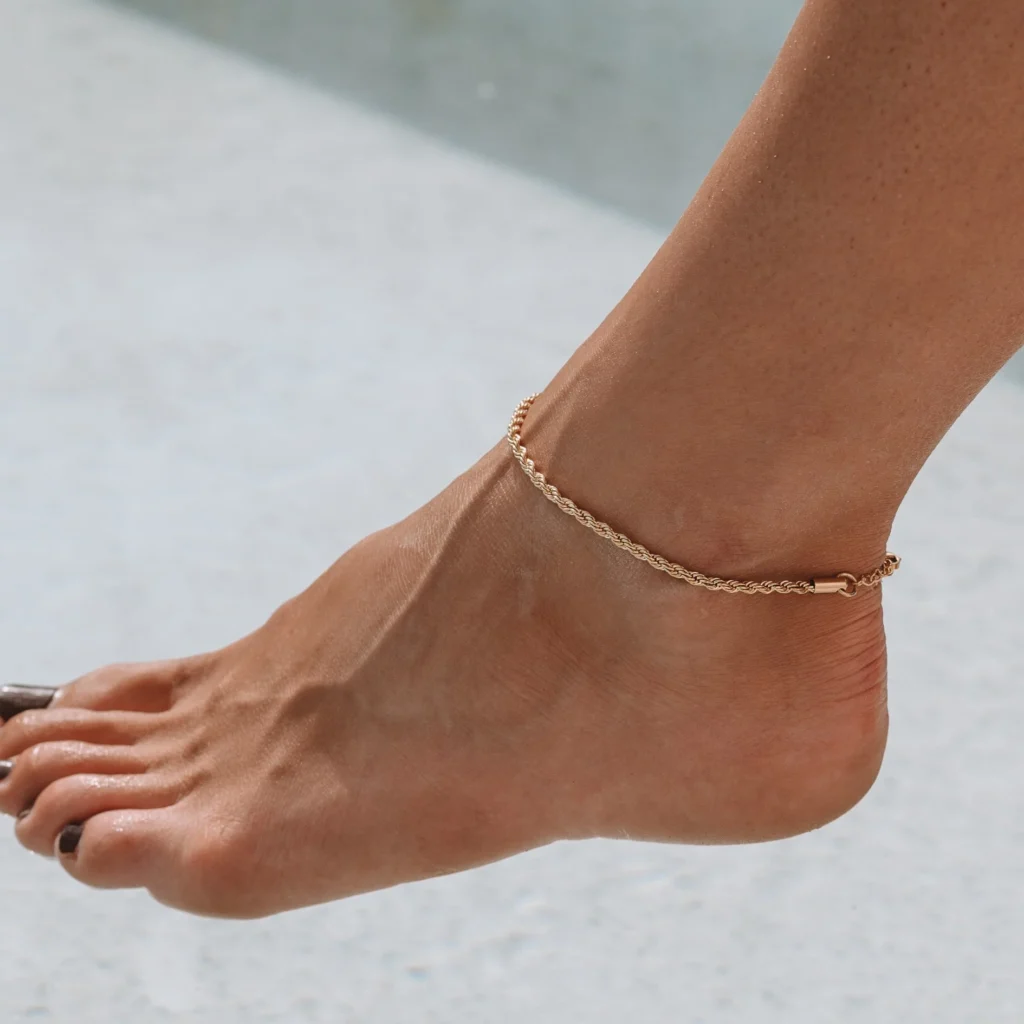
Anklets, which include leg chains, are decorative ornaments worn around the ankles. They come in different designs and materials, including beads, brass, crystals and metal chains. Although worn by both men and women, they are more commonly associated with women in the contemporary Nigerian fashion industry.
A historian, Mrs Amarachi Joseph, said the controversy surrounding anklets reflected how cultural practices could acquire different meanings across generations and communities.
According to her, the ornaments historically held cultural significance among several Nigerian ethnic groups, symbolising prestige, wealth, beauty, religious affiliation and social status.
She explained that among the Igbo, anklets made from brass, beads and elephant tusks were associated with prestige and beauty, while in some Yoruba communities, chiefs and traditional religious devotees wore them as symbols of authority and identification.
“Among the Hausas, some of them wear anklets to beautify their feet on their wedding day,” Joseph said.
She added that some communities attached spiritual significance to the ornaments, while others used them to identify members of particular groups.
Joseph also recalled that in some West African societies, husbands traditionally presented anklets to their brides as symbols of marriage. She however noted that changing social perceptions had contributed to the controversy surrounding their use.
An Abuja resident, Doris Usman, described anklets as beautiful ornaments that women could wear daily or on special occasions, depending on their preferences.
Usman said they came in different sizes, styles and designs, adding that some people attributed health benefits, including relief from leg discomfort and improved blood circulation, to wearing them.
However, a businessman who declined to be named associated anklets with waywardness and queer sexual orientation such as homosexuality or lesbianism, insisting that he would not consider a relationship with a woman who wore them.
“I hate seeing ladies wearing anklets, and I do not think I can have any relationship with ladies who wear them,” he said.
Another respondent, Mr Chris Okigbo, said anklets initially made him associate women who wore them with prostitution and same-sex relationships.
He, however, said his perception changed after seeing women he knew personally wearing the accessories.
“When I started seeing reasonable ladies who are even close to me wearing them, I reconsidered my stance,” he said.
Kefas, another respondent, described anklets as attractive fashion accessories and said he had no objection to women wearing them, although he acknowledged that some stereotypes surrounding the ornaments still crossed his mind.
He said he had heard claims linking anklets to lesbians and commercial sex workers, as well as descriptions of them as a fashion preference among certain social groups.
“Personally, I love leg chains the same way I love piercings and make-up. When I see a girl wearing one, especially when it suits her, I just see her as fashionable,” he said.
He admitted, however, that he could not completely dismiss the social perceptions surrounding the accessory.
For Raymond Dickson, the negative perception of anklets stems largely from changing cultural interpretations rather than the ornaments themselves.
He argued that African women had historically worn beads and chains for beautification, wealth and social distinction, long before such accessories acquired some of their present-day stereotypes.
Dickson maintained that wearing anklets should not automatically invite assumptions about a woman’s character or lifestyle. He compared them with other fashion items, such as expensive watches, rings, bracelets and necklaces, which rarely attract similar criticism.
“I will be comfortable seeing my wife wear one. After all, she wears hand and neck chains, wristwatches and expensive bags to display class and an exotic lifestyle. I can say it is a lifestyle thing,” he added.
Beyond fashion, traditional religious practices offer another perspective on the significance of anklets.
Madam Omifunke Salami, an Osun devotee, explained that different Yoruba deities had specific ornaments worn by their followers around the neck, arms or ankles.
According to her, devotees of Osun, the Yoruba deity associated with beauty, wear yellow and white beads around their necks and ankles as symbols of devotion and identification.
“Osun was a beautiful person. She wore beautiful ornaments in her time, on her neck and ankle, and that is why her devotees wear the same now. It is worn for beauty and identification, so we know that we are children of the same kindred spirit,” she said.
As anklets gain wider acceptance in contemporary fashion, the contrasting opinions highlight how an accessory regarded by some as an expression of beauty and personal style can attract moral judgments from others.
Ultimately, wearing an anklet does not necessarily define a woman’s character, but the debate reflects the continuing influence of cultural beliefs and social stereotypes on personal fashion choices.



