By Ameh George
In Nigeria, rotational presidency often referred to as “zoning” is an informal power-sharing arrangement designed to alternate the office of the president between the North and the South every eight years, serving as a vital mechanism for national stability and regional inclusion. The debate surrounding this convention has intensified ahead of the 2027 general election, largely centered on former Vice President Atiku Abubakar’s decision to contest as the presidential candidate of the African Democratic Congress (ADC) during what many political stakeholders consider a Southern eight-year cycle.
Why Rotational Presidency Matters
Although the 1999 Constitution does not explicitly mandate power rotation, political elites and regional stakeholders have relied on it throughout the Fourth Republic to manage Nigeria’s complex ethnic and religious diversity. It is seen as a viable tool for preserving national unity and peace. Supporters of zoning argue that rotating power prevents any single region from monopolising governance, thereby reducing mutual suspicion and ethnic tension.
Political analysts frequently point to the post-election violence of 2011, which followed a perceived breach of a zoning agreement, as evidence that ignoring regional balance can threaten national peace.
Many political analysts and stakeholders have argued for the zoning system, insisting on its potential for guaranteeing fairness and reciprocity. Proponents view rotation as a reciprocal pact rather than a mere political concession. Because Northern Nigeria held the presidency for eight consecutive years under former President Muhammadu Buhari (2015–2023), many political leaders, including figures from the Presidency and former Kaduna Central Senator Shehu Sani, have maintained that the South should complete a full eight-year tenure (ending in 2031) before power returns to the North.
The system is being canvassed for by many Nigerians because of its ensuring long-term political predictability. According to advocates like Shehu Sani, respecting the South’s eight-year cycle ensures that when the presidency inevitably rotates back to the North in 2031, Northern candidates will face minimal regional resistance.
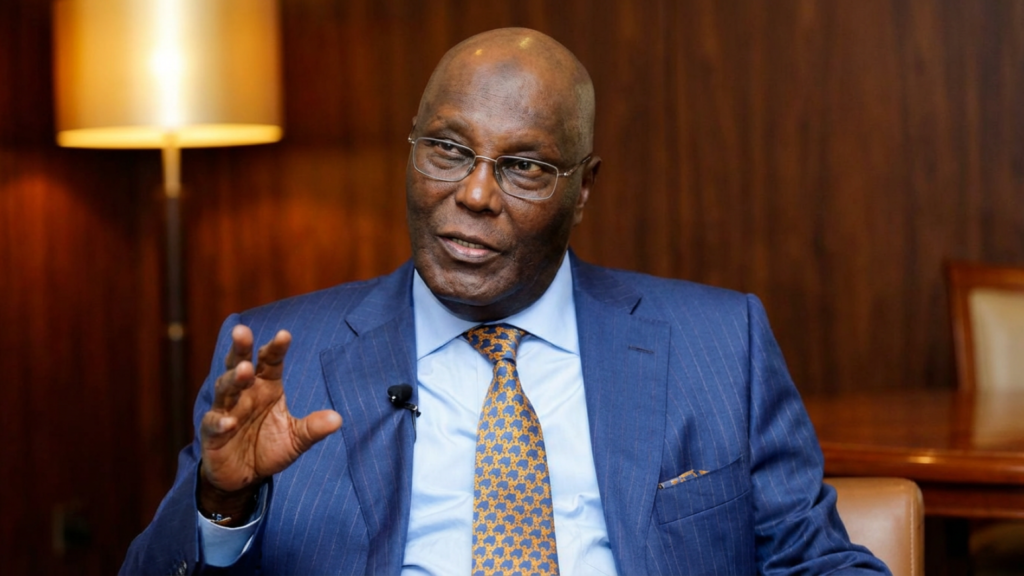
Atiku Abubakar, a northerner, running on the platform of the African Democratic Congress (ADC) with Rotimi Amaechi as his running mate, has sparked significant debate by contesting after only four years of a Southern administration under President Bola Ahmed Tinubu.
A section of Nigerians has however lent arguments supporting Atiku’s candidacy and the rationale supporting it.
They situate their position on constitutional rights and meritocracy. Defenders of Atiku’s bid emphasize that zoning is a party-level convention, not a constitutional requirement, meaning every qualified Nigerian has the legal right to contest any election. Some political commentators also argue that contesting across regional lines promotes meritocracy and forces candidates to build broad, cross-regional coalitions rather than relying on regional entitlement.
Some have even made a proposal for a Single Four-Year Transition Term to diminish the argument in support of a zoning arrangement. In November 2026, reports from the G100 group indicated that Atiku, alongside other opposition contenders, agreed to serve a single four-year tenure if elected in 2027.
Proponents of this arrangement describe it as a transitional government aimed at resetting national governance before handing over power, with advocates suggesting it creates a pathway for a subsequent Southeastern presidency.
There is also the perspective on the advocacy for a formal constitutional reform. Atiku has previously argued that informal zoning arrangements lead to political indiscipline and crises.
To resolve this, he formally proposed to the National Assembly that the 1999 Constitution be amended to institutionalise a mandatory, single six-year rotational presidency among Nigeria’s six geopolitical zones.
A larger majority of Nigerians and some international interests have however sustained criticisms and concerns over his candidacy.
The Atiku 2027 bid stands as a threat to the zoning convention in Nigeria. Critics, including officials within the Presidency, warn that a Northern victory in 2027 would effectively dismantle the rotational presidency system.
They argue this could generate deep political bitterness in Southern Nigeria and destabilise future elections.
Most opinion holders have pointed to the fact that Atiku is simply prioritising personal ambition over national cohesion. Representatives of the Presidency have criticised Atiku’s candidacy as placing individual political ambition above national stability, arguing that Northern leaders should exercise patience until 2031 to honour the established North-South balance.
The steady decline in the trust quotient for politicians has raised skepticism toward single-term pledges. While Atiku’s camp and allied groups have floated a one-term transition agreement to assuage southern concerns, critics in the region remain cautious about informal promises, noting that constitutional provisions allow an elected president to seek a second term regardless of pre-election gentlemen’s agreements.
Historical account accurately reflects the zoning dispute within the Peoples Democratic Party (PDP) following the death of President Umaru Musa Yar’Adua in May 2010.
The political conflict centered on how power should rotate between Northern and Southern Nigeria, leading to major rifts in both the 2011 and 2015 presidential elections.
There was the zoning argument stemming from 2007–2015. Under the PDP’s power-sharing arrangement, the presidency rotated between the South and the North every eight years, two four-year terms. After Southern President Olusegun Obasanjo served from 1999 to 2007, power shifted to the North with President Yar’Adua.
When Yar’Adua died in 2010 and Vice President Goodluck Jonathan, who is from the South-South, assumed office, Northern leaders, including former Vice President Atiku Abubakar, Ibrahim Babangida, and the Northern Political Leaders Forum (NPLF) led by Adamu Ciroma, argued that the North was entitled to retain the presidency until 2015 to complete its eight-year slot.
During the 2011 election, this position was held up tightly In the build-up to the 2011 primaries, the NPLF selected Atiku Abubakar as the Northern consensus candidate to challenge Jonathan.
Pro-zoning allies also pursued legal action and internal party pressure to bar Jonathan from running, arguing it breached party rules. Jonathan and his supporters countered that zoning was a party convention that could not override his constitutional right to run, and he went on to defeat Atiku at the January 2011 PDP primary.
Also, during the 2015 election, the same argument was played up. When Jonathan sought re-election in 2015, Northern politicians and several PDP governors argued that he had breached an alleged agreement to serve only one term and return power to the North.
In protest, Atiku, alongside five PDP governors, the G5/nPDP faction and other key figures, defected to the newly formed opposition coalition, the All Progressives Congress (APC). They backed Northern candidate Muhammadu Buhari, who defeated Jonathan in the 2015 general election.
Considering a broader context on zoning, while Atiku and his allies championed zoning to protect the North’s turn in 2011 and 2015, political commentators have frequently noted that the debate over zoning in Nigeria has shifted over time depending on political alignments, such as during the 2019 and 2023 elections, when Atiku contested for the presidency immediately after President Buhari’s two-term Northern administration.
Critics, political commentators, and regional groups argue that maintaining an unwritten north-south balance is vital for national cohesion, pointing out that Atiku previously championed this exact principle.
He argued that zoning was necessary in a diverse nation to prevent “majority tyranny” and ensure fairness, warning that ignoring party ground rules sends wrong signals about obeying national laws.
Some media have also reported Atiku recalling how he turned down calls to challenge President Olusegun Obasanjo in 2003 out of respect for the party’s resolution keeping power in the South for eight years.
Ahead of the 2027 elections, not a few stakeholders have argued that while Atiku has the constitutional right to run, his insistence against the supposed zoning arrangement that is meant to instill some order and stability in the polity would upset the apple cart and tilt the advantage in power distribution to the more dominant North.
Similarly, former House Speaker Yakubu Dogara in January 25, 2026 and the South-North Progressive Forum in May 24, 2025 have urged northern aspirants to allow the South to complete an eight-year presidential cycle before power returns to the North in 2031.