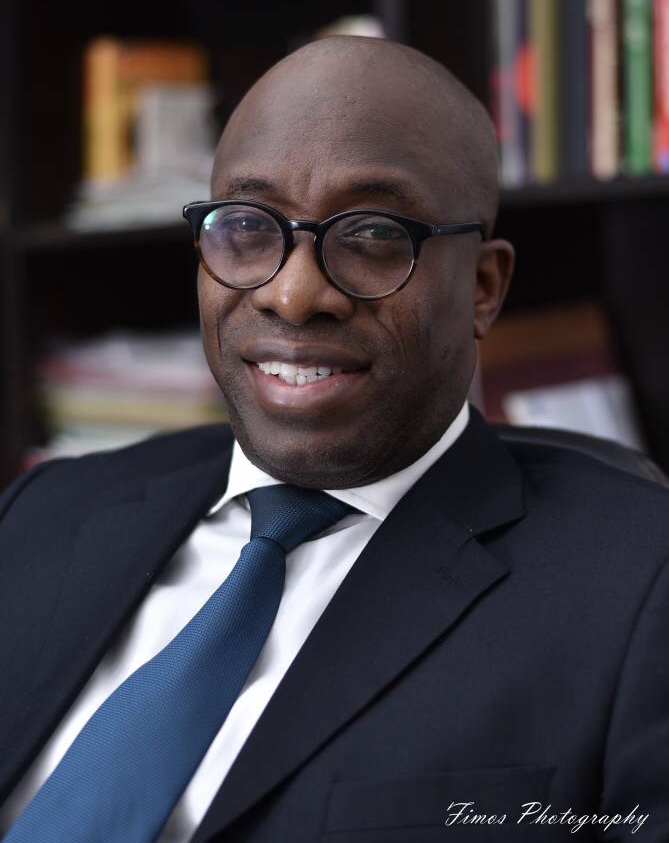
Spokesperson to former Vice President Atiku Abubakar, Mr. Segun Sowunmi, in this interview with SAMUEL ALONGE, dissects Nigeria’s problems, with a clincher that the leaders and the led need a social contract. Besides, he hinges the probability of Atiku, contesting for President again in 2023, on the state of the latter’s health. Excerpts:
What is your view of Nigeria at almost 61?
I have done enough on this. At the commencement of the 60th anniversary held last year, I said to Nigerians that we have circled our problems for too long; we have complained, criticised, agonised and have been angry for long.
It’s now time for us to reset our agenda; all the citizens of the country and those that are in the Diaspora. Anyone related to Nigeria by birth or naturalization should reposition their minds and see what we can do collectively to make the country great. I became persuaded because I tried to look at the last few decades that we were already adults and look at the previous decades before we could be easily active participants.
I found that over the years, people have been only satisfied with the Nigerian government in retrospection; what does that mean? It means people are happy with the government only after it has left and so every new government that comes becomes the new hero. However, after voting the government into power, they begin to hate it and start loving the government that they had been unsatisfied with.
That told me that conversation is the very high level of expectations that had not been met. Why are Nigerians’ expectations not being met? There are one million reasons. One of them is that, it is possible for the expectation of Nigerians not to have been met because the people in the country themselves and the leaders, have not had what we call a shared vision. If everybody does not know what we are trying to do, where we are going and what we’re trying to build, it’s easy for people to work at cross purposes. It’s easy for people to be frustrated, not knowing precisely what the frustration is.
Then again, I thought that the Nigerian nation at 60 had become ripe enough to have social contract with the people, which means; what are those minimum things that the citizens can expect from the country? I began to ask myself, what does the country really guarantee for a citizen? I could find the Universal Basic Education Commission (UBEC) of PDP’s intervention during the early days which says Nigerians are entitled to education at age six until they finish the first three years of secondary school, guaranteeing the first nine years.
I then asked myself; is that all that a nation can guarantee to the people? I became worried that okay, we can come together now and say, what are the minimum safety nets of social contracts that this nation would guarantee to a citizen? So having followed that trajectory, I started to adjust even my conversations and styles from maybe, even criticising the government or pointing accusing fingers at individuals. I decided that it was best to now start pointing at what I think we should do, and to God be the glory, that decision is beginning to take action. Are Nigerians satisfied with their country at 60? The answer is no. If they were, then their complaints wouldn’t be heavy.
Are Nigerians satisfied with the government of the day? The answer is no. Nigerians believe that the people that served in the past are better than those that are serving now. But don’t forget, I have earlier said that there is the tendency for Nigerians to love the leader only after he has stepped out of office. The Nigerians that are in the Diaspora are now in larger numbers. That also indicates that perhaps our people are gravitating, and looking for greener pastures and feeling frustrated here.
How worried are you about the unemployment situation in Nigeria?
Our own unemployment figure doesn’t help. We have a very large population of unemployed young people, which has also led to internal frustrations. We have a situation where the country doesn’t give anybody room for happiness or comfort; we have allowed things to fester for so long. We must consider the security architecture that we are running and determine whether we can afford to change it, improve on it and make it more resettable to our peculiar challenges. We must also move in the direction of industrialisation, to take our thoughts out of the labour market.
How would you assess the role of the police, in terms of internal security?
Talking about the police, we must thank them for standing up and providing security despite the odds, as we have over-stretched them. The structure suggests now that the level of crime and criminal activities around the country doesn’t make it reasonable to say we wouldn’t think about alternative models, which will probably give the state’s opportunities to start their own police force, so that they can police themselves and they can fit into the federal police structure. This is because they have models they can copy and they don’t have to reinvent the wheel.
What’s your take on the state of the economy?
If you look at how the present government is piling up debts, you’re going to be very worried. No nation should have a debt policy that doesn’t include a clear programme or how they’re going to repay the debts because not to have a programme for repayment is to be living at the mercy of those you borrowed the money from, probably expecting them to forgive you or not come for their money. That is not a good way to run a nation. That is not an honourable way to run a nation. Nations must, yes, use debt instruments for development, but these debt instruments must be instruments that nations have the intention to make judicious use of. And, for you to pay back the debts, you must also tie them to projects that can generate income to draw down the debts.
What are your comments on agitations by various ethnic nationalities for self-rule?
There are a lot of issues there, all tied to the problem with national cohesion. Now, more than any other time in our history, the country has been divided a lot. It is as if almost every section of the country has some ethnic nationality agenda. Take, for instance, the IPOB asking for the revalidation of the civil war era Biafra. In Yorubaland, some are agitating for Oduduwa Republic. When you go to the Middle Belt too, you’ll meet similar agitations.
Whether you call it true federalism or restructuring, we must at this point now determine for ourselves, a constitution. We must come to realise that this is the basic thing that will allow us to build a nation. We don’t have any reason to be afraid because I do not think that any section of the country should be deceiving itself, that it can stand alone outside the others. Whatever greatness any section has, it has been greatness that accrues from being a member or being part-owners or a country that is diverse or as blessed as Nigeria.
Even the leadership challenges can only be solved by good leaders, within a time of five, six or 10 years. A good leader will make us forget the years of bad leadership. We should rather, fix the leadership problem and for us to fix this problem, we need to fix the orientation problems for the people, so that the citizens themselves would have an idea of what to look out for. All of these and more are the reasons I am championing the reset agenda. Even you people in the media can help us to push it, so that all persons can begin to say what can I do for the country, why don’t I pray for Nigeria, why not be a solution bringer, and why won’t I reduce the acrimonious complaints that we have in the country.
Do you see Nigeria overcoming the second wave of economic recession any moment soon?
The economy of any nation is like a circle; sometimes it will go up and come down. Nigeria has had glorious years in the economy in its over 60- year history. For instance, if we didn’t have glorious years in the economy, we wouldn’t have had a nation like Nigeria and boastfully say, money is not our problem. Nigeria also had a glorious era in the early days in the last 16 years of the PDP, until towards the end where we started growing the economy at a six percent average, and that growth of the economy propelled us to become the biggest economy in Africa.
We, in the PDP, managed the country in a manner that people thought that we were the likely champion of the emerging market. That we are under a leadership, under the APC where we have struggled much on the economy does not mean that a better leader, a leader who understands the workings of the economy and how to put together a good team that can work for the country cannot turn things around. After all, Nigeria still has a very large population, which means we have a large market. Nigeria still has an appetite for a lot of things that have not been created, which means we can create our own local industrialisation to solve the problems of the citizens. Nigeria still has a fairly stable climatic condition, which means that we can plan with the weather. Nigeria still has a very good quantum of arable land, which means that we can embrace agriculture and agriculture value chain.
Nigeria still has a great potential in tourism, which means that any leader that knows what to do can sit down and plan, and make us more available and more receptive to visitors. Nigeria still has a very large set of diverse people, which means that we are going to have a pool of ideas of a lot of people with views and opinions that can be harvested. Nigeria is like a rainbow nation and a rainbow always at every point in time, no matter how gloomy things are, always has a potential to turn it around and become great. So, as far as I am concerned, Nigeria can come out of its economic recession if leaders of the country expand access and opportunities for the majority and if they readjust their governance philosophy.
What is your assessment of the performances of South-West governors?
Well, I think that relative to their colleagues in the other parts of the country, you will see that they are enjoying the s of a fairly more egalitarian people; the people in the South-West. Each of the states fairly has citizens who can drive development either in their small businesses or through their small and medium-scale enterprises. The economy is still good here.
They are still contributing a whole lot to the VAT, which means that the consumer relationship here is very high. There is a lot of room for improvement and I believe that a great number have reduced the conversation around vision in governance and they are only doing ordinary things. And I hold them responsible to themselves because where you do not have an arrangement of where erring leaders are punished, you will find out that you are going to enthrone a culture of people doing whatever they like and that is what we have here. Leaders are stealing the country blind and nobody is holding anyone responsible.
Which faction do you belong to in Ogun PDP?
I have struggled over the years to stay away from being completely involved in any of the factions. I have tried as much as possible- even sometimes being criticised, to keep a good relationship with all of them in so far as they are for PDP and I am for them. If anybody were to ask me now that what is my point of view about the Lado group (Adebutu’s group), I will tell you clearly that they are my people. I am for them and they are for me. If anybody were to ask me what is my thinking about the Kashamu group; I would say clearly, I am for them, they are for me, and they are my people. If anybody were to ask me what my view about another faction is, I will tell you, I am for them and they are for me. What I have done over the years is to remove myself from the crisis and not to allow any personal frustration or personal hurt determine my relationship with them. But, we thank God that peace has returned to the Ogun State PDP and we are now one happy family.
What is your message to Nigerians ahead of the 2023 general elections?
On the national level, I have been asking myself and people have asked me, will Atiku contest? Should Atiku contest? What is going to happen? My answer has been very simple; Atiku is not the kind of person that pretends. So, when he is ready and he has got to the point where he has to declare his ambition, he will definitely declare it frontally. But personally, I have said to myself that the elephant in the room that we want to take care of before 2023 are unemployment, a broken down economy, insecurity, lack of unity in the country, how to create jobs, and bringing the country to be reconciled.
These issues are still on the table. So if the big elephant in the room is still on the table, perhaps we still need to call the experienced hunters to come and help us to take care of it. So what will determine whether Atiku will contest in 2023 is whether he has the level of vitality. I think we should not be looking forward to a president that could be probably ill in office because we have had that with President Buhari.
So, we do not need that in the future. But if the vitality is there up till now, I believe God will continue to sustain him (Atiku) and if he has the appetite to take on the job, why not? Atiku has ever been at the forefront of national development; advocating for Nigeria to have good democracy and he has done it for such a long time at great personal cost and at great emotional cost. But if he sees that he cannot afford to sit down and be watch Nigeria go down when he still has what it takes to help us, then he will have to get up again and show Nigerians that this is the way. At least, so that it can be on record that Atiku Abubakar spent his entire adult life trying to serve Nigeria; making himself available for Nigeria and advocating on issues for Nigeria. May God Almighty give us good leaders going forward.