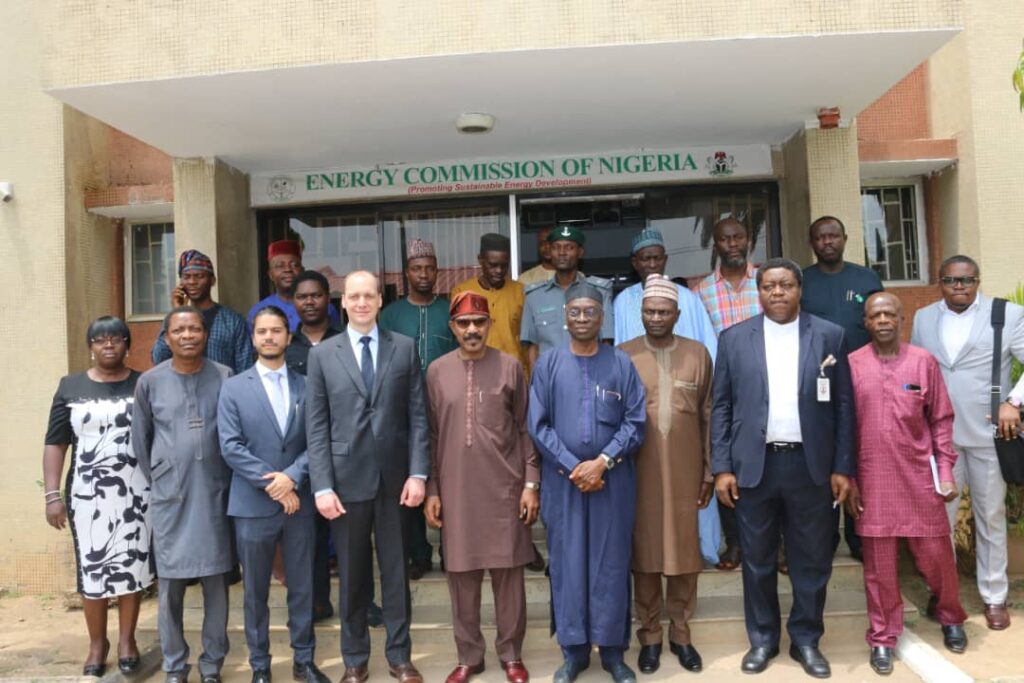
In its continued efforts towards promoting sustainable cooling in Nigeria, the Minister of Science Technology and Innovation, Senator Adeleke Olorunnimbe Mamora Thursday engaged stakeholders on the need to imbibe the zeal for policy implementations order to achieve the desired goals.
The Minister made the statement while declaring open a one-day stakeholder’s consultative workshop on energy and inauguration of national technical committee on sustainable cooling organized by Energy Commission of Nigeria (ECN), in conjunction with the United Nations Environment Programme (UNEP), Clean Cooling Collaborative (CCC) and United for Efficiency (U4E) in Abuja said there is need to optimize every cooling units to generate a conducive working environment in order to achieve optimal results.
Members of the committee inaugurated include: Energy Commission of Nigeria, Standard Organization of Nigeria, Federal Ministry of Environment (Department of Climate Change and National Ozone Office), Nigerian Customs, NARP, UNEP project technical team expected to provide general guidance to the projects implementation with focus on data collection, data analysis of MEPS, ACs market monitoring amongst others.
Senator Mamora, who also emphasized the significance of stakeholders’ involvement in achieving national and international climate targets, hinted at effective adherence to the policies and guidelines to ensure effective scrutiny of cooling systems brought into the country so that it does not become a dumping ground for substandard products.
According to him, with the global warning which tailor to addressing issues of environment and carbon emissions, it is pertinent for law enforcement agencies to ensure right actions are taking to avoid humans going into extinction by appropriately adapting to changing environment.
The Minister acknowledging the presence of foreign experts from UNEP for assisting Nigeria in replacing inefficient cooling appliances with the most efficient ones in line with President Muhammadu Buhari’s commitment to mitigating the challenges of climate change, stated that Nigeria remained the largest market in Africa, which also applied to the cooling sector.
“With the current growing population, combined with improving lifestyle, urbanization and rising global warning, Nigeria will continue to experience growing demand for Air Conditions (ACs), refrigerators and other cooling devices; thus, becoming one of the fastest growing ACs and refrigerators market in the world. Unfortunately, most of the ACs utilized in the country have Energy Efficiency Ratio (EER) below internationally acceptable Minimum Energy Performance Standards (MEPS).
“Consequently, the importance of this Workshop on scaling up energy efficiency and climate-friendly cooling in Nigeria cannot be overemphasized”, said the Minister.
Earlier, Prof. Eli Jidere Bala, Director General and Chief Executive Officer of the Energy Commission of Nigeria, revealed that the workshop’s goal was to install effective cooling units in residential and commercial buildings, reduce the demand for electricity, and improve the environment’s condition as a result of greenhouse gas emissions.
Regarding the workshop’s effects, the DG stated that the committee will immediately begin its work to develop methods for putting the set rules into practice as part of the federal government’s commitment to upholding international standards.
“This one-day stakeholders engagement workshop is being organized to re-engage with stakeholders and refresh their minds in the key components of the project, its implementation strategies and respective stakeholder’s strategic roles in the entire implementation process”, said the DG.
Assuring the commission’s commitment to its roles in energy and energy-related matters, Prof. Bala recalled that the project on “Scaling Up Energy Entergy Efficient and Climate-friendly Cooling in Nigeria,” which was launched on February 3rd, 2022, was intended to hasten the country’s transition to climate-friendly low-Global Warning Potential (low-GWP) refrigerants and energy-efficient ACs while also supporting Nigeria’s climate targets as clearly stated in its National Climate Change.
According to him, “The important of this project cannot be overemphasized as it contributes to meeting one of the MDCs target of 2.5 per cent per year reduction in energy intensity through energy efficiency best practices across all sectors of the nation’s economy. Therefore, it is important that efficient cooling in Nigeria be given top priority in the development of NDC plan”.