

Williams Orji takes a look at the factors that will make or mar the chances of some of the contestants to seat of the President of the Senate, as the 10th Senate is set to take off.
As the nation emerges from what some analysts have described as the most rigorous and decisive electoral process in her history, another round of election stares us in our faces, when the elected lawmakers in the National Assembly, NASS, take their seats to begin another legislative year, which comes with the election of their principal officers.
Though, the coming election in NASS is more of the micro electing the officials that will pilot the affairs of the two chambers of the NASS, but the frenzy and dust it is generating is becoming more interesting, especially when one takes a cursory look at the array of contestants vying for the leadership positions in the two chambers, especially the Senate, commonly refers to as the Red Chamber.
There are about six dependable senators-elect vying to occupy the seat that Senator Ahmed Lawan will be vacating in the next few months as President of the Senate and the Chairman of the National Assembly, with each of them whipping up various sentiments to back up the suitability of his candidature.
However, many factors will play out to determine who wins the favour of the other 108 members to the coveted seat of the Senate President in June, when the President and Commander in-Chief will inaugurate the 10th National Assembly.
These factors include the influence of President and Commander in-Chief, the All Progressives Congress factor, the political bloc factor, the religion factor, the Ranking factor and lastly the Personality factor. A clinical look at the factors will suffix.
The President and Commander-in-Chief factor: Nobody can overrule the influence of the President of Nigeria in choosing the principal officers for the National Assembly, especially who becomes the Senate President and Speaker.
In the case of Asiwaji Bola Tinubu as the president, though he has clearly said that he would not be interfering in who becomes the next senate president, the facts remain that no president would like to work with a Senate President or Speaker he cannot reasonably control. A case in mind was the tenure of Senator Bukola Saraki as senate president during the first tenure of President Muhammadu Buhari.
So, Tinubu will go all out to make sure that whoever becomes the next senate president is someone he can work with on all fronts.
Political analysts believe that Tinubu will look forward to having a senate president like Ahmed Lawan, who will give his administration all the needed support from the senate chambers without asking much questions.
All Progressives Congress APC factor: The ruling party will like to exact its influence on who becomes the next president. Though, in doing that, the party hierarchy normally goes to where the interest of the president lies. So, to choose the person that the party will put forward to other senators to support in the quest to electing him as the next senate president, the party normally looks for a completely loyal party man, who will work on the ideals of the ruling party and the continuous influence the party exacts on legislators in the National Assembly through the senate president and other top officials of the senate.
Therefore, APC will not like to look the other way when the Senate convenes and begins the process of choosing who leads it as senate president.
The Political Bloc Factor: This factor comes to play in choosing who will lead the senate, most especially within those that belong in the same political bloc with Mr. President. Therefore, the tendency of Tinubu anointing a senate president from his political bloc is not far-fetched. This factor is given much consideration by the president because he normally goes for the person he knows well, the person he can trust and holds on to his loyalty at all times.
The Regional Factor: For balance of power, the country’s power equation always lies on a regional basis, which has been instrumental in stabilizing and giving every component a sense of inclusiveness. Therefore, in electing the next senate president, focus must be on the region that is not represented in the executive arm of the administration. In this case, the south-west and north east are technically out of the race for the next senate president, as the president in-wait is from the south-west. Same as the vice president elect, who is from the north eastern part of Nigeria.
The searchlight will be beamed on the South-east or the South-south, which are technically fitted to occupy the exalted position, as the out-going senate president is from the north, from north-east precisely.
Religious Factor: This factor comes to play mostly because of the same faith that the president and vice president represent. Politically, there will be clamour that the next senate president should be a Christian, for balance of power, as well assuaging the Christians that the APC is not insensitive to the call for a Christian to occupy the third most powerful position in the land. The party will also put into consideration how the same faith ticket would have caused it the presidency in the last election.
The Ranking Factor: Many analysts believe that ranking may play a major role in determining who becomes the next senate president. A senator is regarded as a ranking senate after he or she might have spent more than one term in the upper chamber. Therefore, some are rooting for a senator of long ranking to be elected as the next senate president.
But some analysts also differ in the sense that Senator Ken Nnamani became the senate president in his first year as a senator. To this school of thought, competence and loyalty to party rather than ranking should be the driving factor.
The Personality Factor: This factor revolves around the personality of the contestants; what defines and constitutes their personalities, especially as it relates to the office they are vying for. It also takes a look at their political backgrounds and achievements of such personalities either in the public or private sector.
In looking at this factor, emphasis should be on how these qualities can influence and drive an effective 10th senate assembly.
There are majorly three outstanding contestants from the southern part of the country who are basically eligible to contest for the office of the senate president, as those from the north may have been technically ruled out of the contest because of the factor earlier mentioned.
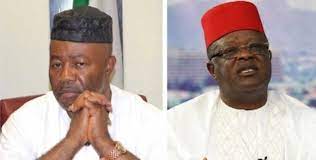
Those eligible contestants to the office include Godswill Akpabio, Orji Uzor Kalu and David Nweze Umahi.
These personalities come with long standing and intimidating curriculums that stand them out anywhere, any time.
However, amongst these lots, there are issues that may make or mar their chances of being elected as senate president by their fellow senators when they converge for that purpose in a few months to come.
Godswill Akpabio: This former Akwa Ibom State governor holds the ground as a former senator and former minister. This antecedence should ordinarily propel him comfortably to the seat as the senate president but the question of loyalty, trust and credibility hangs conspicuously on his neck.
Akpabio has been battling corruption charges from the Economic and Financial Crimes Commission (EFCC). In 2020, the EFCC said it was investigating corruption allegations against him as a Minister of Niger Delta Affairs.
These charges may be an albatross to his ambition of being the next senate president. Though from the South-south part of the country, Akpabio stands a good chance if not because of his case with EFCC. The party hierarchy including Bola Tinubu may not want a senate president that may face conviction in the court of law in the beginning of their presidency.
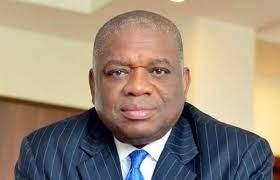
Orji Uzor-Kalu: Senator Orji Uzor-Kalu is a ranking senator from Abia State, who has indicated his interest to be the next senate president. A party man to the core whose loyalty is not in doubt since joining APC from PDP, Senator Kalu, coming from the south-east may be an added advantage that will boost his ambition, as the zone is seen as a more likely place that will produce the 10th senate president.
Kalu, who is a former governor of Abia State, has not hidden his intention to occupy the exalted position and has been taking his time for an opportunity like this. As Senate Majority Leader, he is strategically moving his dreams to reality as he hobnobs with the president-elect and the outgoing President Buhari through intensive lobbying.
However, the conviction of Senator Kalu by a competent court of law in 2020 on some corruption charges brought by EFCC, may be a strong factor that will hinder such lofty aspiration. As in the case of Akpabio, issues of indictment by law courts may be played up in electing the next senate president.
David Nweze Umahi: Governor David Nweze Umahi who is currently the governor of Ebonyi State, won the senate seat to represent Ebonyi south in the Red Chamber in the last election.
His declaration to contest for the seat of the president of the senate automatically changed the dynamics as Umahi is seen as a dogged fighter in a political game.
Political pundits believe that with Umahi joining the race, hitherto insinuated to have been reserved for Senator Kalu, has become a mere myth, as Umahi is bringing to the contest a loaded CV and action-packed programmes that have set him aside as the most performing governor in the country both in infrastructure and service delivery.
With the Governor joining APC in 2020, and delivering his state in the recent elections that were held in the country, it is more obvious that Engr. Umahi is roundly prepared for the leadership challenge in the senate if he is chosen as the next senate president.
It is on record that in the recently concluded general election, he was the only governor in the southern part of the country that delivered to the ruling party, more total number of candidates both from the state assembly, to the House of Reps and the Senate.
To cement the grip of his party in Ebonyi state, the last governorship election saw the victory of the candidate of the All Progressives Congress Rt. Hon. Francis Ogbonna Nwifuru as the governor-elect of Ebonyi State. Hon Nwifuru is a man who was identified and groomed for the office by Governor Umahi.
The journey to these electoral victories in Ebonyi State that had hitherto been a traditional base of the People’s Democratic Party since 1999, was both arduous and tortuous, but the tenacity, political shrewdness and resilience of Umahi, the people of Ebonyi state prevailed, as today, the state is strongly rooted in APC and wired also to the mainstream politics of the country, thereby making the southeast to host two APC states in Ebonyi and Imo, against when it was a PDP dominated zone.
Again, the governor enjoys a robust relationship with the president-elect, Asiwaju Bola Tinubu, including the outgoing president, Muhammadu Buhari. This cordial relationship, analysts believe, will count positively for Umahi, as the campaign for the senate president gets tougher.
Many believe that with Umahi as senate president, the south-east will feel highly represented on top of the administration’s hierarchy, even as they have also argued that his choice as the next Senate President “should be a conscious effort to address the current obvious ethno-religious imbalance with an eye on a consistent, focused, result-oriented, tolerant, loyal, astute and cerebral administrator with penchant for teamwork.”
And only the senate presidency of Engr. David Umahi can bridge and cement a cordial working relationship with the executive arm of government, even as the judicial arm will not feel neglected.



