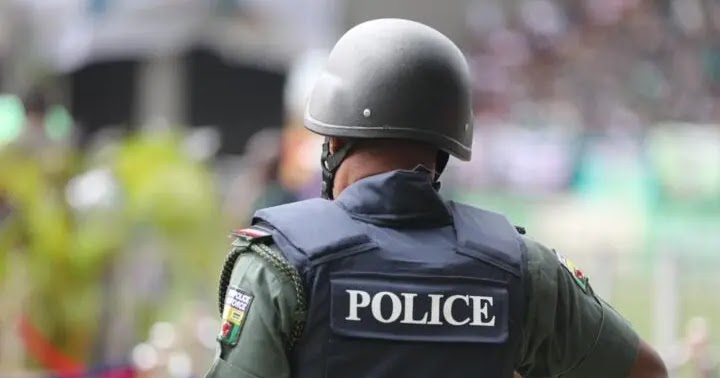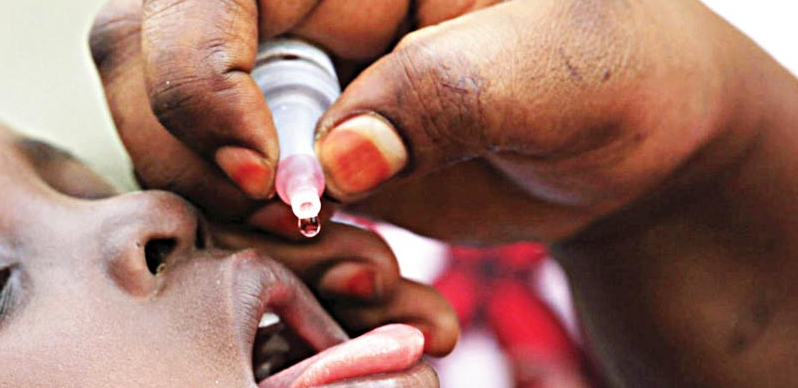
The Federal Capital Territory Administration (FCTA) said it would sanction any parent in Federal Capital Territory (FCT) that resists Polio vaccines for their children.
Executive secretary, FCT Primary Health Care Board, Dr Isah Vatsa stated this on Friday in Abuja, when he announced the commencement of routine immunization with ‘fractional lnactivated polio vaccine (fipv) and novel oral polio vaccine (nOPV2).
Vatsa explained that if the board receives any case of resistant, or complaint on any parent or caregiver against the vaccines, it would engage the community traditional and religious leaders of the community to talk to such parent, adding that if such parent refuses to comply, he or she would be told to move out of Abuja.
According to him, “On sanctions against resistance to the Polio vaccines, we don’t want to be too extreme in our approach, but definitely we have mild sanctions.
Community leaders are also empowered with information about the risk that this individual constitutes to their community.
So with that information, anytime we have resistant cases, or complaint cases, we will engage the community traditional and religious leaders to talk to them to the extent that if they don’t want to comply, we will tell them to move out of Abuja.
This is because you cannot constitute a risk to the community just for refusing to be immunized.”
He revealed that over 2.4 children would be vaccinated against polio viruses in all the six area councils of the territory, with 1, 274,415 children to be vaccinated with (noPV2), while 1,210,588 will take (fiPV).
Vatsa said the phase1 of the immunization exercise, which will start on 29th July to 4th August, 2023, covers five area councils, which includes, Abaji, Kwali, Kuje, Gwagwalada and Bwari, while the phase 2 of the vaccination would be carried out in Abuja Municipal Area council, from 5th August to 11th August, 2023.
The Executive secretary explained that several strategies had been deployed to ensure that every eligible child is reached during the immunization.
According to him, “The immunization campaign we are starting in the FCT on 29th July to August 11, is a supplemental immunization exercise aimed at interrupting the risk of transmission of all forms of the poliovirus and boosting the routine immunization coverage in the FCT.
All the PHC facilities and government hospitals in the Six Area Councils of the FCT will be used as vaccination post. This will help ease stress on the parents and care givers, there will be temporary vaccination posts situated in workshop Centres, schools, markets, village squares and other designated centres identified by the communities”.
Vatsa noted that the FCT Administration in partnership with its partners on immunization is committed to the campaign aimed at improving the health and well-being of the children and residents of the territory.
[8:04 am, 28/07/2023] Nns David Ani: Also speaking, the coordinator, World Health Organization (WHO) FCT, Dr Kumshida Balami, said the vaccination exercise would help in the fight against poliovirus in the city, which is one of the flagship points of the body.
Balami said the key priorities for the exercise also include immediate implementation of the integrated fpv & RI intensification across the country.
She said significant progress has been made in the effort to address the evolving risk of circulating vaccine-derived poliovirus type 2 (cVDPV2) in Nigeria, which FCT is not an exception, as 89% decline in cVPV2 cases as of Week 15 of 2023.
Balami noted that the major reasons for missed settlements and major risks associated with the transmission of cVPD2 includes, low immunity to type 2 poliovirus due to low IPV coverage, evolving insecurity, heightened insecurity, displacement of settlements, and hard-to-reach/rugged terrain, restricting access to vaccination have created a pool of unreached children.
She added that others are malnutrition, poor Sanitation, polio surveillance Gaps among Nomadic/Migrant population movements and presence of orphan cVPV2 virus detections, and high risk of breakthrough/continuous transmission in states with a known history of being sources for international spread of NIE cVPV2 emergencies amongst others.