

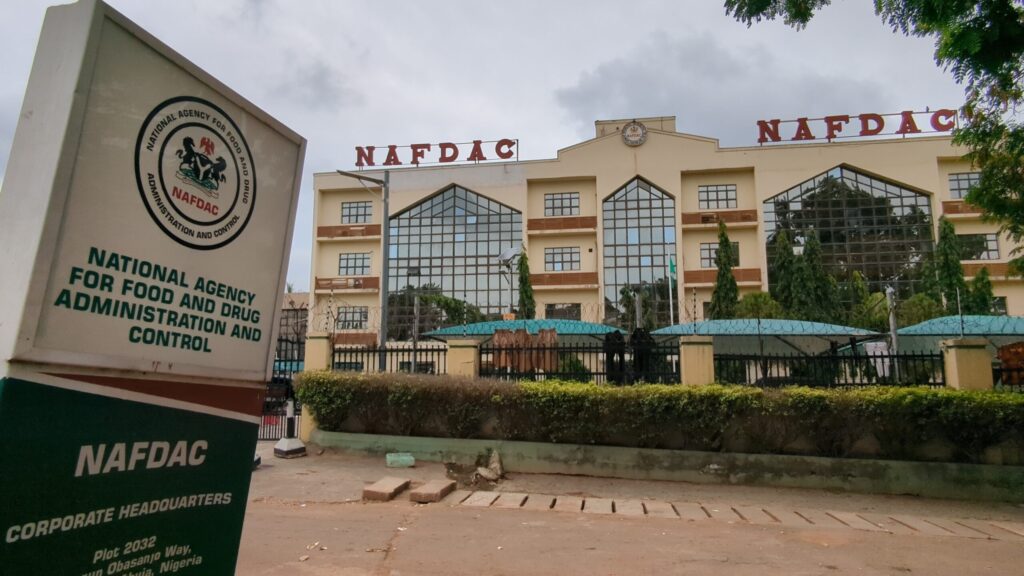
 The price of pharmaceuticals has recently increased across the country, and the threat of counterfeit and inferior medications has also increased, creating new challenges for the National Agency for Food, Drug Administration, and Control’s (NAFDAC) regulatory responsibilities.
Health experts’ perceptions indicate that the surge of substandard and counterfeit pharmaceuticals being sold at premium prices may not be unrelated to incidences of diseases, impairments, and even fatalities.
However, research revealed that NAFDAC suffers from the same limitations as the loosely controlled pharmaceutical industry. The agency is facing difficulties related to insufficient staffing, low financing, and ineffective post-market supervision of items that have been registered.
The regulatory body hardly has enough money left over after salary payments to adequately regulate the 58,020 registered items and the numerous drug marketplaces around the country.
Recall that the United Nations Office on Medications and Crime (UNODC) recently released a report that projected 500,000 deaths annually in sub-Saharan Africa are attributed to substandard medications.
Up to 267,000 of the fatalities were associated with counterfeit and inferior antimalarial medications. Antibiotics of poor quality and counterfeit that are used to treat children with severe pneumonia account for an additional 169,271 fatalities. The surge of tainted cough syrups, antibiotics, and other children’s pharmaceutical items has also prompted a warning from NAFDAC.
However, the cost of health consumables has increased by almost 300 percent in the last six months, making the drug industry more profitable. This has created a new incentive for “merchants of death” to import inferior and phony equivalents.
NAFDAC is mandated by law to carry out routine post-marketing monitoring of pharmaceuticals at retail locations, along with quality control testing and detection of these pharmaceuticals; moreover, NAFDAC is tasked with conducting periodic surveys of pharmaceuticals in hospitals as well as Federal and State Medical shops throughout Nigeria. However, the agency has become a shell of its former self and is far from functional.
The Guardian’s investigations revealed that the organization has been reduced to the role of a helpless bulwark against increasingly potent drug cartels due to inadequate funding allocation.
For example, NAFDAC, which employs barely 2000 people nationally, is responsible for year-round pharmacovigilance and post-market surveillance.
A total of 58,020 goods, including medications, herbal remedies, foods, cosmetics, medical equipment, chemicals, vaccines, biological products, veterinary/animal feeds, etc., and narcotics, are included in NAFDAC’s Registered Product Database. 6350 of the agency’s registered items are pharmaceuticals, according to the NAFDAC Greenbook, Nigeria’s Registered Drug Product Database.
However, the 2023 Appropriations Bill indicates that just N222.7 million remains for capital expenditures, with the remaining N7.43 billion going toward payroll and salary payments. This is out of a total of N7.65 billion.
The staff’s low pay was another finding of the Guardian study. An employee of NAFDAC with Grade Level (GL) 8 makes N1,247,854 annually. That comes out to about N103,987 a month before taxes and pensions are deducted. Additionally, NAFDAC workers on GL 7 receive N1,073,217 per year in pay. That comes out to around N89,434 a month before taxes and pensions are deducted.
In addition to their base pay, NAFDAC workers are also entitled to certain allowances. These benefits are contingent on several factors, including geography, employment status, and years of service, among others. Nonetheless, compensation rises as one climbs the ladder of service.
The source, who wished to remain anonymous, stated that NAFDAC pays an average salary of N137,480.
Prof. Mojisola Adeyeye, the Director General of NAFDAC, said that the organization is aware of these difficulties and that a 100% personnel augmentation is planned for the upcoming years.
Adeyeye stated that to grow Post Marketing Surveillance (PMS), the organization will hire additional personnel, supply equipment, develop capacity, and improve enforcement’s agility for long-term reaction.
“We need staff,” she stated. There are just 12 employees in one of our states, although they are expected to perform a lot for the state. They are expected to do several tasks, including registration, follow-up, inspection, and surveillance.
“We would have reached 4,000 by the end of 2024, 2025, or thereabouts. Right now, we are about 2000. Since our post-marketing surveillance includes that. With what little we have, we will do better, but we are hoping and praying that the government will provide us with financial assistance.
NAFDAC is depending on outside funding sources in the interim. Adeyeye stated that the agency has advanced in its efforts to adopt pharmaceutical traceability, pharmacovigilance, post-marketing field checks for subpar or falsified medications, and other system-strengthening initiatives because of the collaborations.
The Global Fund’s Resilient and Sustainable Systems for Health (GF-RSSH) grant, which was primarily awarded to the National Agency for the Control of AIDS (NACA), provided crucial assistance that enabled the endeavor.
Olumide Akintayo, a former president of the Pharmaceutical Society of Nigeria (PSN), stated that drug addiction and counterfeit medications are two of the main issues resulting from Nigeria’s current inadequate drug regulation. He claimed that this dual evil has grown to be a serious threat to Nigeria’s public health.
“On paper, NAFDAC appears to be well-funded, but it can do more,” the pharmacist clarified. To help NAFDAC logistical operations break through the network of drug fakers in their home nations, a government intelligence architecture must be implemented. The factories that produce death potions both domestically and abroad need to be blacklisted.”
NAFDAC is doing a wonderful job, but they need to do more, Emzor Pharmaceutical Industries’ founder and CEO, Dr. Stella Okoli, told the media. NAFDAC must thus conduct extensive post-market surveillance. We must make sure that West Africa, including Nigeria, is not used as a landfill.


