

By Victoria Yakubu
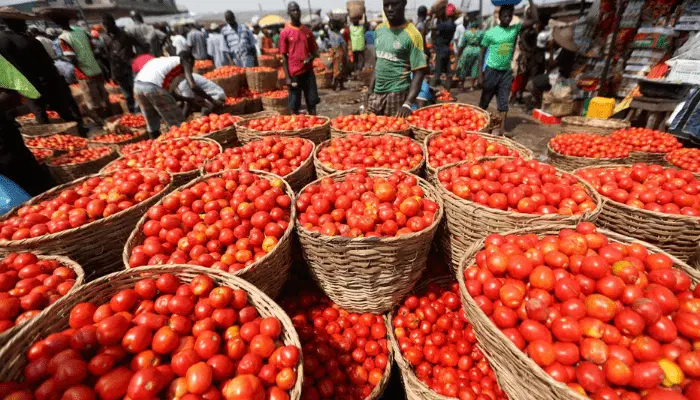
Traders and consumers in the Federal Capital Territory (FCT) and neighbouring Nasarawa State have expressed concern over the sharp increase in the prices of tomatoes and peppers, saying the rising cost of the staple food items is worsening economic hardship and forcing many households to seek cheaper alternatives.
A survey of markets on Thursday by our Correspondent showed that many buyers were purchasing smaller quantities of tomatoes than usual, while others had turned to dried tomatoes and dried peppers to cope with the soaring prices.
A tomato trader, Mrs. Juliet Emeka, said the situation had become difficult for both sellers and consumers, noting that many families could no longer afford the quantities they previously bought.
According to her, a small portion of tomatoes consisting of about five pieces now sells for between N500 and N1,000, depending on the size, while quantities that once sold for the same amount have become significantly more expensive. “The economy is hard. People come to the market with money and still cannot buy what they need. Everybody is feeling the impact,” she said.
Emeka noted that traders were also struggling as declining patronage often left them with unsold produce that eventually spoiled.
“People now ask for only very small quantities. Some customers have stopped buying fresh tomatoes completely and are using dried tomatoes or pepper instead. Sometimes we buy tomatoes at high prices and end up losing money because they spoil, and we have no choice but to throw them away,” she added.
Another trader, Mrs. Grace Bassey, described the development as unbearable for both sellers and buyers, saying many customers who previously purchased tomatoes in larger quantities now settle for only a few pieces.
“Tomatoes are too costly now. Customers who used to buy more can only afford a few pieces. Sometimes we buy at a high price and still lose money because sales are low and the tomatoes get spoiled,” she said.
Bassey attributed the shortage partly to the rainy season and insecurity in some farming communities, which she said had affected production and the movement of produce to major markets.
A resident, Mrs. Marie Oche, who spoke with the New National Star said the difference in prices compared with a few months ago was alarming.
According to her, consumers who could buy a sizeable quantity of tomatoes with N1,000 between March and April can now only afford a few pieces. “Now you can only get four or five pieces of tomatoes for N1,000. A paint bucket of tomatoes, now cost between N10,000 and N16,000 depending on the market,” she said.
Oche said that many households had adjusted their cooking habits because of the rising prices. “Many families now use dried tomatoes and dried pepper more often because fresh tomatoes are becoming too expensive. It is affecting how people cook and what they eat,” she said.
Another resident, Mr. Musa Abdullahi of Kubwa, said households were feeling the impact of the price hike deeply. “The price of tomatoes and pepper has changed so much. Before, with N2,000 you could buy enough for a pot of soup for a family of four, but now that same money can only get a few pieces. Many families are now using dried pepper or dried tomatoes because fresh ones are too expensive,” he said.
Other residents also spoke of the growing strain on household budgets. Mrs. Angela Ikenna, a mother of two shopping at Dutse Market in Abuja, said the increase had forced her family to change how they purchase food items. “I used to buy the tomatoes I need for a week, but due to the price, I now buy only what I need for a day or two. It has really changed how we plan our meals at home because tomatoes were used in almost everything we cook but now, no way.”
Similarly, Mr. Moses Sunday, a nurse and resident of Kuje, Abuja, said the rising cost of tomatoes was adding to the pressure on household incomes.
“What used to be a routine kitchen item has now become expensive, and people are cutting down on how much they buy. For many households, it is no longer about choice but about what the money can cover,” he said.
For some households, the rising cost of tomatoes has led to a complete change in meal preparation.
Mrs. Agatha Ochuko, a resident of Apo, Abuja, said her family had largely abandoned tomato-based stews in favour of pepper soup because it was more economical. “I now buy pepper soup spice worth between N4,000 and N5,000, grind it and keep it at home. It can last my family for at least one or two months. I just buy any protein of my choice and make pepper soup to eat with rice. There is no stress of this tomato ‘wahala’ this season. I can’t kill myself over tomatoes,” she exclaimed.
Mrs. Esther Danladi, a resident of Masaka in Nasarawa State, said she had adopted a similar approach to cope with soaring food prices.
“These days, I think twice before buying tomatoes. What I spend on a small quantity can buy other ingredients that will last longer. Sometimes we prepare pepper soup or use dried pepper because it is more affordable and easier on the family budget,” she said.
The women said many families were increasingly turning to cheaper substitutes and adjusting their meal plans as the rising cost of fresh produce continues to stretch household incomes.
Buyers in Abuja and neighbouring Nasarawa said the price hike was forcing them to reduce quantities, switch to cheaper substitutes and rethink daily meal planning as fresh tomatoes become increasingly unaffordable.
Findings indicate that the current surge is being driven by a combination of seasonal supply shortages, rising production costs, transportation challenges, insecurity and post-harvest losses.
Agriculture stakeholders say tomato production typically declines during certain periods of the year due to seasonal planting and harvest cycles, resulting in reduced supply and higher prices. The situation has also been compounded by pest and disease outbreaks, particularly ‘Tuta absoluta,’ commonly known as the tomato leaf miner, which has caused significant crop losses in some major tomato-producing states.
Rising costs of fertilizer, seeds and other farm inputs have further increased production expenses, while irregular rainfall patterns have affected farming activities in some communities.
Wholesalers who transport tomatoes from northern producing states said the price hike was being driven by a combination of rainy-season disruptions, poor road conditions, insecurity on transport routes, high fuel costs and crop losses after harvest.
A tomato supplier from Kano, Mallam Ibrahim Musa, said transportation had become a major burden for traders.
“We are not happy with the situation because even after buying tomatoes from the farms, the cost of transport has gone very high. The roads are bad, fuel is expensive and when rain falls movement becomes slower. By the time the tomatoes get to the market, many are already damaged,” he said.
Another wholesaler, Alhaji Abubakar Yakubu, who supplies tomatoes from Katsina State to markets in Abuja, said reduced harvests and logistics challenges were contributing to the shortage.
“This season is difficult for tomato business. The rain has affected farming in many places and farmers cannot harvest as they used to. When supply drops, the price naturally goes up,” he said.
Agricultural experts and market stakeholders also point to inadequate storage facilities and limited processing capacity, which contribute to substantial post-harvest losses. As a result, a significant quantity of harvested tomatoes never reaches consumers, further tightening supply and driving up prices.
Some traders said they had reduced the volume of tomatoes they purchase to avoid losses from spoilage as a result of low sales, a development that further limits availability in local markets.
Residents who spoke with our correspondent appealed to the government to support farmers, improve security in farming communities, address transportation challenges and invest in storage infrastructure to help stabilise food prices.
As food inflation continues to pressure household incomes, many families in the FCT and Nasarawa State and say they are being forced to rethink their spending priorities, adjust their diets and rely on cheaper alternatives to cope with the rising cost of living.



