

By Theodora Obayojie
Growing pressure on Abuja’s transport system is worsening the threat of “one chance” robberies, as commuters fall prey to criminals posing as commercial drivers across the Federal Capital Territory (FCT).
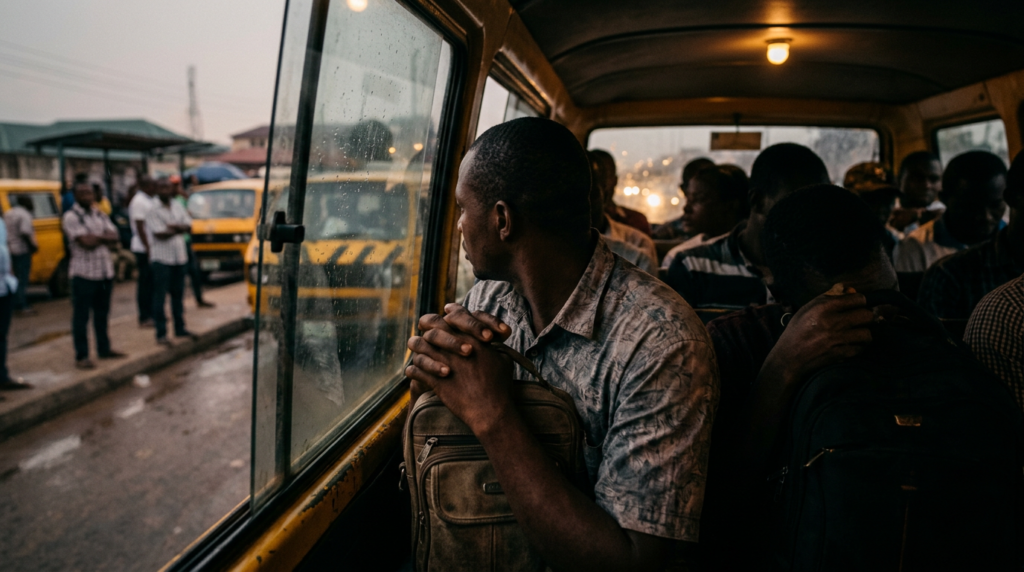
Daily movement within the city has become more difficult amid persistent gridlock on major roads, shrinking transport options and overcrowding at key bus stops and junctions, particularly around Berger, Area 1, AYA, Nyanya, Wuse, Gwarinpa and Kubwa, where queues often stretch late into the night.
Security officials say the worsening transport crisis is creating opportunities for criminal gangs who exploit stranded passengers, especially during evening rush hours when many commercial drivers stop operations because of insecurity, rising fuel costs and traffic gridlocks.
Police sources identified several hotspots where criminals often take advantage of traffic hold-ups and poor street lighting to lure desperate commuters into unsafe vehicles.
Many residents say the situation has created an atmosphere of fear across the city, particularly among women, students and low-income workers who return home late.
“I close from work and stay for almost two hours looking for a vehicle around Area 1 sometimes, and at that point you become desperate because you just want to get home,” Esther Daniel, a civil servant who commutes daily between Nyanya and the city centre, said.
For Faith Oladejo, a bank worker, desperation nearly turned fatal after she boarded a vehicle from Area 1 to Berger around 8 p.m. after work.
Speaking to the New National Star, Oladejo recounted how the attackers demanded her handbag before repeatedly assaulting her inside the vehicle. “They beat me till I almost passed out, then squeezed me under the seats when they thought I was unconscious. After that, they dragged me out and dumped me by the roadside like a bag of trash,” she said.
She later showed deep lacerations and scars sustained during the attack.
A student of the University of Abuja living in Kubwa, who requested anonymity, said the fear of “one chance” attacks now shapes how many young women move around the city.
“Sometimes you see a car with normal-looking passengers inside and think it is safe, but people are scared because these incidents are happening too often,” she said.
A commercial driver, Ibrahim Musa, who operates around Berger Junction, explained that transport shortages become more severe in the evenings, leaving commuters increasingly vulnerable.
“Once it gets late, people become stranded, and that is when these criminals take advantage because many passengers can no longer identify registered taxis as everybody is rushing to get home,” he stated.
The economic impact of the transport crisis is also deepening, as workers spend larger portions of their income on transportation while traders and business owners lose productive hours in traffic.
Some commuters complained that transport fares along major routes rise sharply during peak periods and rainfall, forcing many residents to choose between expensive rides and unsafe alternatives.
Urban planners observed that Abuja’s rapid population growth has outpaced available transport infrastructure, leaving the city heavily dependent on informal and poorly regulated road transport systems.
Transport Analyst Tunde Osahon said inadequate bus fleets, weak traffic management and poor enforcement against illegal operators have further exposed commuters to criminal activities.
The Abuja Light Rail has also struggled to absorb rising passenger demand despite increased ridership linked to subsidised fares, as the service remains limited in coverage and operates skeletal schedules, leaving many districts dependent almost entirely on overcrowded roads.
Emergency response experts warn that severe traffic congestion is also slowing rescue and security operations during robbery incidents and medical emergencies, particularly along the Nyanya-Mararaba axis, where vehicles often remain trapped for extended periods during peak hours.
Analysts warned that unless authorities expand safe and affordable mass transit systems, improve street lighting, strengthen surveillance around transport hubs and intensify enforcement against illegal operators, Abuja could face rising cases of robbery, extortion and violence linked to daily commuting challenges.
Despite years of investment in transport infrastructure, many residents insist that commuting within the nation’s capital has become increasingly unsafe, exhausting and unpredictable.



