

The African Development Bank Group (AfDB) has signed a Letter of Intent with the International Criminal Police Organisation (Interpol) in a renewed commitment to its fight against corruption and financial crime.
It was revealed that AfDB, was the first multilateral development bank to establish such a collaboration with Interpol noted
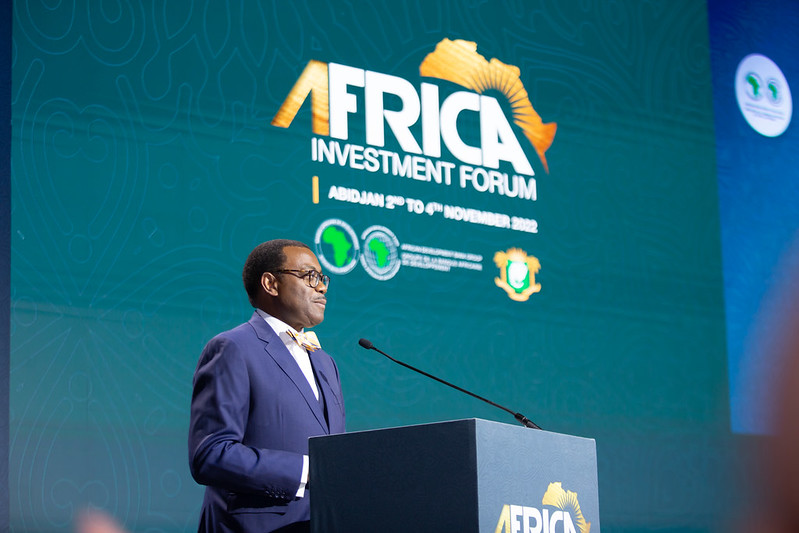
The Letter of Intent was signed by African Development Bank Group President Dr Akinwumi Adesina and Interpol Secretary-General, Valdecy Urquiza, who visited the bank’s headquarters in Abidjan.
The partnership will enhance collaboration between the bank’s Office of Integrity and Anti-Corruption and Interpol’s Financial Crime and Anti-Corruption Centre.
It will focus on sharing expertise, enhancing investigative capabilities, and developing preventive measures against emerging financial crime threats, including cybercrime, anti-corruption measures, and counter-terrorism financing, the statement read in part.
At the signing, Adesina said, “This partnership demonstrates our commitment to protecting development resources and ensuring they reach their intended beneficiaries. As the world’s most transparent financial institution for two consecutive editions, according to Publish What You Fund’s assessment of sovereign portfolios, we maintain zero tolerance for corruption and terrorism financing.
“By joining forces with Interpol, we are strengthening our capacity to help African countries build robust systems against money laundering and financial crime.”
According to Interpol’s 2024 Global Financial Fraud Assessment, business email compromise, romance baiting, phishing, and other online frauds pose growing threats to Africa’s digitalised economy.
Secretary-General, Urquiza, who was elected to his position in November 2024, said, “Corruption and financial crime are among the biggest obstacles to economic and social development in Africa and around the world.
“The evolving nature of financial crime, particularly in the digital environment, requires strong partnerships between law enforcement and financial institutions. Interpol’s closer relationship with the African Development Bank Group will help law enforcement agencies and financial institutions across Africa tackle increasingly sophisticated financial crime threats.”
Adesina said the bank will continue to tackle these challenges by building capacity and supporting African countries in strengthening transparent and accountable governance and strong institutions capable of driving inclusive and sustainable growth and resilient economies. Strengthen Know Your Customer and Due Diligence systems to prevent and fight fraud and corruption, among others.
Urama, the AfDB’s Chief Economist, revealed that Africa loses more than $1.6 billion per day as a result of illicit money transfers and profit-shifting.
According to Urama, stakeholders should concentrate on preventing the outflow rather than pursuing inflows because Africa was losing more foreign direct investment than it was gaining.
He said: “There are so many things that happen on the continent that actually make corruption a big issue. And some estimations show that Africa loses about 248 billion US dollars every year due to corruption. If you add illicit financial flows of over $90bn and add profit shifting; corporates operating in Africa but then maybe have headquarters somewhere else and they find clever accounting ways of legally not paying taxes. In Africa, we are losing about $275bn. When you sum all these up, these are things you can trace through banks, then you find that Africa is losing about $587bn every year.“That’s about $1.61bn every day. Yet we spend all our time chasing FDI, foreign direct investment, official development assistance, portfolio flows and remittances. All these together during the year we did this study for 2022 was about $174.5bn. That’s less than three times, I mean what we are losing is three times more than what we are getting from the global market. So how do we engage with the global market? Are we not focusing on the wrong priorities? Because if you ask me if I’m losing almost $600bn, I will focus on how not to lose it instead of going to get more. Tackling it, is what we are doing.”
Urama highlighted a number of strategies to stop the outflow, including the quality of institutions, accountability mechanisms for institutions, and the ability of public servants and government officials to not only comprehend the consequences of their actions but also to have the resources, rules, policies, and technology necessary to identify and stop it.



