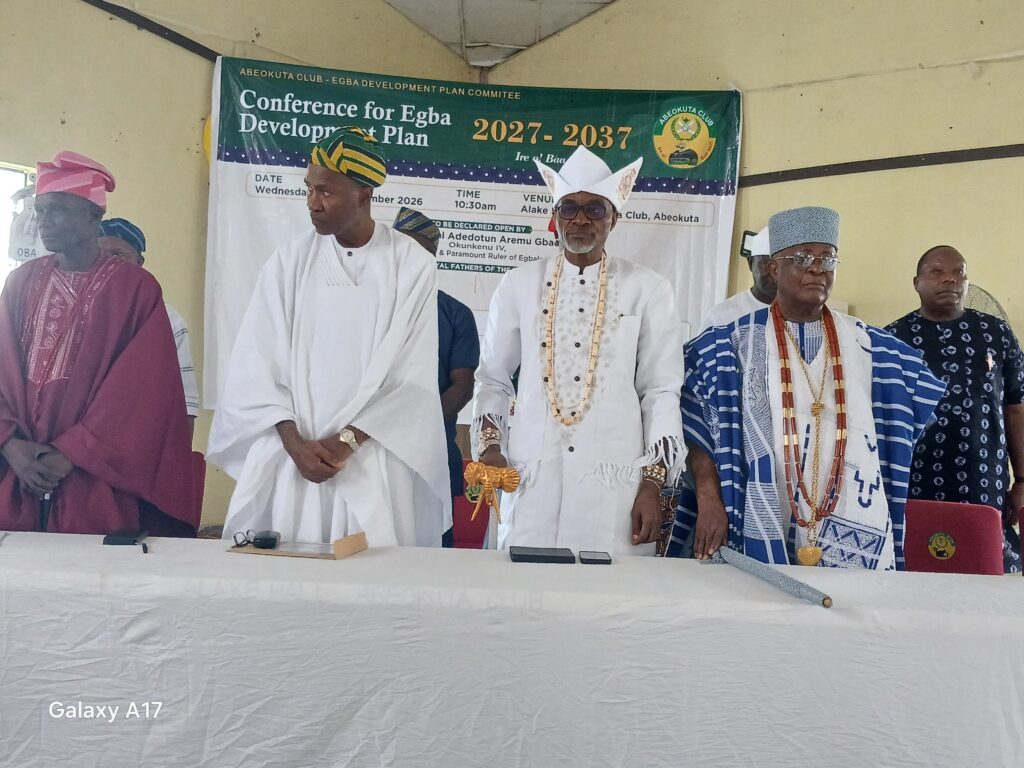
The Alake and Paramount Ruler of Egbaland, Oba Dr Michael Gbadebo, has urged Egba indigenes at home and abroad to unite behind a proposed 10-year development blueprint aimed at restoring the region’s economic, educational and infrastructural prominence.
Gbadebo made the call on Thursday in Abeokuta at a stakeholders’ conference on the Egba Development Plan 2027–2037, organised by the Abeokuta Club.
The monarch lamented that Egbaland had been short-changed in development over the years, insisting that Abeokuta, as the Ogun State capital, deserved infrastructure and economic opportunities commensurate with its historical significance.
He urged traditional rulers, professionals, business leaders and other stakeholders to take ownership of the proposed development agenda, stressing that its success depended on collective commitment.
According to him, Egba indigenes must serve as ambassadors of the initiative by promoting its objectives wherever they found themselves.
Gbadebo also emphasised the need to sustain Egbaland’s reputation in education through continued investment in human capital, describing the region as Nigeria’s educational capital.
He expressed optimism that the blueprint would usher in a new era of collective progress.
Similarly, the Olowu of Owu, Oba Saka Matemilola, called for the transformation of Abeokuta into a modern, economically competitive and internationally recognised West African city.
In a presentation titled, “Abeokuta Among the Great West African Cities: Proud Heritage, Present Strengths and a Bold Vision for the Future,” Matemilola said the city possessed the historical foundation, cultural identity and human capital to compete with cities such as Lagos, Accra, Abidjan, Dakar and Cotonou.
He identified heritage tourism, education, Adire production, creative industries, agriculture, manufacturing and technology as key sectors capable of driving the transformation.
The monarch also advocated urban renewal, improved public transportation, reliable water supply, effective waste management and flood-control infrastructure.
He proposed a phased development strategy beginning in 2027, with emphasis on institutional strengthening, partnerships among government, universities and industry, and measurable performance targets.
Matemilola called for diversified fuding through government allocations, public-private partnerships, private investments, diaspora contributions and international development grants.
He warned against a development approach driven by announcements rather than implementation, insisting that projects must have clear funding arrangements, maintenance plans and measurable benefits.
Earlier, the Chairman of the Committee on Egba Development Plan 2027–2037, Adebayo Ayodele, traced Egbaland’s history, including its settlement in Abeokuta around 1830, the 1893 Treaty of Independence with Britain and the establishment of the Egba United Government in 1898.
He said the region subsequently developed institutions in commerce, education, transportation, healthcare, industry and security.