The growing circulation of fake, counterfeit and substandard products in Nigerian markets raise serious questions about consumer protection, regulatory effectiveness and the safety of millions of citizens.
From adulterated alcoholic beverages and counterfeit medicines to substandard electrical appliances, food products and industrial materials, the menace threatens public health, undermines legitimate businesses and weakens confidence in the nation’s regulatory institutions.
For many Nigerians struggling to survive amid economic hardship, purchasing a product is often a decision made after careful consideration of limited resources.
Unfortunately, some consumers spend their hard-earned money on products that appear genuine but may expose them to serious health risks, financial losses and, in extreme cases, death. This makes the fight against fake products not merely a commercial issue but a matter of public safety, consumer rights and national responsibility.
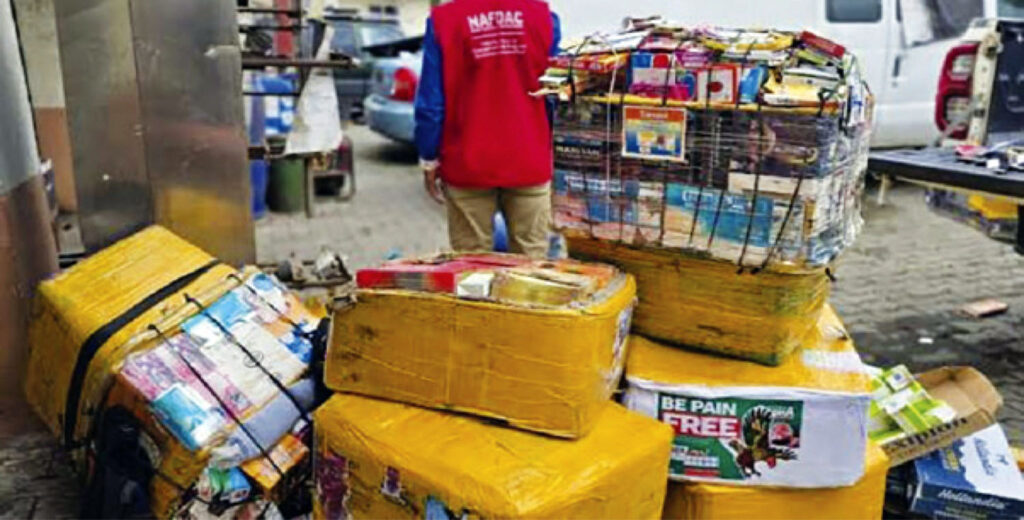
Recent enforcement operations by the National Agency for Food and Drug Administration and Control (NAFDAC) have brought the magnitude of the problem into sharper focus.
According to information released by the agency, counterfeit and unwholesome products valued at more than ₦5.3 billion were seized or destroyed across different locations within a week.
The operations included the seizure of suspected counterfeit alcoholic beverages and repackaging materials worth approximately ₦2 billion at the Lagos International Trade Fair Complex on October 13. In Aba, Abia State, suspected fake drinks and packaging materials valued at more than ₦700 million were reportedly uncovered, while products worth ₦2.6 billion were destroyed in Port Harcourt, Rivers State.
At the Lagos facility, NAFDAC operatives reportedly uncovered more than 20 illegal stores allegedly involved in counterfeiting popular alcoholic beverage brands, revalidating expired drinks and stockpiling prohibited imported products.
In Aba, officials reportedly discovered labels, corks, packaging materials and other items bearing the names of established brands. A separate suspected production facility allegedly contained spirits, herbal liqueurs, ethanol, containers of liquid mixtures, empty bottles and equipment used for packaging alcoholic beverages under unhygienic conditions.
The Port Harcourt exercise involved pharmaceutical products, chemicals, tomato paste, biscuits and other goods intercepted by the Nigeria Customs Service at Onne Port between 2025 and 2026.
These discoveries demonstrate the scale of the challenge confronting regulators. However, they also raise a fundamental question: if products worth billions of naira can be intercepted in separate operations, how many potentially dangerous goods have already reached consumers before enforcement teams arrived?
The Standards Organisation of Nigeria (SON) has a critical responsibility in ensuring that products in the Nigerian market conform to prescribed standards. Its mandate includes standards development, conformity assessment and enforcement against products that fail to meet applicable requirements. NAFDAC, meanwhile, regulates food, medicines, cosmetics, medical devices and other products within its statutory remit.
Both institutions have important but distinct responsibilities. The growing menace of fake products therefore demands stronger coordination, improved surveillance and a more effective regulatory presence across markets, warehouses, factories, ports and distribution networks.
Regulatory agencies must move beyond reacting to discoveries after public exposure. A more preventive system should identify suspicious products before they enter the market, trace their manufacturers and distributors, and close the loopholes that enable counterfeiters to operate repeatedly.
The most disturbing consequence of fake products is the danger they pose to human life. Counterfeit medicines may contain incorrect ingredients, insufficient active substances or harmful contaminants. Such products can undermine treatment, worsen illnesses and expose patients to additional complications.
Similarly, adulterated alcoholic beverages may contain dangerous substances or be produced under conditions that make them unsafe for consumption. Consumers who purchase these products because of their attractive packaging or lower prices may have no reliable way of identifying the danger.
The risks extend beyond medicines and alcoholic drinks. Substandard electrical equipment can cause fires and electrocution, while unsafe cosmetics and household chemicals may cause skin injuries, poisoning or other adverse effects. Poor-quality construction materials can also compromise the safety and durability of buildings and infrastructure.
The tragedy is that innocent consumers often bear the consequences of criminal commercial practices. A family may lose its savings purchasing a fake product and subsequently spend even more on medical treatment. In the worst circumstances, the consequences may be irreversible.
Protecting consumers must, therefore, be the central objective of Nigeria’s campaign against counterfeit goods. Seizures and destruction exercises are important, but their ultimate value should be measured by the extent to which they prevent exposure, reduce the circulation of dangerous products and restore public confidence.
While offenders must face appropriate legal consequences, punishment alone cannot eliminate the problem. The country needs a comprehensive strategy that combines enforcement, prevention, public education, market surveillance and accountability throughout the supply chain.
Authorities should strengthen intelligence gathering to identify illegal production facilities, warehouses and distribution networks. Collaboration between SON, NAFDAC, the Nigeria Customs Service, the police and other relevant institutions should become more systematic, with clear responsibilities and mechanisms for sharing information.
Regulators must also improve consumer awareness. Nigerians should be educated on how to identify suspicious packaging, verify product registration where applicable, check expiry dates and report suspected counterfeit goods.
Manufacturers should adopt stronger authentication technologies, while retailers should maintain verifiable purchasing records and obtain products from legitimate suppliers.
Government must adequately fund regulatory agencies, strengthen laboratory testing capacity and ensure that border inspection systems are sufficiently equipped to detect falsified goods.
A nation cannot afford to treat the proliferation of fake products as an ordinary marketplace problem. Behind every counterfeit medicine, adulterated drink or substandard household item is a potential victim whose life, savings and wellbeing may be placed at risk.
Nigeria must, therefore, strengthen its regulatory systems, close enforcement loopholes and hold proven offenders accountable. The objective should not be punishment for its own sake, but the protection of human life, the preservation of legitimate businesses and the restoration of public confidence.
Nigerians deserve products that meet required standards, effective institutions that protect their interests and markets where safety is not a luxury. The time to strengthen the fight against fake products is now.