

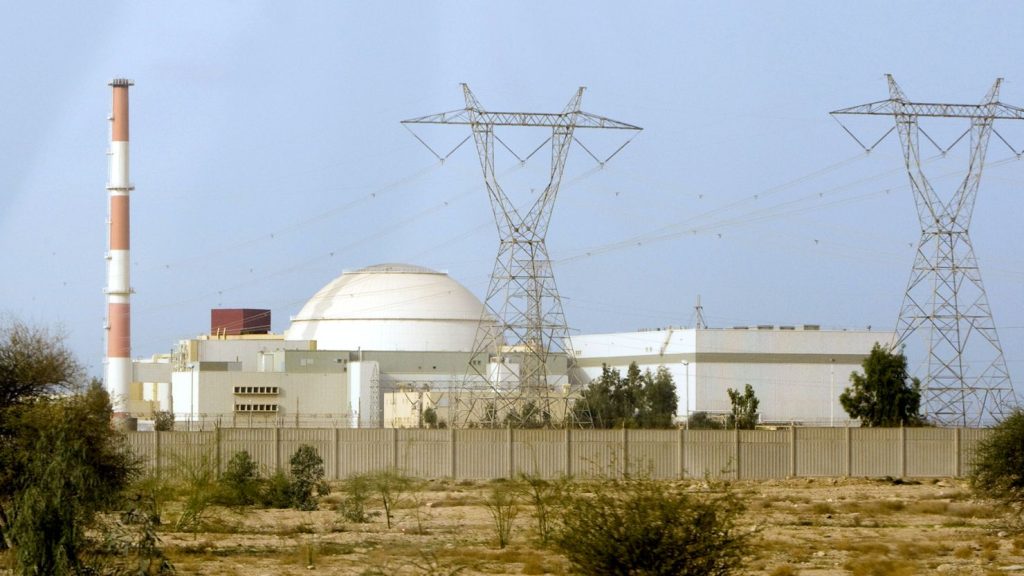
Concern is rising in Gulf Arab states about the possibility of environmental contamination or reprisal attacks if Israel or the United States strikes Iran’s nuclear facilities just across the Persian Gulf.
In Oman, users on messaging apps circulated advice on what to do in the event of a nuclear incident. Residents are instructed to “enter a closed and secure indoor space (preferably windowless), seal all windows and doors tightly, turn off air conditioning and ventilation systems” if the worst were to happen.
In Bahrain, 33 shelters are being prepared for emergencies, and sirens were tested nationwide, the state news agency said Tuesday. Concern about nuclear fallout has also risen over the past week, with news outlets across the Middle East publishing guides on how to deal with radiation leaks.
Elham Fakhro, a Bahraini resident and fellow at the Middle East Initiative at Harvard Kennedy School, said people are “definitely concerned” about the prospect of Israeli and US strikes on Iran’s nuclear facilities.
Iran’s only functional nuclear power plant, in Bushehr, is closer to several US-allied Arab capitals then it is to Tehran.
“Primarily there is fear of environmental contamination, especially in shared waters,” Fakhro said.
She added that other concerns include “the possibility of an Iranian reprisal on US military facilities in the Gulf states, which could impact civilians, and extended airspace closures.”
Despite its improved relationship with Arab neighbors, Iran has implicitly warned that it would target nearby US interests if it were struck by the American military.
Bahrain, for example, hosts the US Naval Forces Central Command, which could be a target.
The Gulf Cooperation Council, an economic and political bloc that comprises Bahrain, Kuwait, Oman, Qatar, Saudi Arabia and the United Arab Emirates, on Monday activated its Kuwait-based Emergency Management Centre, to ensure that all “necessary preventive measures are taken at environmental and radiological levels.”
The UAE’s foreign minister, Sheikh Abdullah bin Zayed, warned “against the risks of reckless and miscalculated actions that could extend beyond the borders” of Iran and Israel. The Qatari foreign ministry spokesperson also warned of “uncalculated” strikes that could affect the waters of Gulf countries.
Almost 60 million people in Gulf Arab countries rely on desalinated sea water from the Persian Gulf for drinking, washing and usable water. Regional leaders have warned that contamination from Iran’s Bushehr nuclear power plant, if attacked, could have severe environmental consequences for this critical water source.


