

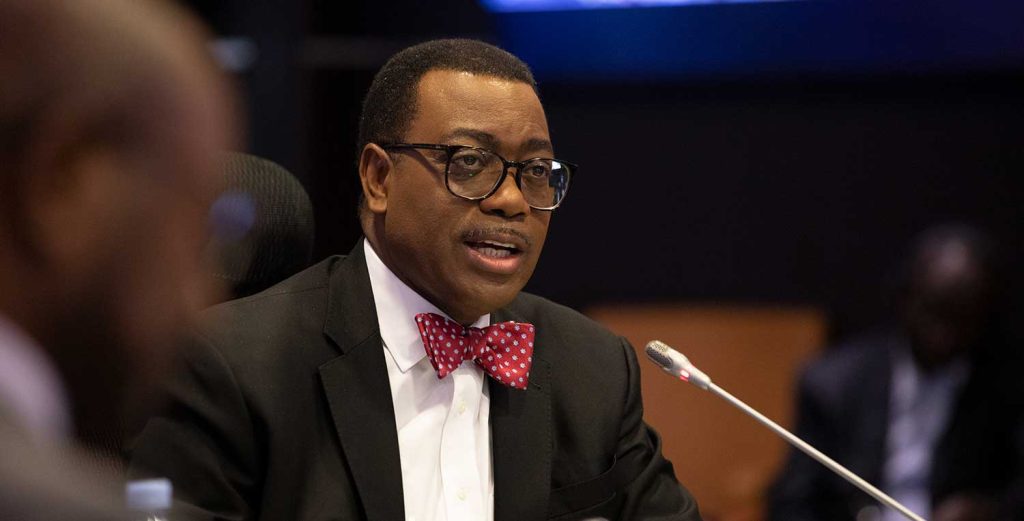
On September 1, 2025, Dr. Akinwumi Adesina stepped down as President of the African Development Bank, AfDB, and a new president, Dr. Sidi Ould Tah, took over.
Adesina’s exit from the continental financial institution was not without emotions amidst farewell orations. “Serving as President of the African Development Bank has been the greatest honor and privilege of my professional career,” he told the gathering of eminent men and women who had flown into Abidjan, Ivory Coast, for the ceremony.
And he added: “Ten years ago, we embarked on a journey together, a journey of transformative growth for our Bank and for our continent.”
Three months earlier, on May 30, 2025, Adesina’s departure was formally marked in Abidjan during the AfDB’s Annual Meetings attended by global leaders, institutional heads, and African dignitaries to honour his impressive tenure.
The 65-year-old Agricultural Economics graduate of the Obafemi Awolowo University, Ile Ife, was the first Nigerian to head the AfDB following his election as its president in 2015, and was re-elected for a second term in 2020.
Before then, Adesina had served as Nigeria’s agriculture minister from 2010 to 2015, for which he was named Forbes African Man of the Year for his sweeping reforms in the sector.
Since then, not a few people have noted Adesina’s stelar performance. Ajay Banga, president of the World Bank, said he “brought vision, energy and relentless determination to the job,” in a tribute that signposted the warm relationship between AfDB and his organisation.
“It’s been a privilege to learn from and work alongside you,” he added.
Banga recalled that their early meeting while he was still vying for the World Bank presidency was the foundation of a renewed and impactful partnership.
“Most importantly, we’re committed to the future of Africa and its young people and their desire for a better life. Akin, thank you for your leadership, your passion, and your commitment to Africa,” he said.
Professor Ngozi Okonjo-Iweala, Nigeria’s former minister of finance and now Director-General, World Trade Organisation, WTO, also spoke glowingly and recalled Adesina’s decade-long stewardship to push up the bank’s stature.
“His tenure has significantly raised the profile of the bank to a new height of recognition and respectability. He is leaving a legacy of which he, Nigerians and all Africans should be proud,” she said.
We note the Nigerian’s defining era at AfDB. Under Adesina, the bank’s capital base expanded from $93 billion to $318 billion. The continental financial institution not only grew stronger financially but also deepened its credibility, maintaining triple-A rating and scaling up infrastructure financing worth more than $55 billion.
The AfDB under Adesina improved healthcare and opened roads across the continent. He expanded access to clean water while the Bank’s “High 5” priorities – Light Up and Power Africa, Feed Africa, Industrialise Africa, Integrate Africa, and Improve the Quality of Life for the People of Africa – became a development blueprint for the continent.
Unarguably, AfDb’s projects under Adesina touched the lives of more than 565 million people across Africa.
As Akinwumi Adesina passed on the torch to his successor, Dr. Sidi Ould Tah, who was elected last May with 76.18 percent of the votes from the Bank’s governors, we enjoin the new team to keep the flag flying along the path the Nigerian had cleared for the continental financial institution. Only then will his legacy live after him.
And instructively, Dr. Tah, born in 1964, the same year the AfDB was founded, has promised to build on Adesina’s foundation while he steers the Bank into a new era of innovation, inclusivity, and economic transformation.
“Under Adesina, the bank’s capital base expanded from $93 billion to $318 billion. The continental financial institution not only grew stronger financially but also deepened its credibility, maintaining triple-A rating and scaling up infrastructure financing worth more than $55 billion.”



