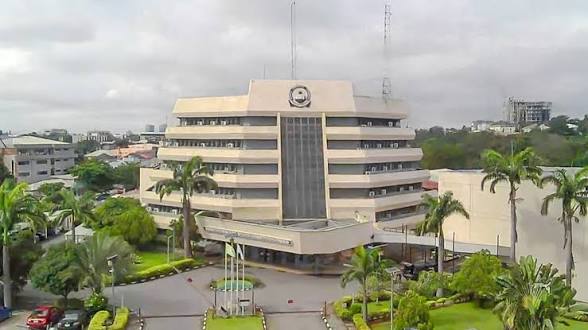
The Academic Staff Union of Universities (ASUU) has attributed the serious staffing shortfall in Nigerian universities to the “Japa syndrome,” as thousands of academics have fled the nation in pursuit of better opportunities abroad.
According to the Union, there are now a lot of retirements at Nigerian universities in an interview with The Punch.
The union at the Federal University of Gusau, Zamfara, revealed that the school needed roughly 1,000 professors to replace the gaps left by those who had gone. ASUU at the Usmanu Danfodiyo University, Sokoto, reported that about 100 lecturers had departed the university.
Around 350 academic positions were open at the Federal University of Agriculture in Abeokuta, Ogun State, according to the union there. Meanwhile, 27 academics had departed two faculties at the University of Lagos, while 100 employees at the University of Uyo had left the nation.
The Olusegun Agagu University of Science and Technology was losing both academic and non-academic workers, according to the union, and there were over 500 academic openings at the University of Ilorin in Kwara State.
Many of the university’s employees, both academic and non-academic, have gone, according to Dr. Rotimi Olorunsola, Chairman of the Olusegun Agagu University of Science and Technology in Okitipupa, Ondo State.
“Yes, some have japa (traveled outside the country), both academic and non-academic staff,” Olorunsola stated.
Many employees of the university had left, according to Mr. Victor Akinpelumi, Head of Media and Protocol at Adekunle Ajasin University in Akungba Akoko.
It is true that a large number of employees, both academic and non-academic, have departed the university, but I am unable to provide an exact figure at this time. I can attest to the fact that a large number of university employees have left,” he said.
Dr. Ray Chikogu, the chairman of ASUU at the University of Benin, stated that the Federal Government’s employment embargo has caused a long-standing staffing deficit at UNIBEN and other universities.
He claimed that this amounted to excessive government meddling in the management of the universities, particularly regarding hiring and staff advancement.
“The teaching staff department is woefully understaffed,” he declared. Academic staff at the University of Benin and many other universities around the nation have been overworked for a very long time.
Because of the hiring ban at federal colleges and the labor-intensive hiring procedure, there has been an issue for several years. The accountant general’s office must contact the head of service to request approval for the university.
“The federal government is meddling in the school’s internal issues. The university system has become disorganized as a result of the centralization of tasks that belonged in the hands of university senates and councils. It’s an extremely depressing scenario.
“A large number of academic staff members are retiring and are not being replaced. In addition, many have quit their jobs in search of better opportunities overseas due to the unfavorable working conditions in which they are employed, contributing to the major issue of brain drain that is negatively affecting the university system and for which nothing is being done. The Federal Government seems to be purposefully undermining the system for reasons that are only known to them.
Dr. Shehu El-rasheed, the ASUU Chairman of the Federal University of Kashere in Gombe State, said that numerous openings at the university were caused by bureaucratic backlogs.
“There are many open positions, but it’s getting harder to fill them because of the strict bureaucratic red tape,” he stated. Before hiring a single staff member, a vice-chancellor must obtain approval from roughly seven federal government departments and parastatals.
“There are no replacements for the departing senior professors. Academic employees at FUK are departing in large numbers for nations like the US, Malaysia, Oman, and New Zealand.
According to El-Rasheed, a lack of academic staff at FUK may be related to “poor remuneration and harsh economic conditions; bureaucratic bottlenecks brought by IPPIS and the Federal Government.”
A few years ago, the Federal Government implemented the IPP as a part of its efforts to address the issue of multiple-salary federal personnel and ghost workers.
Many university employees, however, are uncomfortable with the plan because it prevents the colleges from hiring staff—even in cases where they are severely understaffed.