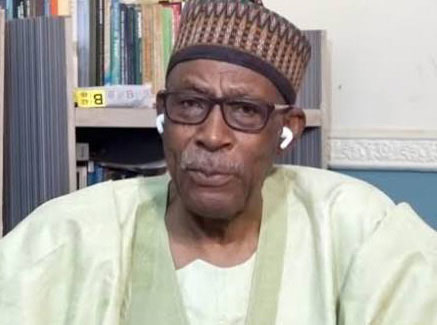
Vivian Michael, in this piece, looks at the Chief Justice of Nigeria, CJN Justice Ibrahim Tanko Muhammad, set to quiz six summoned judges from a different state, today (Monday) over indiscriminate granting of exparte orders. Also, the piece highlights the reactions from the Senior Lawyers who aligned with the CJN and asked for sanctions on the erring jurists.
The judiciary, one of the three legs upon which the government of the country stand is a very well respected institution. On many occasions, the judiciary has come to the rescue of the country to save it from implosion or disintegration.
Though some may disagree but many Nigerians believed the judiciary of the country has proved itself to be the last hope of the common man with the landmark judgement it has delivered.
Notwithstanding the disposition above, for some time now, the activities of judicial officers have come under scrutiny, especially, since the return of the country to democracy in 1999.
Some judges have been suspended, advised to retire or outrightly dismissed for judicial misconduct by the National Judicial Council, NJC.
The NJC is a body established under section 153(1) of the 1999 Constitution with powers relating to appointments and exercise of disciplinary control over Judicial Officers specified in paragraph 21 of Part I of the Third Schedule of the Constitution.
By the same paragraph, it also has power to collect, control and disburse all monies, capital and recurrent, for the judiciary and to deal with all matters relating to policy and administration.
There were infractions in the past by judicial officers which was quickly taken care of by the National Judicial Council.
No doubt, the NJC has discharged its responsibilities creditably well.
The latest issue the NJC has had to deal with is the indiscriminate granting of exparte orders from six-state, particularly, the one that has to do with the leadership of the Peoples Democratic Party, PDP.
It would be recalled that a judge in Rivers State High Court granted an order restraining Chief Uche Secondus, from further parading himself as PDP Chairman.
Few days later, another judge from a High Court in Kebbi, clearly without jurisdiction reinstated him as PDP chairman.
Consequent to the above, the Chief Justice of Nigeria, CJN, Justice Ibrahim Tanko Muhammad, wield the big stick by summoning the Chief Judges of the states and four others.
The CJN wants them to come before the NJC to explain the reason behind the conflicting court orders that emanated in their states in the last one month.
Justice Mohammad who is the Chairman of the National Judicial Counsel, issued the summons to the Chief Judges in Abuja on Monday, August 30.
The summons stumbled upon by our correspondent indicated that the affected Chief Judges are to appear before him as a prelude to the larger one by the NJC to explain what warranted the issuance of conflicting orders by courts of coordinate jurisdiction.
The summoned Chief Judges are those of Rivers, Kebbi, Cross River, Anambra, Jigawa and Imo states.
Specifically, the CJN complained bitterly on the huge embarrassment caused Nigeria’s judiciary by the actions of those who issued the conflicting orders upon ex-parte applications by some political parties.
The summons read in part “My attention has been drawn to media reports to the effect that some Courts of coordinate jurisdiction were granting conflicting Exparte Orders on the same subject matter.
“It has become expedient for me to invite you for a detailed briefing on the development.
“This is even more compelling having regard to earlier NJC Warning to judicial officers on the need to be circumspect in granting Exparte applications”.
Our source, who pleaded anonymity, confided in our correspondent that the meeting between the CJN and the Heads of Court concerned is a prelude to the larger NJC meeting likely to hold next week.
The CJN who was reported to be worried and bitter on the unfortunate development, intends to use the meeting to be seized of the facts for an informed NJC deliberation.
By this move, Justice Muhammad intended to stem the tide of what clearly has been an embarrassment to the Judiciary in the past couple of weeks.
The Nigerian Bar Association, NBA, and some very senior lawyers have been reacting to the action of the CJN.
President of the NBA, Mr Olumide Akpata, said the association had observed with dismay the unfortunate and recurring trend of contradictory court decisions and orders, especially among courts of coordinated jurisdiction.
He said the association would seek an audience with the CJN on the disturbing development.
Akpata, in a statement on Monday, said, Nigeria’s rich history could not be complete without a mention of the invaluable contributions of the judiciary, especially during the military rule, when the courts stood up to tyranny and defended the rule of law and the supremacy of the constitution.
He stated, “Regrettably, we have begun to receive worrying news of recurring contradictory decisions by our courts based on apparently indiscriminate grant of orders and counter-orders. Examples include the orders relating to the nomination of candidates by political parties for the forthcoming gubernatorial election in Anambra State, especially by the three major political parties, the All Progressives Congress, the All Progressives Grand Alliance and the Peoples Democratic Party.
“An equally embarrassing situation is also playing out in respect of the PDP leadership crisis that has seen no fewer than three different rulings, all by courts of coordinate jurisdiction, in circumstances that leave a lot to be desired.
“These aberrations do nothing but bring the judiciary and the entire system of administration of justice to ridicule, and certainly erode the authority of the offices that our judicial officers occupy. If the society cannot trust the judiciary and the legal profession to safeguard our democracy, what then is the justification for the respect that the society has for us?”
Akpata added that in the NBA’s view, there was prima facie evidence of the breach of the Rules of Professional Conduct for Legal Practitioners, 2007 by the lawyers responsible for the unrelenting embarrassment of the judiciary in political matters.
Going further, he said, “Rule 1 of the RPC, which requires a lawyer to uphold the rule of law, foster the cause of justice, maintain a high standard of professional conduct and not engage in any conduct which is unbecoming of a legal practitioner, is clearly being violated in these cases.
“The NBA will not stand by and watch a ridiculing of the justice administration system and will be considering some deterrence options in this regard.”
A professor of law, Chief Awa Kalu, SAN, described the order as reckless.
According to him, a judge in Kebbi cannot give an order in a case filed in Rivers state.
He is supposed to know that he does not have jurisdiction in the matter.
”You are in Kebbi state and a matter came up in Rivers and you involved yourself, you should know as a judge that you lack jurisdiction.
”Why will you sit in Kebbi and involve yourself in a matter in Rivers. The judge should know that the case lacked every ingredient of jurisdiction in it and the best thing he should have done was to wash off his hands’, he said.
Lending his voice also is Abdul Balogun SAN, who commended the NJC for taking actions against jurists.
According to him, judges should learn from events of the past.
”This is not the first time the judiciary is experiencing this and I would have expected that the judges would have learnt from the mistakes of others.
”They should come and answer their summons and if anyone is found to have conducted himself in a bad manner, he should be dealt with according to the NJC act”, he said.
Also, in an interview, Chief Mike Ozekhome, SAN, said the NJC should mete out punishments to judges found guilty of what he called “politicians’ forum-shopping or judge-shopping.”
He stated, “Such conflicting judgments by different judges in different states greatly undermine due administration of justice and bring opprobrium and derision to the entire judiciary.
“It makes the judiciary a caricature of a cash-and-carry judiciary that exists only for the highest bidder.
“Although a judge is entitled to give judgments and make orders based on the peculiar facts placed before him, it becomes ludicrous and extremely laughable when an ex parte order, which is supposed to be for a very short preservative period, is made permanent.
“That is great injustice to the opposing party, who has not yet had the opportunity of being heard. It also undermines the Supreme Court’s position on the famous case of Kotoye Vs CBN, which clearly dilated on all principles governing the issuance of injunctive reliefs.
“Even God himself gave Adam and Eve a fair hearing in the Garden of Eden.
”The NJC should give these judges involved a fair hearing and mete out dire punishments to those found culpable of politicians’ forum- shopping or judge-shopping.”
A former President of the NBA, Dr. Olisa Agbakoba, SAN, in his reaction, said, “This recurring trend of absolutely ridiculous conflict in rulings and judgments of courts of coordinate jurisdiction tarnishes the image of the judiciary. The strongest possible measures and sanctions must be applied to any judicial officer who violates the code of judicial conduct.
“In one of the cases, I have difficulty in understanding how a Judge sitting in Jigawa State will presume to have jurisdiction in respect of election matters arising from Anambra State politics. This is clearly prima facie evidence of gross judicial misconduct. The NJC must take urgent steps to stop this malpractice.”