

…..FG to launch a Farmer Soil Health Scheme to boost productivity
By Ngozi Nwankwo
President Bola Tinubu has directed the Ministry of Agriculture and Food Security to act immediately to bring down food prices, amid rising cost-of-living crisis deepened by the removal of fuel subsidy and a sharp rise in transport and logistics costs.
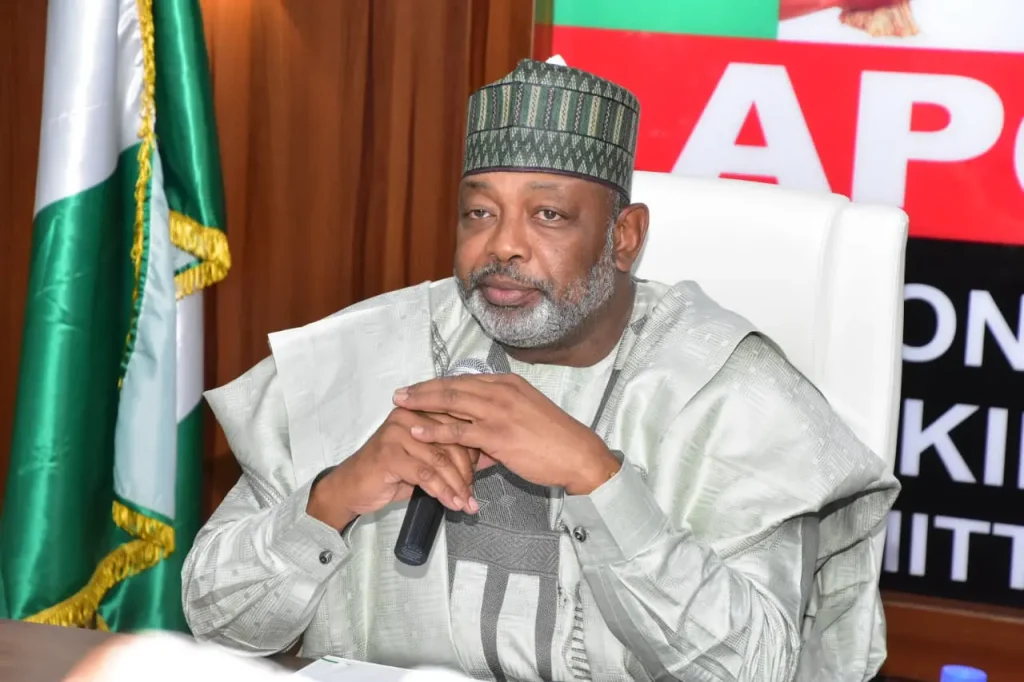
The directive, announced Wednesday by the Minister of State for Agriculture and Food Security, Senator Sabi Abdullahi, followed the Federal Executive Council (FEC) meeting at the State House.
Abdullahi said the President is pushing for urgent measures to guarantee the safe passage of farm produce across the country, a move aimed at reducing the prohibitive costs of transporting goods to markets.
“The President has given a matching order with a federal executive council committee already handling it on how we are going to promote safe passage of agricultural foods and commodities across our various routes in the country,” Abdullahi told journalists at a workshop for Senate correspondents.
For millions of Nigerians, food has become a luxury. Since Tinubu announced the removal of fuel subsidies in May 2023, transport costs have soared, insecurity has continued to choke major supply routes, and inflation has eroded household incomes. The National Bureau of Statistics reports food inflation hovering above 30 percent, with staples like rice, maize, beans, and garri now priced far beyond the reach of ordinary families.
Despite interventions such as grain releases, fertilizer subsidies, and mechanisation schemes, food prices remain stubbornly high. Economists warn that without a comprehensive and well-coordinated policy, hunger could worsen in Africa’s most populous nation, where nearly half of the population already lives in poverty.
Abdullahi noted that the new push ties into Tinubu’s broader vision of achieving food sovereignty, ensuring not just availability, but also affordability, accessibility, and nutrition on a sustainable basis.
He revealed that the administration is preparing to launch a Farmer Soil Health Scheme to boost productivity and a revamped cooperative reform initiative to mobilise resources and empower rural farmers.
“Mr. President has shown tremendous interest in the cooperative sector as a veritable tool for resource mobilisation, for economic activity generation, and to improve the livelihood of members,” Abdullahi added.
Tinubu has repeatedly staked his administration’s credibility on turning Nigeria into a self-reliant food nation. In his Democracy Day address in June, he insisted the country was already on the path to food sovereignty, anchored on policies he says will grow the economy at a “seven percent clip” with a stronger manufacturing base.
But with bread now out of the reach of many households, farmers unable to transport their produce without losing profit, and citizens queuing daily for subsidised grains that quickly run out, the President’s latest directive will be judged, not by promises but by how quickly prices fall in the markets.



