

BY VIVIAN MICHAEL
The Civil Society Organisations (CSOs) have partnered journalists in Nigeria to seek ways to tackle violent extremism in the country.
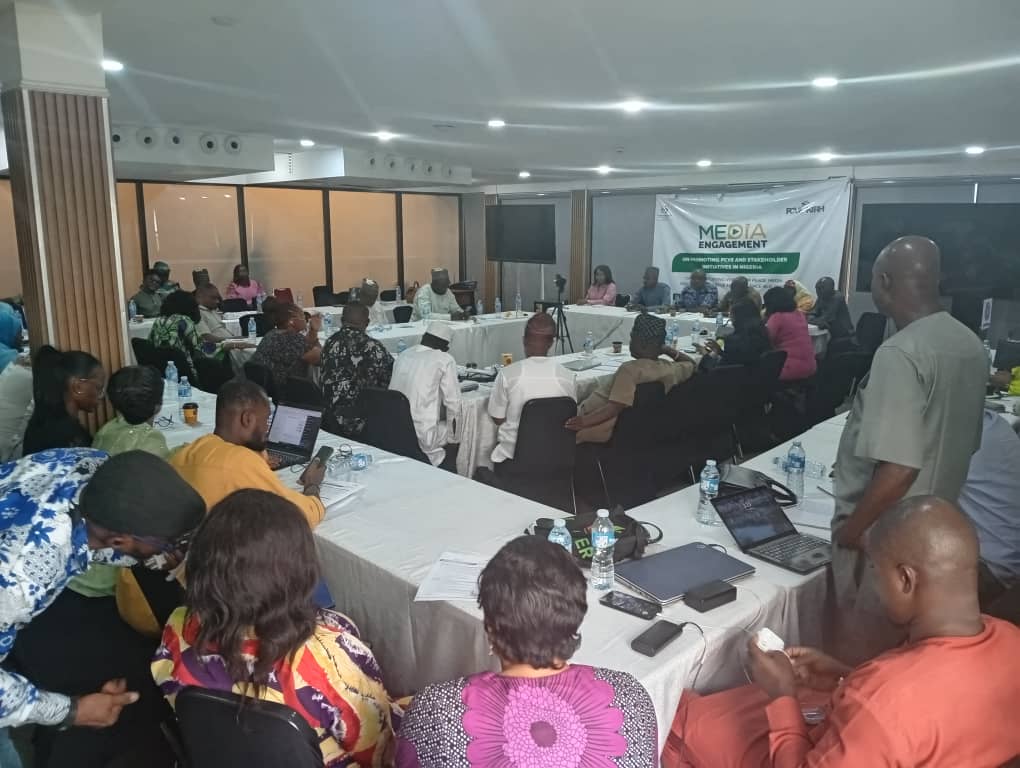
In view of this, no fewer than 50 journalists are gathered in Abuja for a two-day media training to discourage radicalisation and violent extremism, warning that sensational reporting could fuel rather than reduce conflicts.
The roundtable dialogue and training on conflict-sensitive journalism is organised by the Partnership Against Violent Extremism Network (PAVE), in collaboration with the Office of the National Security Adviser (ONSA), and ActionAid Nigeria, with funding from the Global Community Engagement and Resilience Fund (GCERF).
At the opening of the training in Abuja on Monday, Chairman of PAVE’s Steering Committee, Jaye Gaskia, said Nigeria’s long battle with extremism required a “whole-of-society” approach in which the media occupied a central place.
“Narratives shape behaviour, and responsible, conflict-sensitive journalism is essential to prevention, de-escalation and reintegration.
“The way we tell our national story matters. If we consistently choose sensationalism, we deepen divides and amplify fear. But if we elevate voices of resilience, highlight peace initiatives, and frame issues responsibly, we can help build a more peaceful and secure Nigeria,” he said.
Gaskia, who also chairs the Preventing and Countering Violent Extremism Knowledge, Innovation and Resource Hub (PCVE KIRH), said Nigeria’s experience over the last 15 years had shown that government efforts alone could not stem extremist threats.
“No single actor, whether government, civil society, community or the private sector can do it alone. This is why PAVE is pursuing a three-track approach: co-creating State and Local Action Plans on PCVE, operationalising the PCVE Knowledge, Innovation and Resource Hub, and institutionalising media engagement through the Media Against Violent Extremism Network we are flagging off today.
“Today, the coalition was active in 22 states with the vision of a Nigeria free from violent extremism. Our motto is simple and true: Paving the way to peace,” Gaskia told participants.
The GCERF, which has supported community-level interventions in Nigeria since 2016, said ongoing efforts must prioritise sustainability and local ownership.
Also, the National Coordinator, Yetunde Adegoke, said nearly a decade of work in the North-Central and North-West zones had taught valuable lessons about the importance of grassroots solutions.
“As donors, we can only ever be catalysts. What we are really looking forward to is catalysing a very sustainable way of preventing violent extremism and building resilient communities. That is essentially what GCERF is about,” she said.
Adegoke explained that while pilot projects with partners such as ActionAid had yielded results, it was now time to move beyond short-term initiatives.
“We cannot continue with just project-based approaches. That is why we are investing in the PAVE Network… It is intended to work with communities across the six geopolitical zones to design their own solutions,” she added.
She added that GCERF had deliberately supported the creation of the PCVE Knowledge, Innovation and Resource Hub as what she described as the organisation’s “exit strategy.”
“We should not be planning to be here forever. The question is: how do we create something sustainable that will grow and continue beyond our funding, which can end at any time?” she said.
Delivering a goodwill message, ActionAid Nigeria stressed that journalists must consciously avoid reporting that stigmatised regions or peoples.
The organisation’s Project Coordinator, Aliyu Adamu, who represented the Country Director, Andrew Mamedu, said wrong portrayals in the media could reinforce dangerous stereotypes.



