

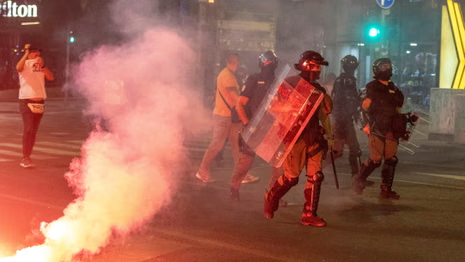
Nearly 50 people have been detained and dozens injured as anti-government protests in Serbia turned violent this week, marking one of the most serious escalations in more than nine months of largely peaceful demonstrations against President Aleksandar Vucic’s rule.
Clashes broke out Wednesday in the northern city of Novi Sad after supporters of the ruling Serbian Progressive Party (SNS) threw flares at anti-government protesters marching past party offices, according to video from the scene. Interior Minister Ivica Dacic said gatherings were held at about 90 locations across the country that evening.
The confrontation quickly descended into chaos, with rival groups hurling rocks and bottles at each other through thick smoke. An army security officer stationed at the SNS office fired his gun into the air, later claiming he feared for his life. Similar skirmishes had been reported the previous night.
The protests, led largely by university students, have rattled Vucic’s government, which critics accuse of eroding democratic freedoms and fostering corruption and organized crime, allegations he denies. Serbia remains a candidate for European Union membership, though Vucic has kept close ties with Russia and China.
In Belgrade, riot police used tear gas to break up crowds and formed a cordon around a camp of Vucic loyalists outside the presidency building. Dacic accused demonstrators of attacking government supporters, warning that “those who broke the law will be identified and sanctioned.”
Student groups, however, claim authorities are trying to “provoke a civil war” by shielding regime loyalists who, they say, attacked protesters with rocks and flares. The informal coalition Students in Blockade, which has been demonstrating since November, said police “were guarding the regime loyalists” during the violence.
The protests began after a renovated train station canopy in Novi Sad collapsed, killing 16 people and fueling accusations of corruption in state-run infrastructure projects. Demonstrators are demanding early parliamentary elections, a call Vucic has rejected.
EU Commissioner for Enlargement Marta Kos described the violence as “deeply concerning,” stressing that Serbia’s EU path requires citizens to speak freely and journalists to report without fear. More rallies are planned for Thursday evening.


