

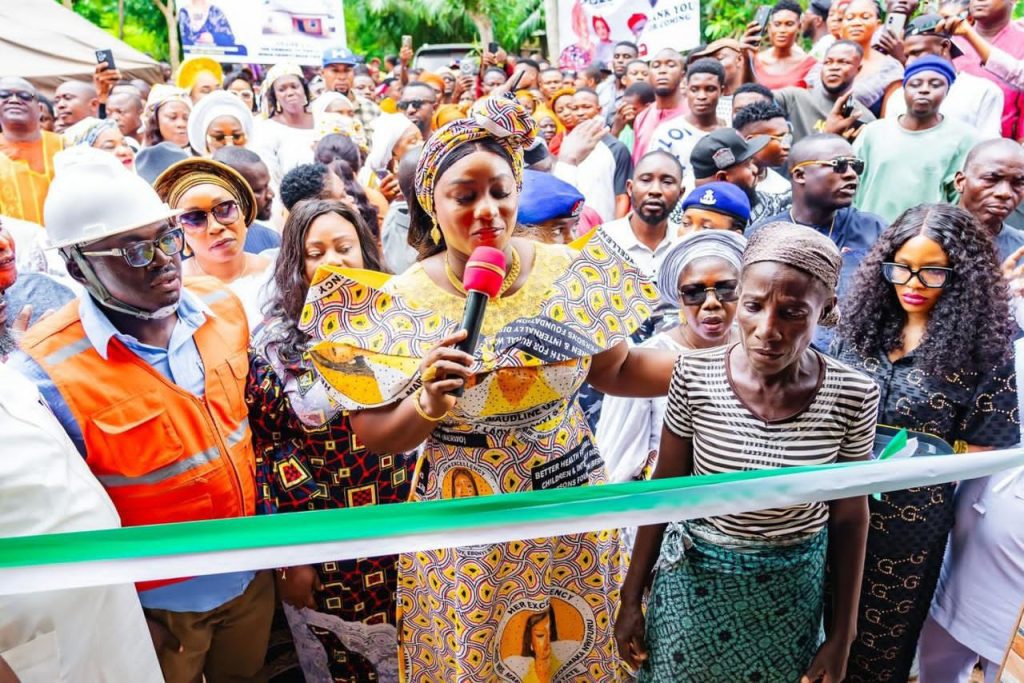
The wife of Ebonyi State Governor, Mary-Maudline Nwifuru, has handed over 26 newly built houses to widows across the state as part of her ongoing empowerment and welfare initiatives in the 13 local government areas.
The gesture, which took place today at Ufezu Umuocha Umudomi Igboeze Onicha, in Onicha Local Government Area, was described as a demonstration of governor Nwifuru’s administration commitment to improving the living standards of vulnerable groups in the state.
Nwifuru, while presenting the keys to the beneficiaries, noted that the project was aimed at giving widows a sense of belonging and relief from the burden of shelter.
According to her, the initiative was born out of the desire to touch lives and ensure that no widow in Ebonyi State is left homeless. She said, “These houses are more than just buildings; they are symbols of hope, dignity, and fresh beginnings for our mothers who have endured so much.”
Some of the beneficiaries, including Nworie Ngene from Onicha Igboeze and Uzoamaka Nwankwo from Ezza North Local Government Area who were overwhelmed with joy, thanked the governor’s wife for the intervention, describing it as a timely support that has restored their confidence in society.
Government officials and community leaders present at the event including the executive chairman of Onicha Local Government Area, Hon. Ikechukwu Ogbuofia, the Development Center Coordinator of Onicha West, Princewill Chukwuemeka Uzor commended the project, stressing that the project aligned with Governor Francis Nwifuru’s ‘People’s charter of needs’ agenda.
Also, the Development Center Coordinator of Ezza North, Hon. Titus Eze, and his Imoha counterpart, Barr. Chika Igboke, and the Executive Secretary of Ebonyi Local Government Pension Board, Hon. Emeka Nwonu, described human welfare as the best form of government, stating that the housing empowerment has revived the aged beneficiary widows.
The distribution of the houses is expected to continue in phases, with more widows and less-privileged persons earmarked as future beneficiaries, of whom two are selected across the 13 LGAs.



