

BY ODIGIE OKPATAKU
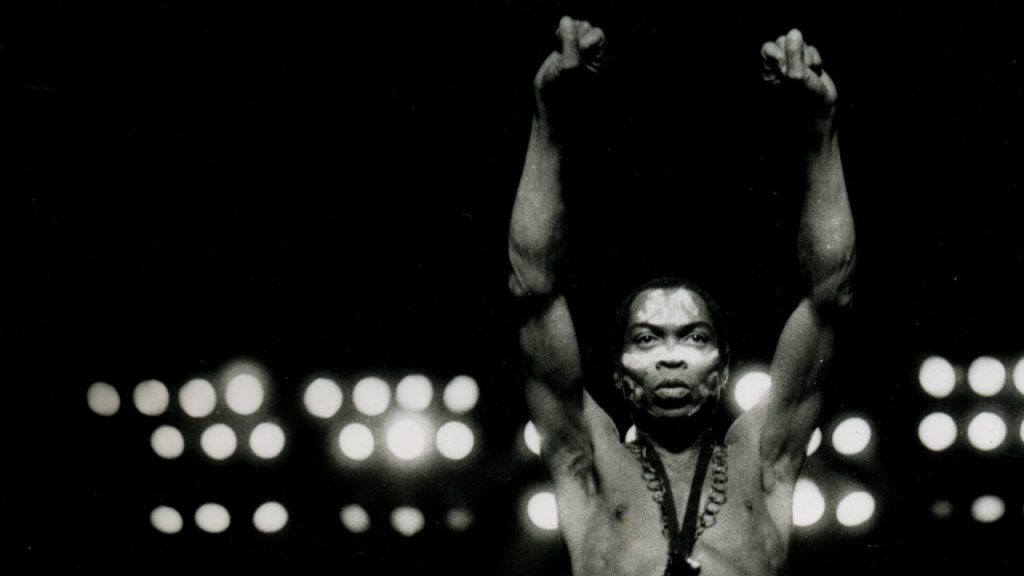
If Lagos had a heartbeat, it would thump to the rhythm of Afrobeat, deep, defiant, and drenched in truth. And once a year, that heartbeat grows louder, vibrating through the streets, nightclubs, art galleries, and the ever-electric atmosphere of Ikeja’s New Afrika Shrine. That is Felabration, not just a festival, but a ritual of remembrance, rebellion, and rhythm. It is where Fela Anikulapo Kuti’s spirit comes alive again in dance, in sound, and in protest.
Afrobeat did not just appear, it erupted. Born in the late 1960s and early 1970s, it was the soundtrack to a continent finding its voice. It was a time when West Africa was shaking off the dust of colonialism and struggling to define its new identity. Traditional Yoruba drumming met highlife melodies, and those collided with jazz, funk, and soul. Out of that fusion came something raw, hypnotic, and unmistakably African. But afrobeat was not just music, it was a movement. It gave the oppressed a megaphone, the marginalised a rhythm, and the disillusioned a dance floor. It was, and remains, a weapon of truth.
Fela Kuti was not born to be silent. Born on October 15, 1938, in Abeokuta, Ogun State, Nigeria, into a family of firebrands, his mother, Funmilayo Ransome-Kuti, was a fearless feminist and anti-colonial crusader, and Fela’s destiny was sealed in the rhythm of resistance. After studying classical music at Trinity College, London, and moonlighting in jazz and rock bands, Fela returned home with more than a degree, he carried rebellion in his soul and rhythm in his blood. With his band, ‘Koola Lobitos,’ he began experimenting, blending Yoruba beats with jazz improvisation and funk grooves. By the late ’60s, afrobeat was born, and so was a revolution.
His 1969 tour of the United States was transformative. There, Fela met the ideologies of Malcolm X, the Black Panthers, and the fire of the Civil Rights movement. When he came back to Lagos, he did not just bring a new sound; he brought a new consciousness. Songs like Zombie, Water No Get Enemy, Shuffering and Shmiling, and Beasts of No Nation became national anthems of protest, exposing the corruption, hypocrisy, and brutality of military rule. Fela was more than a musician; he was a prophet, armed with a saxophone.
At the height of his influence, Fela declared his commune, Kalakuta Republic, an independent nation, a sanctuary for art, freedom, and nonconformity. It was a bold, dangerous move that infuriated Nigeria’s military regime. His compound became a hub of creativity and defiance, home to his band members, family, and followers. But it also drew the wrath of the state. In 1977, soldiers raided the Kalakuta Republic, burning it to the ground, and brutalising its residents. Fela was beaten mercilessly; his aged mother was thrown out from a window, an injury that later claimed her life.
Yet even in pain, Fela’s voice only grew louder. He immortalised the tragedy in his song Coffin for Head of State, carrying his mother’s coffin to Dodan Barracks, the seat of power, as a symbol of defiance. To silence him was impossible. For every beating, he wrote another song. For every imprisonment, he returned to the stage stronger.
Afrobeat is not for the faint of heart. It is orchestral, percussive, and unapologetically long – some songs stretch past the 20-minute mark, looping hypnotically like a sermon in rhythm. It thrives on polyrhythms, a thunderous blend of talking drums, congas, electric guitars, and brass sections. But it is Fela’s voice that carries the fire, part preacher, part trickster, part truth-teller. His lyrics were fearless, his tone sardonic, his message universal: freedom, accountability, and self-determination. He performed night after night at his Lagos nightclub, The Shrine, where music and revolution danced together till dawn. His audiences, from market women to university radicals, came not just for entertainment, but for enlightenment.
Today, decades after his death in 1997, from complications related to AIDS, Fela’s legacy refuses to fade. Instead, it grows stronger each year through Felabration, the annual festival founded by his eldest daughter, Yeni Kuti.
Held every October to coincide with Fela’s birthday, Felabration has become one of the biggest cultural events in Africa, a carnival of sound and spirit that transforms Lagos into a living stage. Hosted at the New Afrika Shrine, a modern reimagining of Fela’s original club, it draws hundreds of thousands of fans, musicians, scholars, and tourists from across the world. The festival is not just about music; it is a week-long cultural mosaic. Debates on Pan-Africanism and governance mix with art exhibitions, dance competitions, poetry slams, and fashion shows that celebrate African identity in all its fierce colours. From street parades to live performances, from the blare of trumpets to the pounding of drums, every beat feels like Fela is still in the room, grinning, sweating, preaching truth to power.
Over the years, Felabration has hosted both local and international acts, from Seun and Femi Kuti to 2Baba, Burna Boy, Asa, and even foreign musicians drawn by the magic of Afrobeat. It is not just a festival; it is a pilgrimage. To speak of Afrobeat today is to speak of legacy, not nostalgia. The genre has evolved into afrobeats (with an ‘s’), the global sound dominating airwaves from Lagos to London. Artists like Burna Boy, Wizkid, Davido, and Tems have turned it into a universal language of rhythm and resilience. But they all tip their hats to Fela, the man who dared to dream of an Africa free from mental colonization, an Africa dancing to its own drum. Burna Boy samples his lyrics and borrows his bravado. Wizkid channels his smooth swagger. Even American artists, like Beyoncé, Jay-Z, and Erykah Badu, have paid homage to his genius.
Fela was not just ahead of his time; he redefined time. His art forced the world to listen, not just to his saxophone, but to his soul. Felabration is not just about the past, it is about what Fela stood for: truth, resistance, and the celebration of black identity. It is about community and consciousness, rhythm and revolution. It is where the old guard and the new wave meet in one mighty groove, reminding us that art still has the power to confront power. At the shrine, under the coloured lights and the haze of palm wine, strangers become comrades. The beat connects generations, those who lived through Fela’s fire and those who only know him through the glow of YouTube.
Fela, the man who said he carried death in his pouch, may be gone, but his ideas are immortal. Through Felabration, his fire burns on, year after year, note after note, like the unending beat of the talking drum. As long as Lagos dances, as long as Africa sings, and as long as truth demands a rhythm, Fela lives.


