

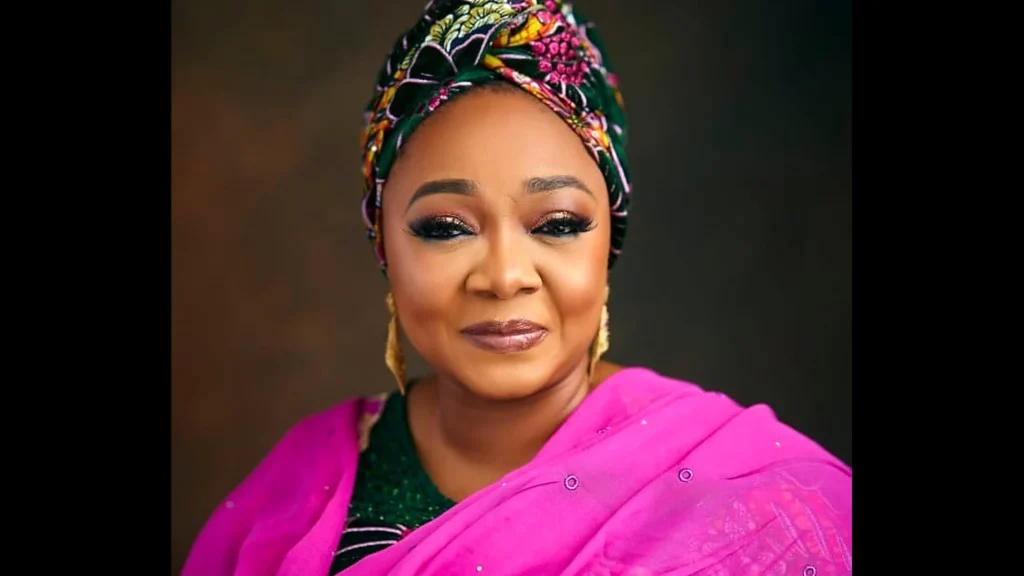
The Federal Government has approved the establishment of the National Council for Social Work and three national policy instruments aimed at strengthening child protection, menstrual health and social care across the country.
The Minister of Women Affairs and Social Development, Imaan Sulaiman-Ibrahim, disclosed this at a press conference commemorating the 26th anniversary of the United Nations Security Council Resolution 1325 on Women, Peace and Security.
The Minister said President Bola Ahmed Tinubu had approved the establishment of the National Council for Social Work, with a chairman, registrar and administrative structure, to professionalise social work and improve support for vulnerable individuals and families.
She explained that a World Bank-assisted project would support the training, certification and nationwide deployment of licensed social workers to ensure that women fleeing violence, children at risk and families facing crises receive professional assistance.
Sulaiman-Ibrahim also announced that the Federal Executive Council had approved three national instruments presented by her ministry to improve protection and social welfare.
They include the National Action Plan on Ending Violence Against Children, the National Policy on Menstrual Health and Hygiene Management, 2026–2030, and the National Care Policy and Implementation Plan, 2026–2030.
According to the minister, the National Action Plan on Ending Violence Against Children would extend child protection interventions to all 36 states and the Federal Capital Territory through a Pathfinder State Model.
She said the menstrual health policy would address barriers preventing girls from attending school because of inadequate access to sanitary products, while promoting local manufacturing through women-owned enterprises and establishing Pad Banks in public spaces.
On the National Care Policy, Sulaiman-Ibrahim said it would recognise unpaid caregiving responsibilities, establish minimum standards for care centres, regulate child adoption and create employment opportunities in the professional care sector.
She added that the policy would be supported by a proposed National Care Fund, with plans for an eventual Act of the National Assembly.
The minister linked the initiatives to Nigeria’s broader peace and security efforts, arguing that insecurity was not limited to armed conflict but could also emerge from child abuse, gender-based violence, poverty and the unequal burden of unpaid care.
“Twenty-six years on, the measure of Resolution 1325 is no longer what governments sign. It is what women live,” she said.
Resolution 1325, adopted by the United Nations Security Council in 2000, calls for women’s participation in conflict prevention, peacebuilding and decision-making, alongside stronger protection for women and girls affected by conflict.
Sulaiman-Ibrahim said Nigeria’s implementation efforts had progressed from its first National Action Plan in 2013 to a second plan in 2017, which supported the development of 17 State Action Plans and 21 Local Action Plans.
She noted that the Third National Action Plan, launched by First Lady Oluremi Tinubu on December 15, 2025, was built around five pillars: prevention, protection, participation, relief and recovery, and crisis response and emerging threats.
The Minister said the plan would place women’s leadership, rights and dignity at the centre of Nigeria’s security framework, particularly as communities continue to grapple with insurgency, banditry, kidnapping, displacement and conflicts over land and livelihoods.
She also highlighted the growing representation of women in security and justice institutions, citing the appointments of Kemi Nanna Nandap as Comptroller-General of the Nigeria Immigration Service and Folashade Adekaiyaoja as the first female Deputy Director-General of the Department of State Services.
The representative of the Minister of Defence, Lieutenant Colonel Nneka Olimma- Adinweruka, SA, gender HMOD ministry of defence, stressed that security was a collective responsibility and not the exclusive preserve of the military.
She called for a shift from viewing women merely as victims of conflict to recognising them as leaders, decision-makers and strategic partners in national security.
Olima said advancing the Women, Peace and Security Agenda required deliberate and coordinated action, including greater representation of women in the armed forces, security agencies, peace negotiations, mediation processes and leadership positions.
She noted that women’s experiences and perspectives were essential to developing inclusive and effective security strategies.
“Our collective aspiration must be to ensure that Nigerian women are protected from violence, empowered to lead, included in security decisions and recognised as indispensable partners in building lasting peace,” she said.
She added that sustainable peace could not be achieved without women’s meaningful participation in security processes.
Olima called on stakeholders to work towards a Nigeria where peace is sustained, security is strengthened and the dignity and contributions of every woman are respected.



