

…Nigeria’s reform program going great – Bwala
…Figures look good on paper, not in reality – Expert
BY SAM OTUONYE
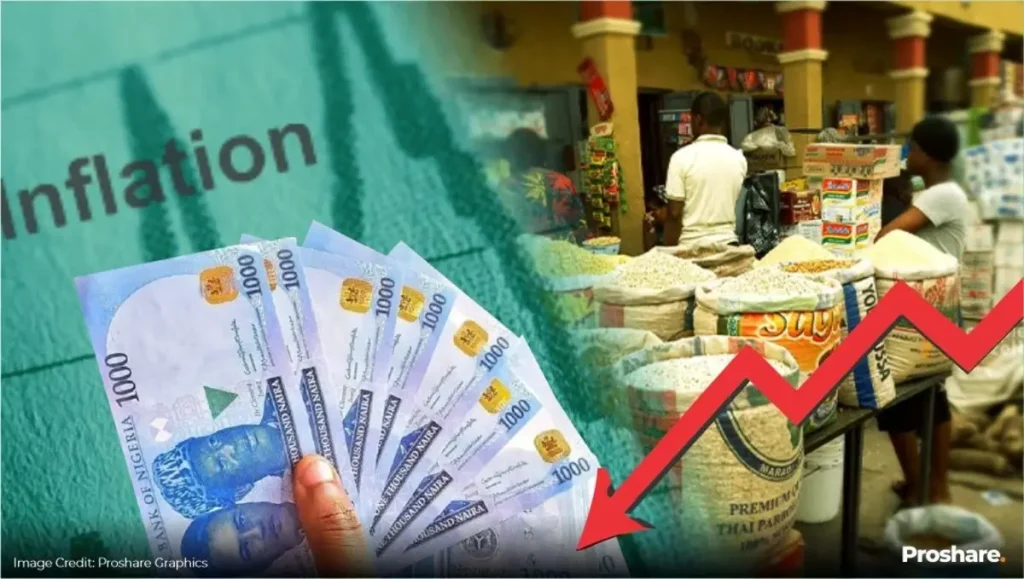
Nigeria’s federal government has applauded the headline inflation rate which eased for the fifth consecutive month in August 2025, dropping to 20.12 per cent from 21.88 percent in July, even as ordinary Nigerians continue to struggle with rising food prices, transport costs, healthcare bills, and overall living expenses.
The National Bureau of Statistics (NBS), in its Consumer Price Index report released on Monday, said the figure represents a 1.76 percentage point decline from July and a sharp fall from 32.15 per cent recorded in August 2024.
According to the report: “The Consumer Price Index rose to 126.8 in August 2025, reflecting a 0.9-point increase from the preceding month (125.9).
In August 2025, the headline inflation rate eased to 20.12 per cent relative to the July 2025 headline inflation rate of 21.88 per cent.
Looking at the movement, the August 2025 headline inflation rate showed a decrease of 1.76 per cent compared to July.”
The NBS noted that urban inflation dropped to 19.75 per cent year-on-year in August from 34.58 per cent a year earlier, while rural inflation was higher at 20.28 per cent compared with 29.95 per cent in August 2024.
On a monthly basis, inflation in urban areas slowed to 0.49 per cent from 1.86 per cent in July, while rural inflation came in at 1.38 per cent, down from 2.30 per cent. The figures suggest that rural households continue to bear sharper inflationary pressures due to transport and supply chain costs.
Food inflation remained the dominant driver but moderated significantly. It dropped to 21.87 per cent year-on-year from 37.52 per cent in August 2024. Month-on-month, food inflation slowed to 1.65 per cent from 3.12 per cent in July.
The moderation was attributed to falling prices of staples including rice, guinea corn flour, maize flour, millet, semolina, and soya milk.
The twelve-month average for food inflation was 25.75 per cent, far lower than the 36.99 per cent recorded a year ago.
Core inflation, which strips out volatile food and energy costs, stood at 20.33 per cent year-on-year, down from 27.58 per cent in August 2024. However, it rose month-on-month to 1.43 per cent from 0.97 per cent in July, reflecting pressures from housing, utilities, transportation, education, and healthcare.
The mixed movement indicates that while headline inflation is easing, structural cost pressures persist.
Inflation varied across states, with Ekiti (28.17%), Kano (27.27%), and Oyo (26.58%) recording the highest rates, while Zamfara (11.82%), Anambra (14.16%), and Enugu (14.20%) had the lowest.
On a monthly basis, Yobe (9.20%), Katsina (8.59%), and Sokoto (6.57%) recorded the steepest rises, while Enugu (-5.32%), Taraba (-3.64%), and Nasarawa (-3.56%) saw declines.
The announcement comes ahead of the Central Bank of Nigeria’s Monetary Policy Committee meeting scheduled for September 22–23, where the bank is expected to review the benchmark interest rate of 27.5 per cent.
Reacting to the report, the Presidency credited the drop to ongoing reforms, with Daniel Bwala, the Special Assistant to President Bola Tinubu on Policy Coordination, calling it a wonderful development.
“Wonderful. Wonderful. The reform program is going great. Nigerians are seeing glimpse of hope and recovery.”
But financial expert Murktar Mohammed, CEO of FinanceWithMurktar, warned that the relief was not translating into everyday life.
“At the macro level, the reforms are impacting positively on businesses and foreign direct investments, but in reality the shift is not felt by ordinary Nigerians as food inflation and transportation costs remain high,” he said.
He added that while foreign exchange stability has helped businesses, “the reality on the ground is that households are still under severe pressure.”



